Last updated October 31, 2026
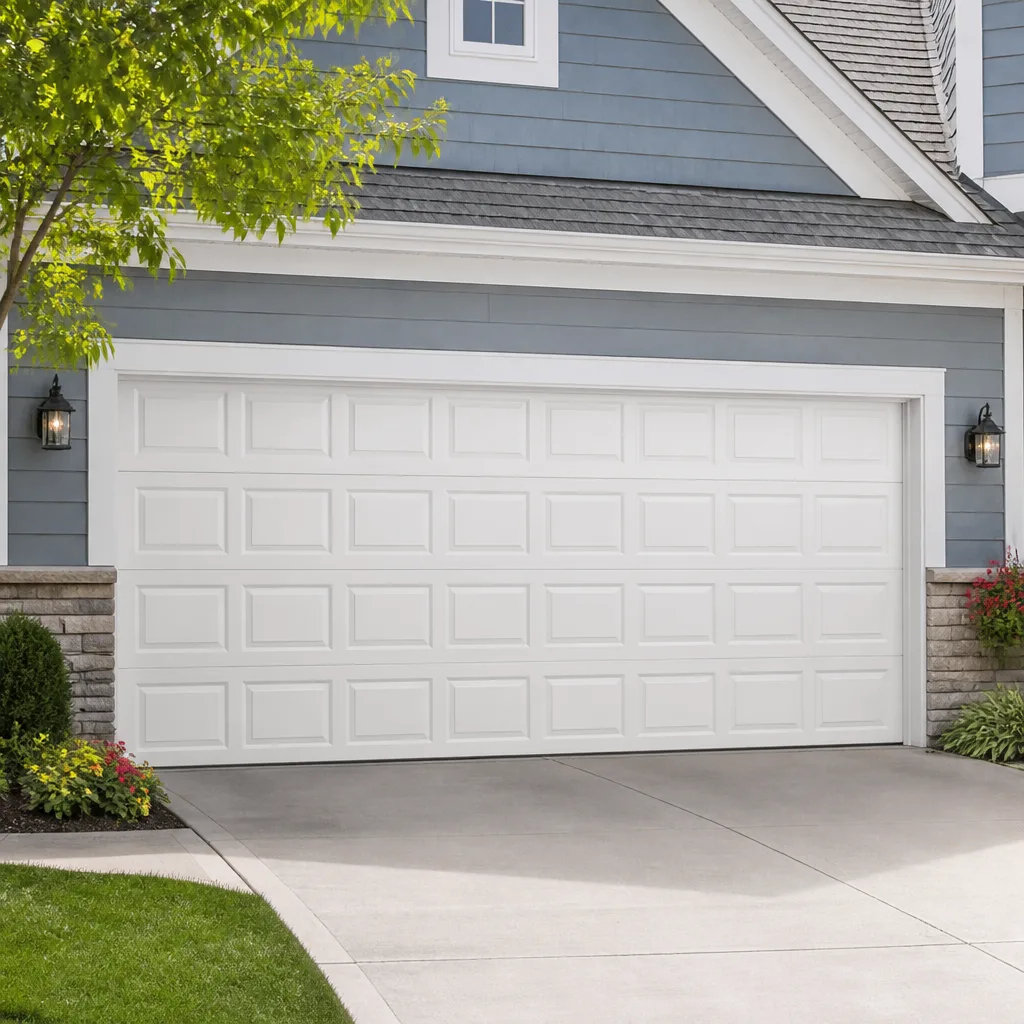 Raised-panel steel
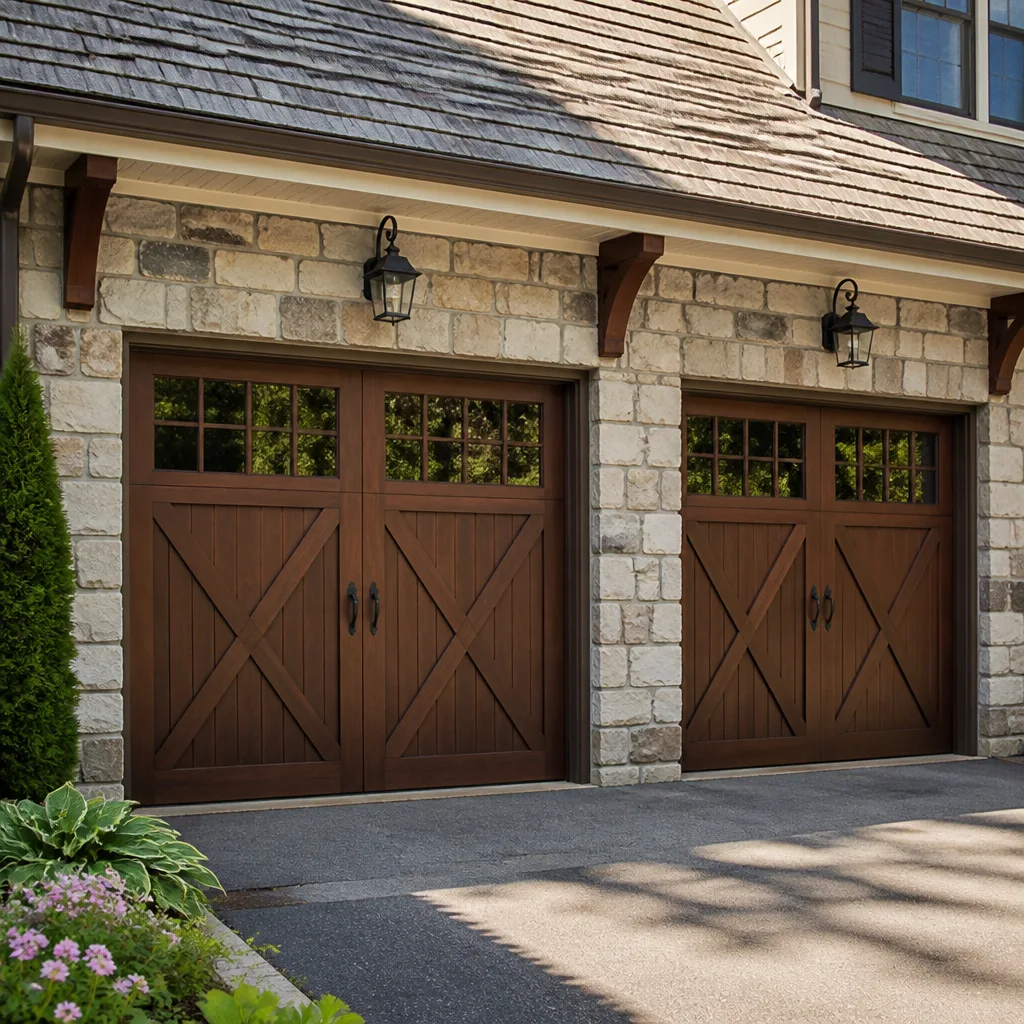 Carriage house
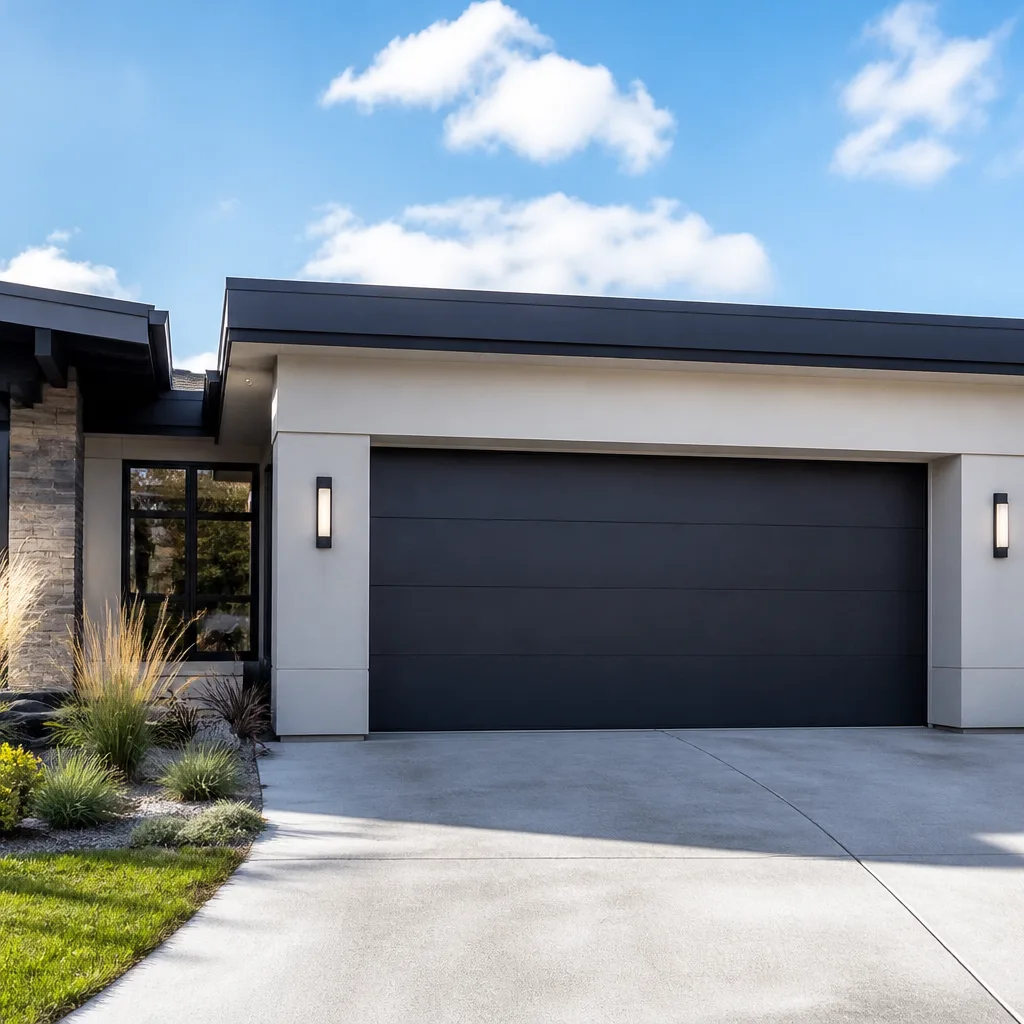 Modern flush
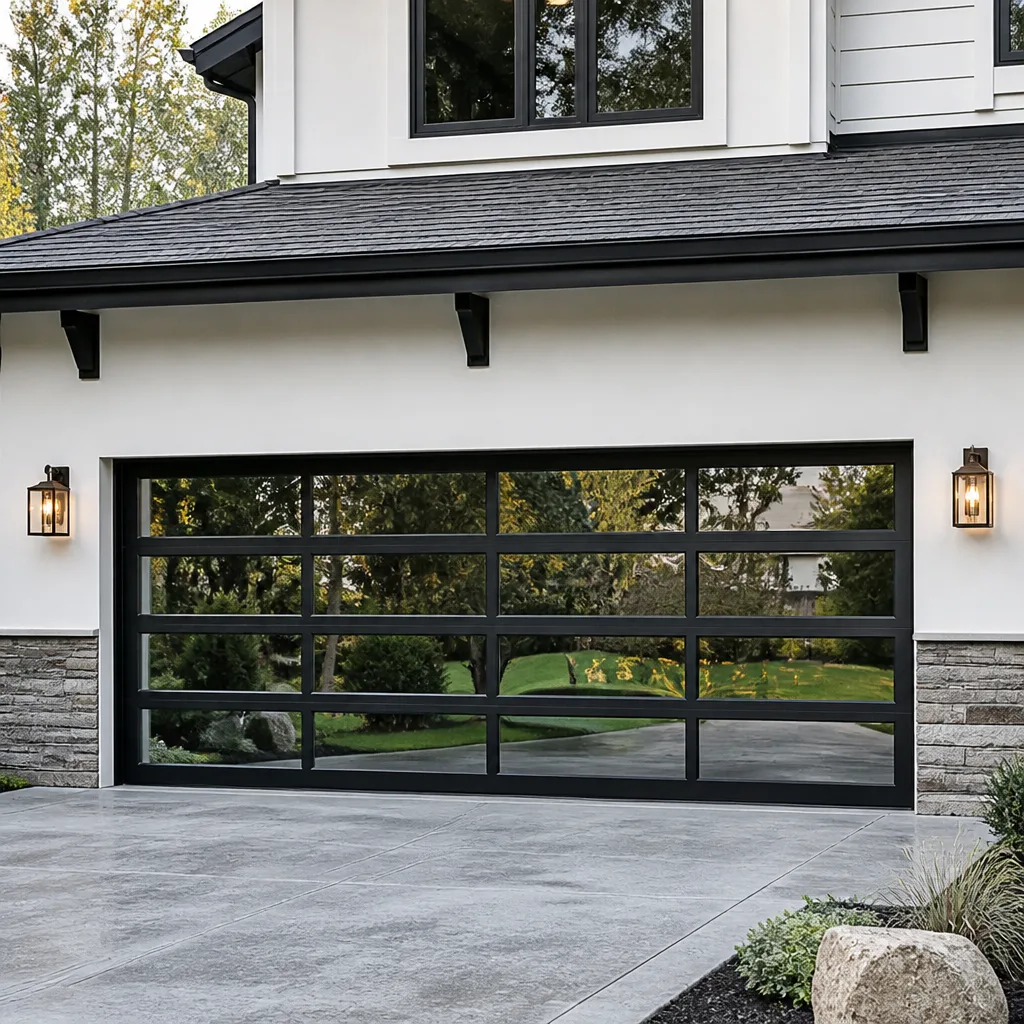 Full-view glass
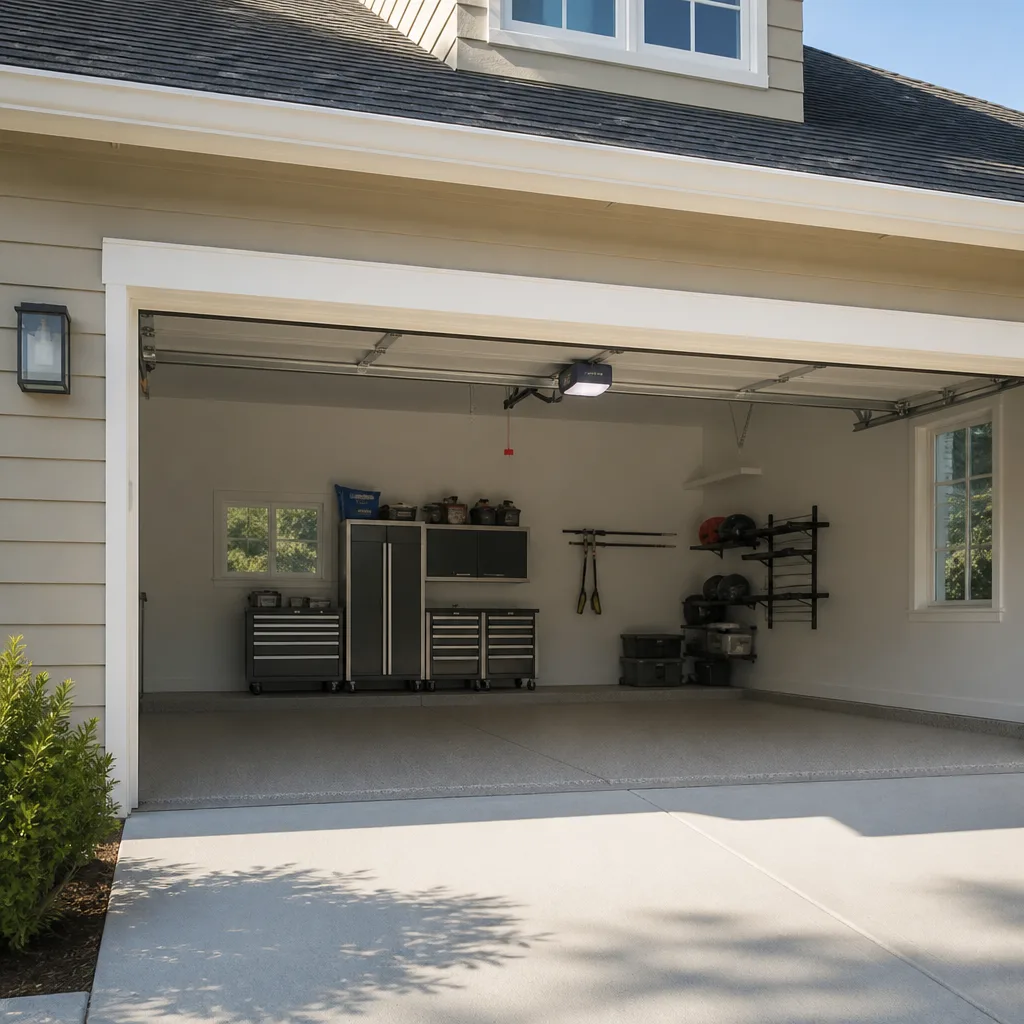 LiftMaster openers
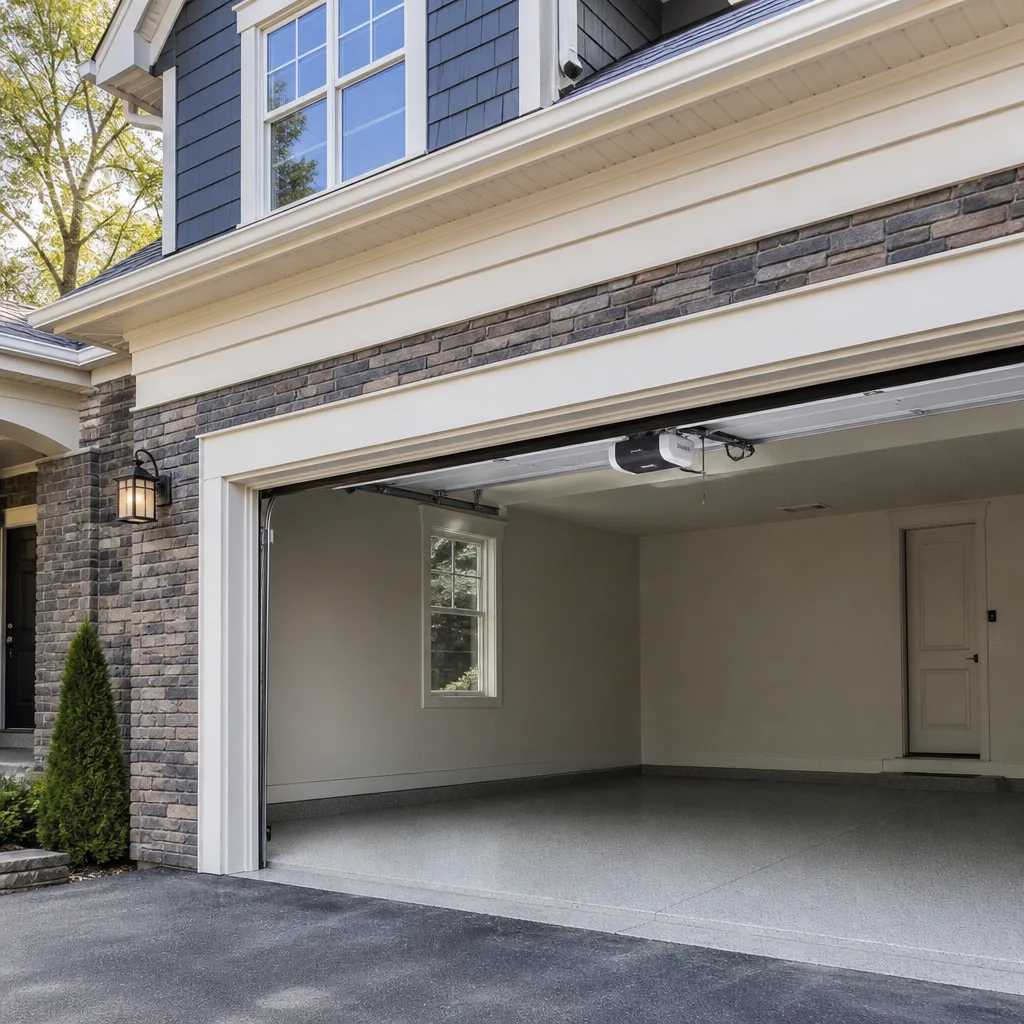 Chamberlain openers
Full 25-point door and opener safety check with every visit - springs, cables, rollers, tracks, and your LiftMaster or Chamberlain opener included
You get a price before we start. It does not change when the truck arrives.
Get your free estimateGarage Door Warning Signs: A Fort Pierce Homeowner’s Reference Guide
Most Fort Pierce homeowners don’t realize their garage door has been warning them for weeks before it fails. The door that groans on the way up, the panel that’s starting to chalk white along the bottom edge, the opener that reverses for no reason on humid mornings: these aren’t quirks. They’re diagnostic signals. Ignore them long enough and you’re looking at a Saturday morning with a door that won’t budge and a car trapped inside. This guide walks through the warning signs specific to coastal Florida homes, what each signal actually means, and which ones demand same-week attention. For seasonal garage door care in Fort Pierce, check our year-round homeowner’s guide.
Styles & brands we work with
Quick Answer
The most common garage door warning signs in Fort Pierce are grinding or popping sounds (worn rollers or springs), a door that’s slow on one side (cable or spring wear), white chalking or rust bloom on steel panels (salt-air corrosion), and an opener that reverses without obstruction (often humidity-swollen weatherstripping or frame issues). Any of these signals means a component is degrading. Catching them early typically prevents a full spring or cable failure that takes the door out of service entirely.
What’s Covered in This Guide
- What Different Garage Door Noises Actually Mean
- Coastal-Specific Visual Warning Signs: Salt Air and Humidity Damage
- Behavior-Based Warning Signs: Springs, Cables, and Track Alignment
- Opener Warning Signs That Matter Most in Florida
- Cosmetic vs. Structural: Which Issues Need Same-Week Service
- What to Check Yourself (and What to Leave Alone)
- Common Mistakes to Avoid
- When to Call a Professional
- Frequently Asked Questions
- The Bottom Line
What Different Garage Door Noises Actually Mean
The warning sign Fort Pierce homeowners most often ignore is a door that still works but sounds different. A subtle grinding or rhythmic clicking gets written off as normal wear until a spring snaps at 7 AM on a Monday. Sound is the earliest and most reliable diagnostic tool a garage door gives you, and each noise points to a specific component.
Grinding or growling typically means the rollers are worn out. Most residential doors in Fort Pierce use nylon or steel rollers, and after five to seven years of daily cycles in salty, humid air, the bearings inside the roller seize up. A seized roller doesn’t spin, it slides, and that friction drags metal against the track. Left alone, a seized roller will eventually carve a groove into the track itself, which turns a $20 roller replacement into a full track job.
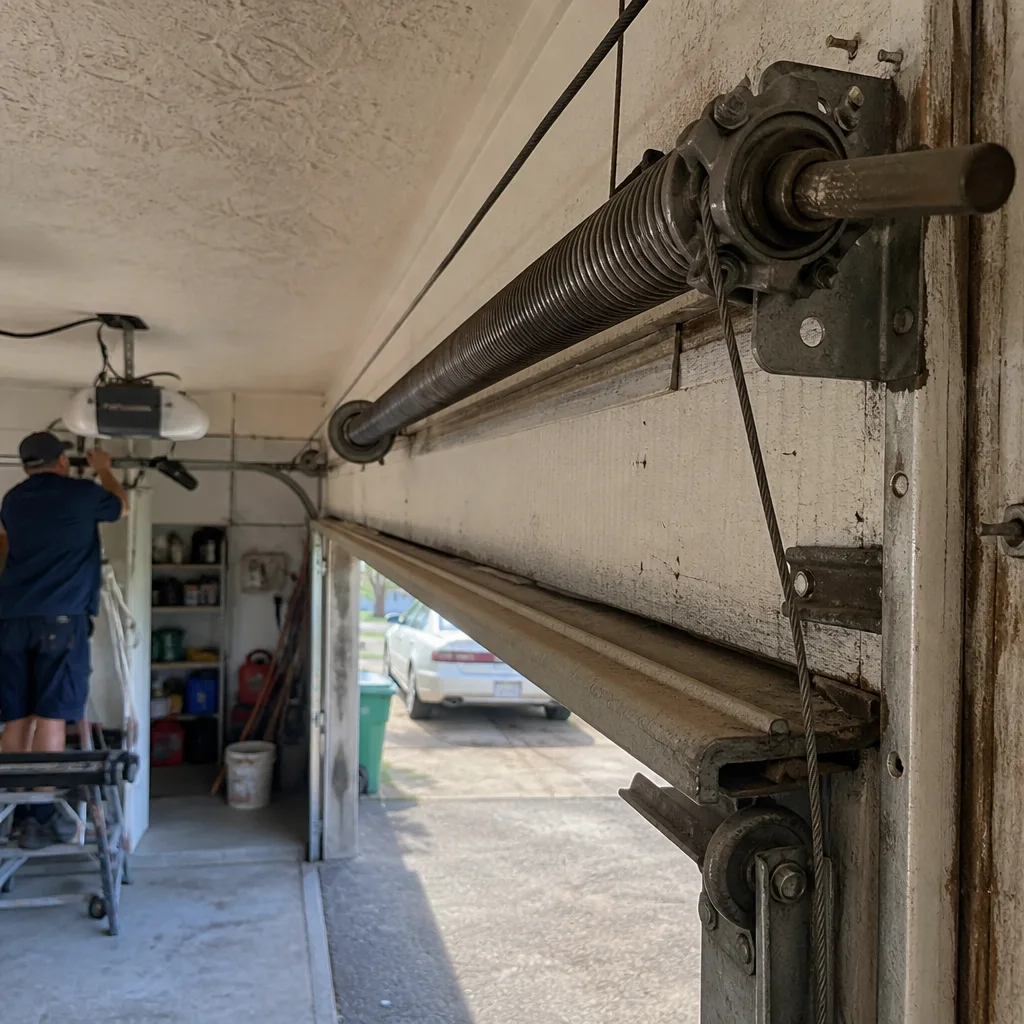
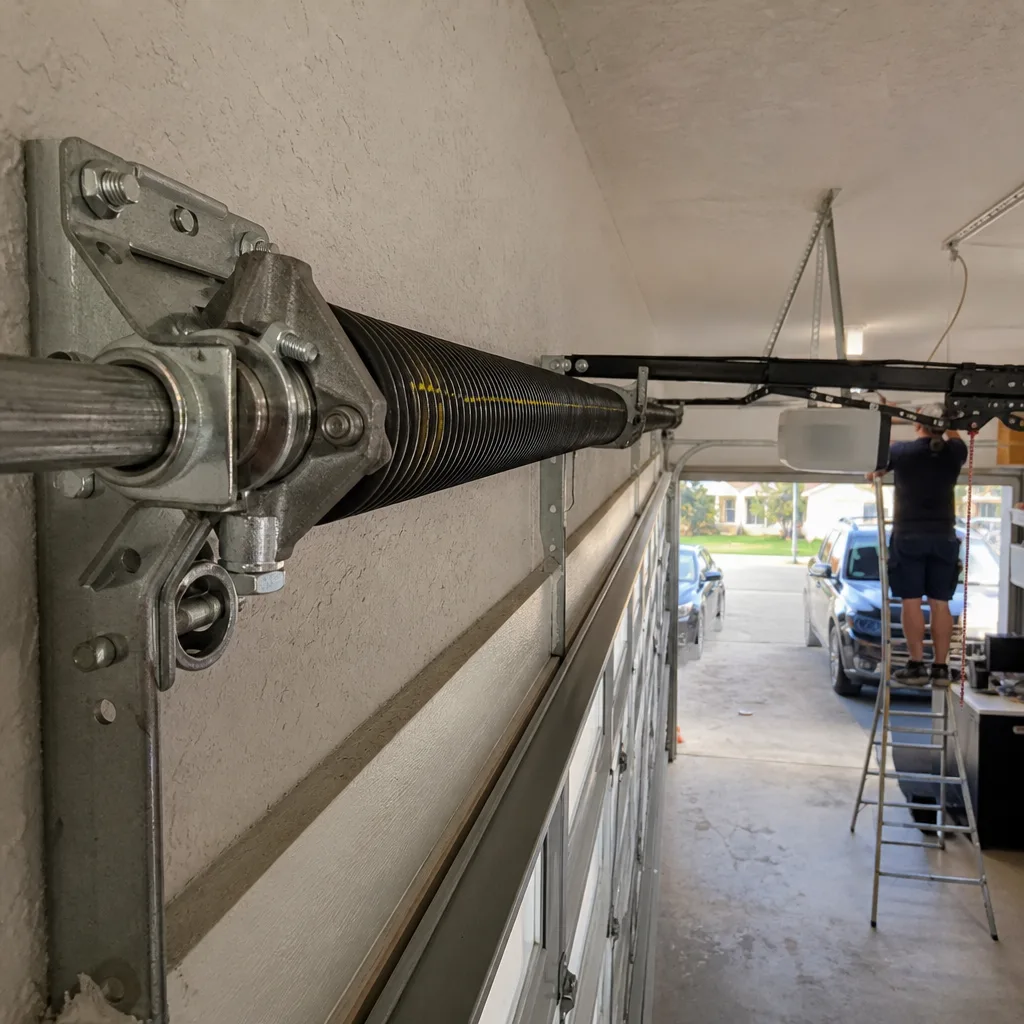
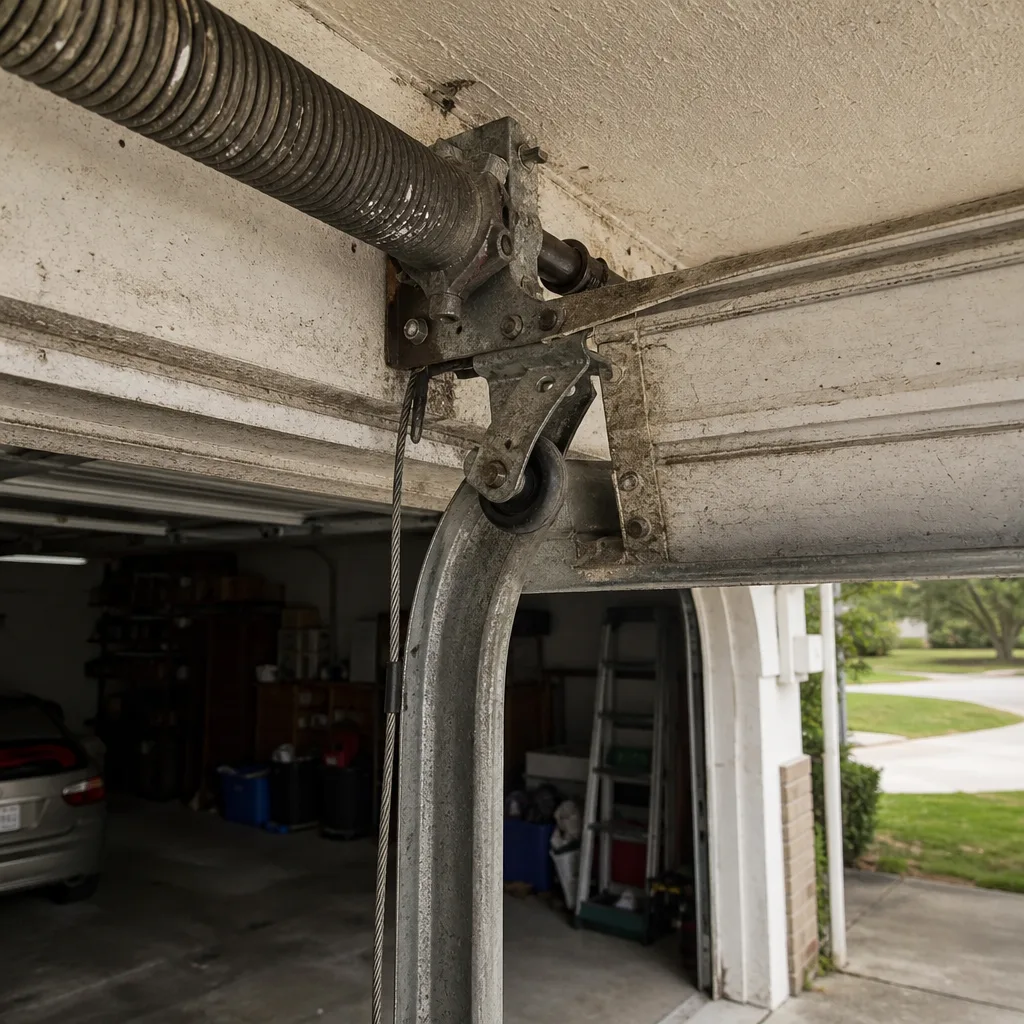
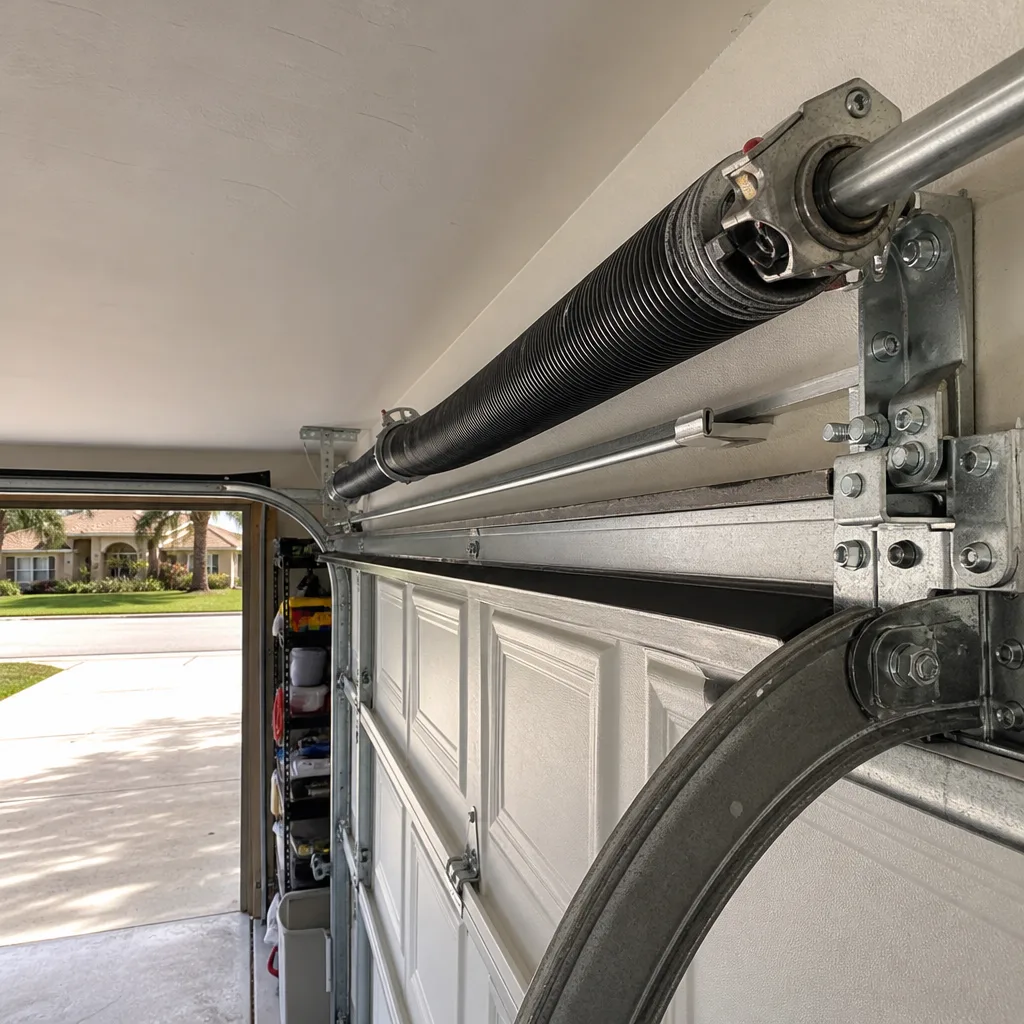
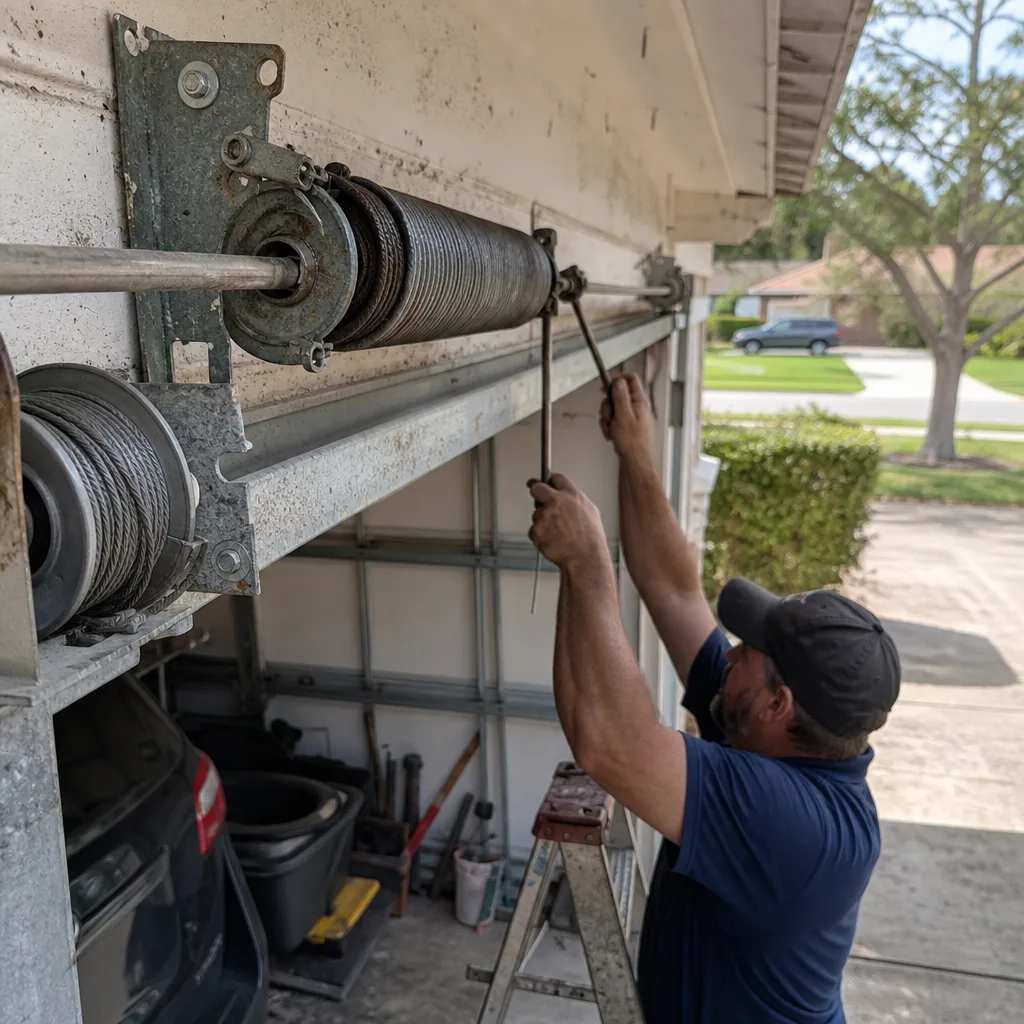
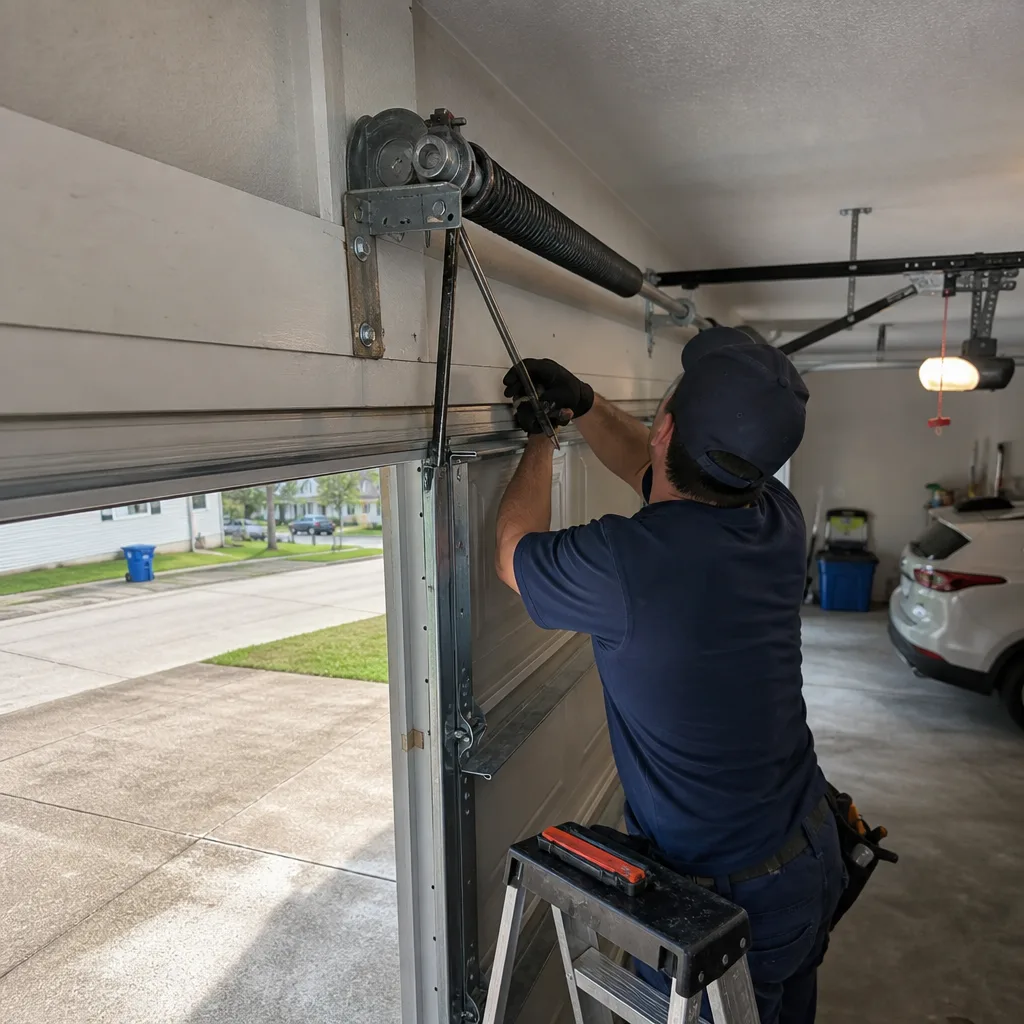
Popping or snapping when the door moves almost always points to the springs. Torsion springs, the kind mounted across the header above the door, develop internal friction as they wind and unwind thousands of times. When a section of the coil sticks and releases, you hear a pop. It’s the sound of a spring telling you it’s near the end of its cycle life. In Fort Pierce’s climate, springs also develop surface rust faster than inland areas, which accelerates wear on the coil surfaces.
Scraping or metal-on-metal usually involves the door edge contacting the track, which means the door has drifted out of alignment or a hinge is failing. A failing hinge lets one panel lean slightly, and that lean pushes the door edge into the track rail. The scraping sound gets worse as the hinge loosens further.
Rhythmic clicking or ticking as the door moves often comes from a loose chain on the opener, or from a door section with loose fasteners. On chain-drive openers from Chamberlain or Genie, a chain that’s stretched over years of use rides slightly proud of the sprocket and clicks as it passes. Tighten or replace the chain and the noise disappears.
Here’s the practical takeaway: a garage door that opens and closes silently is a door with healthy components. Any persistent sound means something has changed, and changed parts don’t heal themselves. We regularly tell Fort Pierce customers that calling us when a door first starts making noise is the difference between a thirty-minute repair and a full replacement. If you’re planning ahead, see how to hire a garage door contractor in Fort Pierce for what to ask before you book.
Coastal-Specific Visual Warning Signs: Salt Air and Humidity Damage
National garage door guides talk about dents and peeling paint. Fort Pierce homeowners deal with a different set of visual signals. The combination of salt air, high humidity, and intense UV exposure creates wear patterns that inland garages never see. Knowing what to look for can save you from a panel replacement that creeps up over two or three seasons.
White chalking on steel panels is the first sign of paint film oxidation. It starts as a faint white haze, usually on the lower panels and the side that faces the street. That chalky residue is the paint’s resin breaking down under UV and salt exposure. Once the paint resin is compromised, the steel underneath is exposed to moisture and salt, and rust follows within a year or two. You can’t stop oxidation once it starts, though you can slow it. What you can do is catch it early enough that the panel’s structural integrity isn’t compromised yet. A panel with heavy chalking and early rust bloom at the bottom edge will eventually fail along the bottom rail, where the panel meets the weatherseal.
Rust bloom at hinge points is a signal we see constantly in Fort Pierce. Hinges are the structural fastening points between panels, and they’re exactly where salt-laden moisture collects. Small rust spots at hinge screws or around the hinge stamping itself mean the hinge is corroding. Eventually the hinge pin enlarges its hole, the panel shifts, and the door starts binding. Replacing hinges early is a minor job. Waiting until the hinge tears free of the panel means panel repair or replacement.
Brittleness in weatherstripping is another coastal-specific signal. The rubber or vinyl strip along the bottom of the door and the vinyl seals along the sides take a beating from UV and salt. When they lose their flexibility, they crack instead of flexing. A cracked bottom seal lets rain, salt spray, and bugs into the garage. In hurricane-prone areas like Fort Pierce, a degraded bottom seal also compromises the wind-load resistance of the door, which matters when a storm blows in. If you can fold the weatherstrip and it stays creased, or if you see cracks along its length, it’s time to replace it.
Salt accumulation on tracks and rollers shows up as a fine white grime. Wipe the track with a dry cloth. If the cloth comes back gritty or white, that’s salt buildup mixing with the roller lubricant to form an abrasive paste. This accelerates roller and track wear. Cleaning tracks and switching to a marine-grade lubricant helps, though many homeowners prefer to have us do it during a routine inspection.
One more Fort Pierce-specific visual signal: sagging or discoloration at the top panel. The top panel catches the most direct sun and the most heat reflected off the roof. Insulated steel panels can delaminate when the adhesive between the steel skin and the insulation core breaks down from heat cycling. You’ll see a wavy appearance in the panel surface, or a line of discoloration that doesn’t match the rest of the door. A delaminated top panel loses strength and can crack along the wave lines.
Behavior-Based Warning Signs: Springs, Cables, and Track Alignment
How a door moves tells you more than how it looks or sounds. Pay attention to the door’s behavior during a cycle and you’ll catch spring and cable wear before catastrophic failure.
A door that’s slow on one side is the classic early sign of uneven cable tension. Both cables should carry equal load at all times. When one cable stretches slightly more than its partner, the door starts rising crooked, and that crooked rise means more friction on one track. The door motor works harder, the springs wear unevenly, and eventually the cable snaps or the door jams. In our experience with Fort Pierce homes, this signal often appears after storm season, when the door has been run with wet or gritted tracks.
An uneven gap at the floor when the door is closed is another cable or spring signal. The door should rest level, with the bottom seal in contact with the concrete across its full width. If one corner sits visibly higher, a cable has stretched or a spring has weakened on one side. This isn’t just cosmetic: the unsealed gap lets water under the door during heavy rain, which every Fort Pierce homeowner knows happens with regularity in summer.
A door that drifts after stopping is the most urgent spring-related signal. If you open the door halfway, release the opener (pull the red emergency release rope, but only when the door is closed unless you’re experienced with the system), and the door creeps up or down on its own, that’s a spring tension problem. A healthy spring holds the door wherever you stop it. A drifting door means the spring is losing tension and will fail completely in the near future. This is a same-week call, because a spring failure turns a 150-pound door into a free-falling hazard.
Shuddering or jerking during travel often points to track misalignment, loose mounting hardware, or a door section that’s binding. In coastal homes, track brackets can loosen as the garage slab settles or as the wall framing cycles through humidity expansion and contraction. A door that shudders through its travel is stressing every component: rollers, hinges, cables, opener gear. It’s also loud enough that neighbors will hear it before you get around to fixing it.
Opener Warning Signs That Matter Most in Florida
Garage door openers fail in predictable ways everywhere, but Florida’s climate adds a few signals that national guides miss. If you’re running a LiftMaster, Chamberlain, or Genie opener, here’s what to watch for.
The door reverses for no apparent reason. Photoelectric sensors (the two small units mounted near the floor on either side of the door) are designed to reverse the door when something crosses their beam. In Fort Pierce, humidity-swollen wood framing or a shifted sensor bracket can misalign the beam just enough that the door interprets a clear threshold as an obstruction. Before assuming a sensor failure, check that the sensor housings are clean and aligned. If the problem persists on humid days only, the frame may be swelling and shifting the sensor mount. We see this with wood-framed garage openings more than steel or masonry.
Remote range shrinks noticeably. A remote that worked from the street now only works from the driveway. That’s usually one of two things: a failing capacitor in the opener’s receiver board, or growing RF interference from nearby devices. In dense Fort Pierce neighborhoods, new smart-home gear, LED shop lights, and even solar panel inverters can flood the 300 to 400 MHz band that garage remotes use. Try new remote batteries first. If the range is still poor, the opener’s receiver is slipping and will eventually stop responding at all.
The backup battery light stays on. Most newer smart openers from LiftMaster and Chamberlain include a battery backup that keeps the door operational during power outages, which are a real consideration during hurricane season in Fort Pierce. If the battery indicator stays lit after a full charge cycle, the battery has failed. A dead backup battery means the opener won’t work when the power is out, which is exactly when you need it. Battery replacement is typically a fifteen-minute fix.
The opener runs but the door doesn’t move. This is the sound of the drive gear stripped, a common failure on older chain-drive openers. The motor spins, the gear that should turn the chain or belt has worn smooth, and nothing engages. On screw-drive and belt-drive models from Genie and Chamberlain, the same symptom can mean a sheared drive coupling. Either way, the opener needs internal work. Replacing the gear is a doable repair, but if the opener is more than 12 years old, we often tell customers honestly that replacing the unit makes more financial sense than repairing it.
The opener starts and immediately stops. A one-second run followed by a stall usually means the door is binding and the opener’s force-sensing logic is shutting it down to prevent damage. The cause is almost never the opener itself. It’s a door-side problem: a failing spring, a seized roller, or track obstruction. The opener is doing its job. The fix is on the door side.
Palmetto Garage Door Service works on openers from LiftMaster, Chamberlain, Genie, and Craftsman, and from the opener to the panels, we’ll trace the actual source of the problem before touching a component. That matters because opener symptoms are often door problems in disguise, and vice versa.
Cosmetic vs. Structural: Which Issues Need Same-Week Service
Not every warning sign is an emergency. Some are cosmetic drift you can plan around. Others are structural deterioration that will fail on schedule. Here’s how to sort them.
Cosmetic issues you can schedule around:
- Faded paint or early white chalking without rust beneath it
- Light surface scratches or small dents that haven’t broken the paint film
- Minor rust spots on non-structural trim or decorative hardware
- Slight discoloration of weatherstripping that’s still flexible
- Dirty rollers that still spin freely (clean them, but no urgent replacement needed)
Structural or safety issues that need same-week service:
- Any grinding, popping, or scraping sound during travel
- A door that drifts after stopping or rises unevenly
- A visible gap under one corner when the door is closed
- Rust that has eaten through the panel skin or hinge plate
- A cable that’s frayed, kinked, or off the drum
- An opener that reverses constantly or fails to hold the door
The dividing line isn’t always the part itself; it’s what the part does. A rusty hinge is cosmetic until it tears free of the panel, then it’s structural. A noisy roller is annoying until it seizes and carves the track, then it’s a track replacement. If you’re not sure which category a signal falls into, that’s exactly the kind of question we answer over the phone in two minutes. Repair or replace, we’ll tell you which one actually makes sense, and we won’t upsell you into work the door doesn’t need.
What to Check Yourself (and What to Leave Alone)
Some garage door inspections are safe for any homeowner. Others involve stored energy that can kill. Here’s the honest dividing line.
Safe to inspect yourself:
- Visual inspection of the door surface. Walk the exterior and interior faces looking for chalking, rust bloom, dents, or panel separation. You’re looking, not touching anything under tension.
- Weatherstripping condition. Fold the bottom seal and side seals. If they crack or stay creased, they’re due for replacement. This is a no-risk check.
- Noise observation. Run the door through a full cycle while standing a few feet away. Note any grinding, popping, scraping, or clicking. Record it on your phone if you can; the audio helps a technician diagnose faster.
- Balance test using the opener. With the door closed, disconnect the opener using the release handle, then lift the door manually about halfway. A healthy door stays at roughly that height. If it drops or climbs, the springs need attention. (Do not attempt to adjust the springs yourself.)
- Sensor alignment check. Wipe the sensor lenses and ensure they’re pointing at each other. If the small LED is blinking, the beam is misaligned or blocked. Re-aligning the sensor bracket is a safe homeowner task.
Leave to a trained professional:
- Torsion spring adjustment or replacement. Torsion springs hold enough stored energy to cause serious injury or death if mishandled. This is the one area we tell every Fort Pierce homeowner, every single time, not to attempt.
- Cable repair or replacement. Cables run under the same tension as the springs. A snapped cable can whip with enough force to cut steel. Always call for this.
- Track realignment involving the vertical tracks. Horizontal track adjustments with the door down are manageable, but any work on the vertical risers involves the door’s full weight and balance.
- Opener internal repairs. The motor, drive gear, and control board are not user-serviceable on modern openers. Opening the case typically voids the warranty and exposes capacitors that can hold a charge.
The balance test is the single most useful thing a homeowner can do safely. Run it once a season. If the door won’t hold midway, call us. That’s the spring telling you it’s done.
Want a second opinion? The Palmetto Garage Door Service home page walks through our full scope, and Garage Door Repair in Port Saint John covers repair specifics if you’re just north of Fort Pierce or planning a move that direction.
Common Mistakes to Avoid
- Ignoring a new noise because the door still works. Garage doors are mechanical systems with finite component life. A new sound is the system telling you which component is failing. Waiting until the door won’t open means a repair becomes a replacement, and usually at a worse time.
- Lubricating everything with WD-40. Standard penetrating oils are too light for garage door rollers and springs. They provide momentary relief and then drain away, leaving the components drier than before. Use a purpose-formulated garage door lubricant or marine-grade lithium grease, and only on the moving parts that need it, not the tracks.
- Tightening the torsion spring yourself. This is the one mistake we cannot warn against strongly enough. Torsion springs are under enough tension to break bone. Every spring-related repair should be done by someone trained for it.
- Ignoring salt-air corrosion until panels rust through. In Fort Pierce, the ocean is always working on your door. A small rust spot becomes a penetrated panel in one to two hurricane seasons. Treat rust early, when it’s surface-level.
- Replacing the opener when the problem is the door or vice versa. A door that binds is often misdiagnosed as an opener failure. An opener with a stripped gear gets blamed on the door. Get a diagnosis that considers the whole system before spending money.
- Running the door with one broken spring. After one spring breaks, some homeowners keep operating the door manually or with the opener, not realizing the remaining spring is now doing double duty and the door is dangerously unbalanced. Stop using the door and call for service.
When to Call a Professional
Pick up the phone when the door makes a noise it didn’t make before, when it drifts or rises unevenly, when cables show fraying, or when you notice rust penetrating a panel or hinge. Pick up the phone faster if a spring breaks, because the door is not safely operable in that condition. Pick up the phone when the opener reverses constantly, runs but doesn’t move the door, or shows a persistent backup-battery fault. And pick up the phone if you’ve done a balance test and the door won’t hold position halfway.
Palmetto Garage Door Service offers free estimates in Fort Pierce. Browse more guides & resources on our blog. Call (877) 265-2128, tell us what the door is doing, and we’ll tell you honestly whether it’s a this-week fix or something you can plan around. Garage doors are all we do, and we work on your brand, whether it’s a Raynor steel door from the early 2000s or a current-model LiftMaster smart opener.
For more on the repair side of what we handle, start with Garage Door Repair in Port Saint John. If your opener is the problem child, Garage Door Opener Repair in Port Saint John covers the diagnostics we run. And when the verdict comes back that a new door beats another season of patchwork fixes, Garage Door Installation in Port Saint John walks through our installation process.
Frequently Asked Questions
Most garage door repairs in Fort Pierce fall between $125 and $450 depending on the component. A roller replacement runs on the lower end, a hinge or sensor fix in the middle, and a spring replacement or panel repair at the higher end. The exact quote depends on the door brand, the specific part, and the current condition of surrounding components. The price is quoted and agreed before any work starts, so there are no surprises on the invoice. Call (877) 265-2128 for an exact quote. Estimates are free.
Salt-air corrosion leading to premature roller and spring wear is the most common problem we see in Fort Pierce. Coastal homes run their doors through more humidity cycles than inland homes, and the salt accelerates metal fatigue. The second most common issue is weatherstripping degradation from UV exposure. Both are predictable for this area, and both are fixable early if caught before failure.
We’re certified to work on eight major garage door and opener brands: LiftMaster, Chamberlain, Genie, Clopay, Amarr, Wayne Dalton, Craftsman, and Raynor. That covers most doors installed in Fort Pierce homes over the last three decades. If you have a different brand, it’s worth a call anyway; the underlying mechanics are similar across major manufacturers.
Once a year is a good rhythm for coastal homes. The salt-air environment shortens the life of springs, rollers, and hardware compared to inland areas, so an annual inspection catches wear before it becomes a breakdown. We recommend scheduling inspections in the fall, before winter cold snaps, or in spring, before hurricane season puts the door under extra wind stress.
The usual cause is sensor misalignment, either from a bumped bracket or humidity-driven frame swelling shifting the sensor mount. Clean both sensor lenses with a dry cloth, make sure the mounting brackets are snug, and check that the small LED indicators are solid (not blinking). If the problem persists only on humid days, the frame itself is the likely culprit, and that’s worth a pro evaluation before it gets worse.
For a broken spring, yes. That’s a safety issue and a door that won’t operate, and we prioritize those calls. Call (877) 265-2128 as soon as you notice the problem, and we’ll get you back up and running as quickly as the schedule allows. Same-day availability depends on call volume, but broken springs always move to the top of the list.
The Bottom Line
Fort Pierce garage doors face a specific set of enemies: salt air, humidity, UV exposure, and the cumulative wear of being the most-used entrance in a typical home. The door tells you when something is wrong long before it stops moving. A new noise, a crooked rise, a drifting door, a rust spot at the hinge, a weatherstrip that cracks instead of flexing: each is a signal pointing at a specific component. Read the signals early and you’ll spend a hundred dollars on a preventive repair. Ignore them and you’ll spend a Saturday and several times that much on a full replacement. If your door is sending a signal you can’t decode, call (877) 265-2128. We’ll tell you exactly what the door is saying.
Written by the team at Palmetto Garage Door Service, serving Fort Pierce since 2018.
See the difference
 Before
 After
 Before
 After
 Before
 After