Last updated October 31, 2026
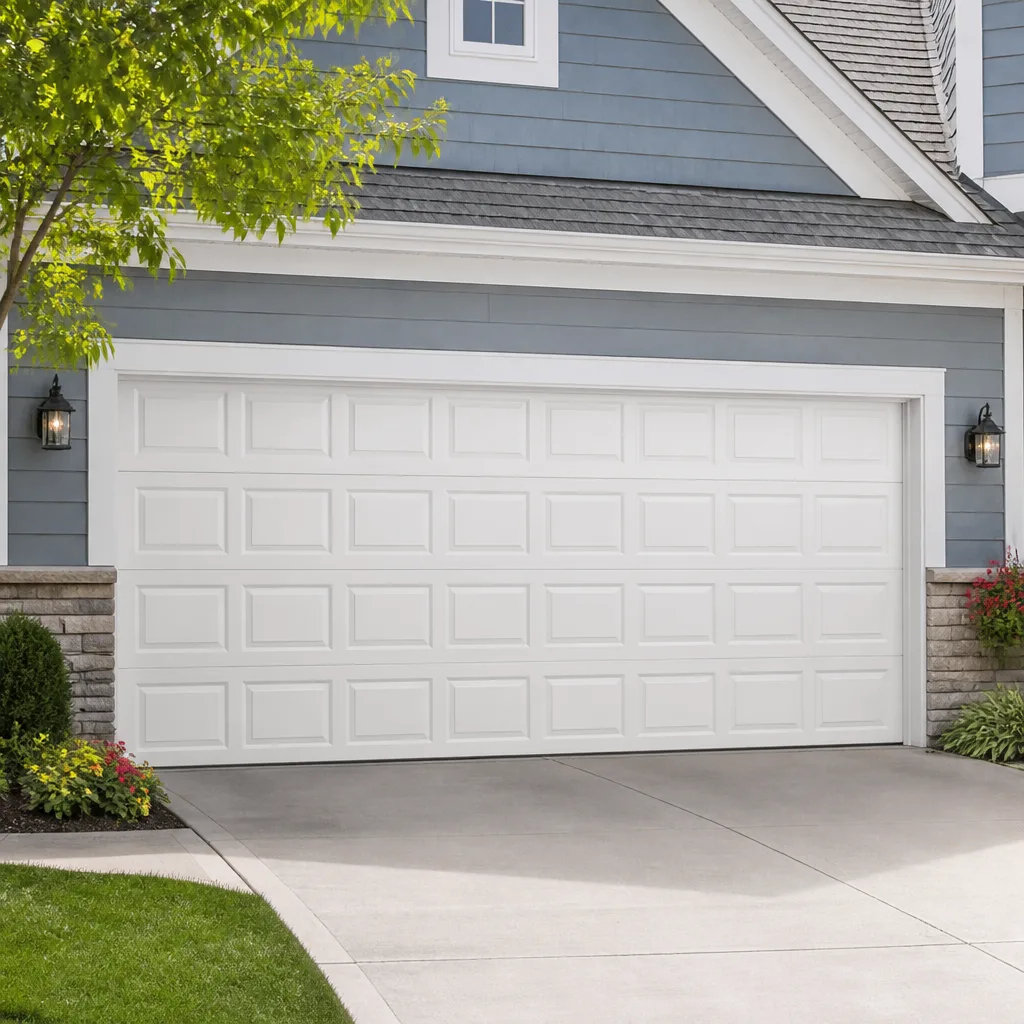 Raised-panel steel
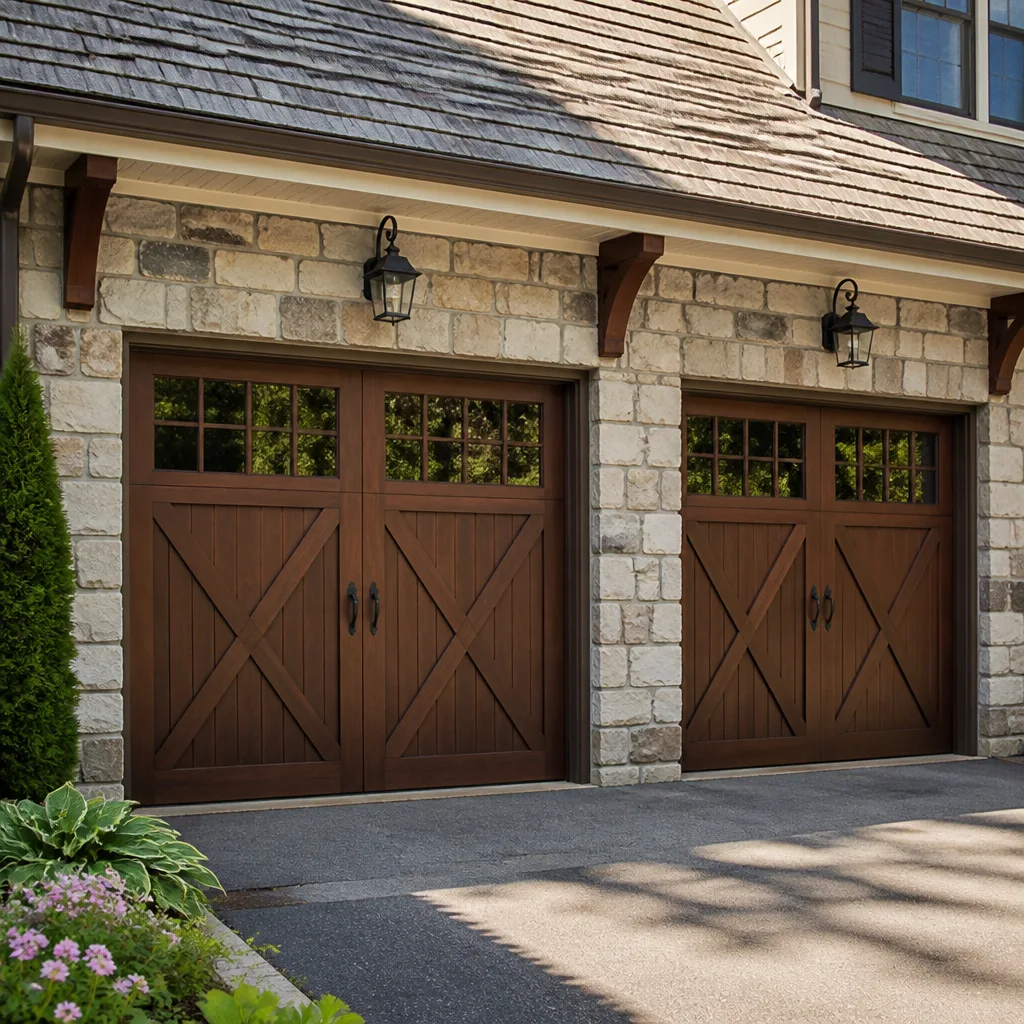 Carriage house
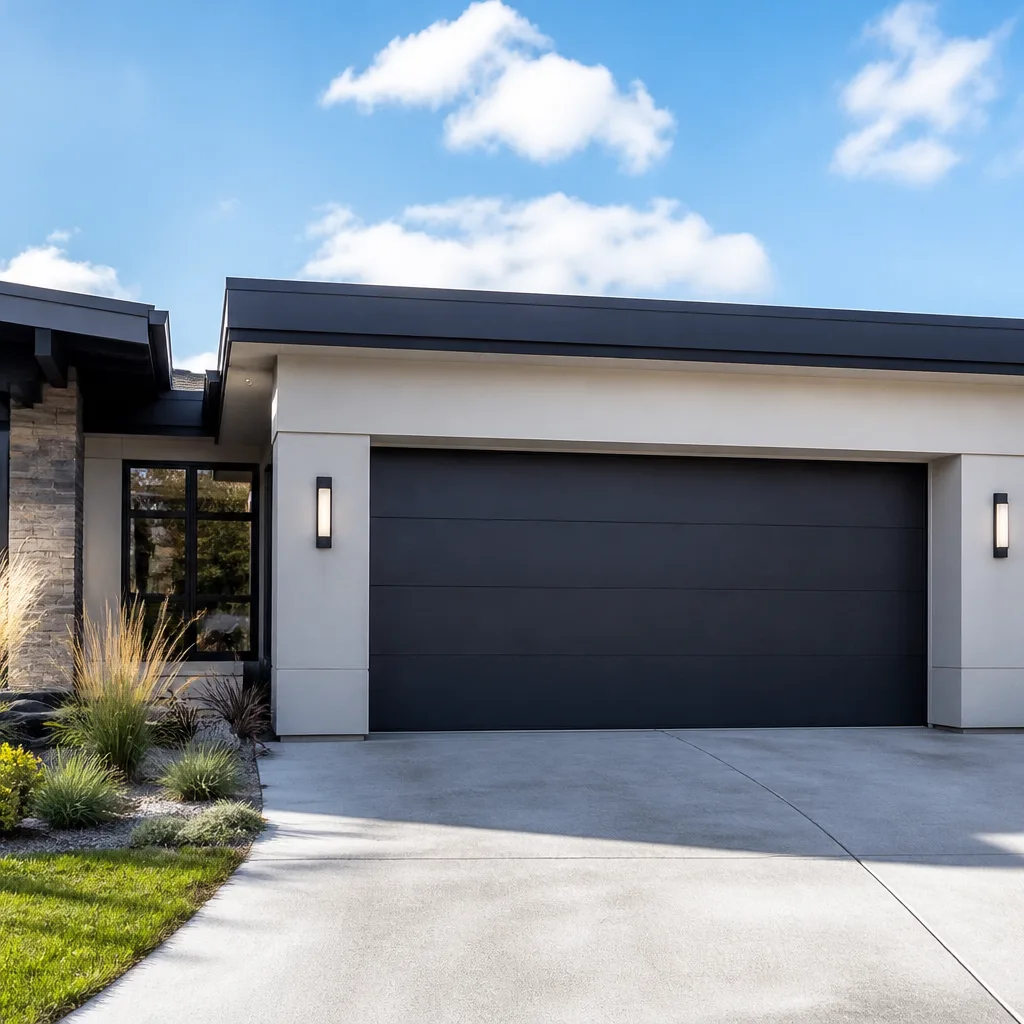 Modern flush
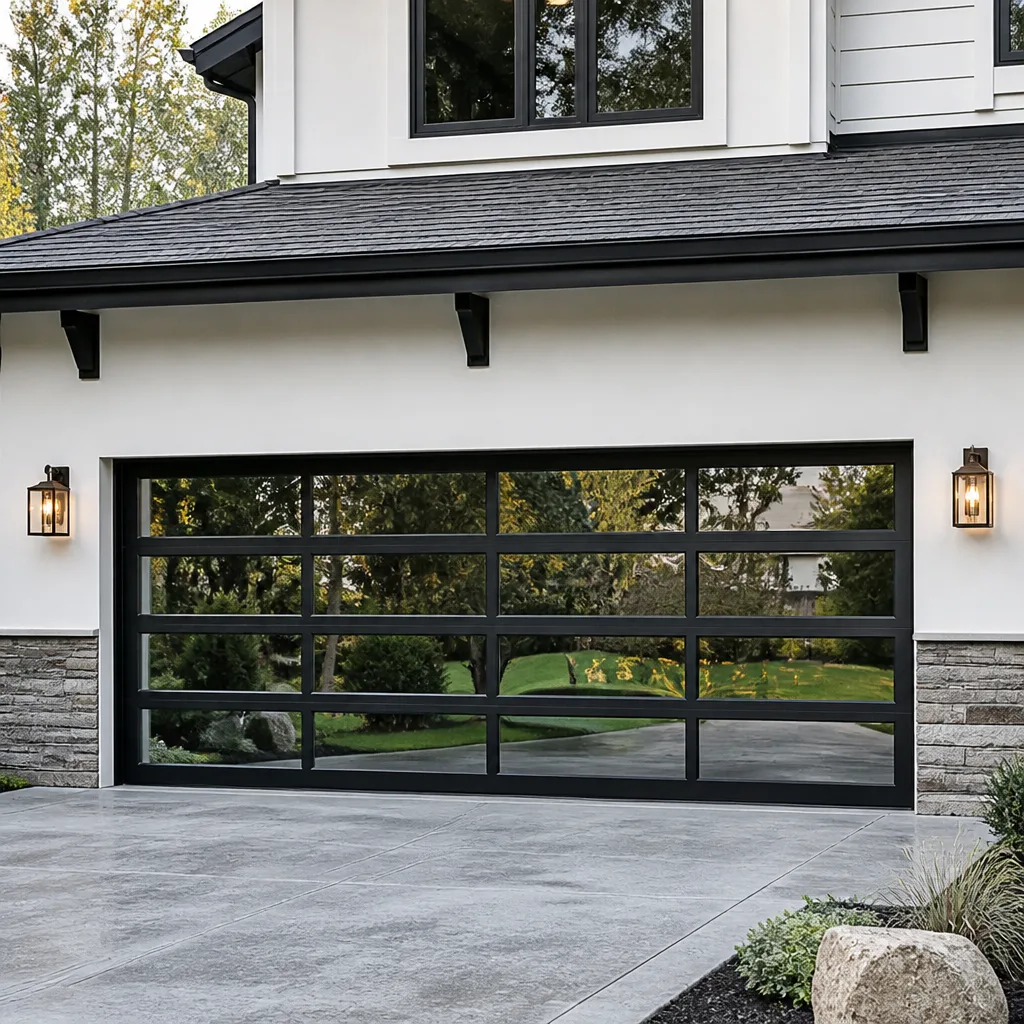 Full-view glass
 LiftMaster openers
 Chamberlain openers
Full 25-point door and opener safety check with every visit - springs, cables, rollers, tracks, and your LiftMaster or Chamberlain opener included
You get a price before we start. It does not change when the truck arrives.
Get your free estimateSeasonal Garage Door Care for Fort Pierce: Year-Round Homeowner’s Guide
In Fort Pierce, the most damaging season for your garage door isn’t the one with the worst storms. It’s the stretch from October through December, when humidity drops, nights cool into the 60s, and torsion springs calibrated during sweltering July heat quietly lose tension. A spring that held perfectly through hurricane season can snap on a mild November morning, leaving your door dead on the tracks. This guide walks you through what actually happens to garage door hardware in coastal Florida’s subtropical climate, season by season, and what you can do about it before a small problem becomes a door that won’t open at 6 a.m. on a workday. For the complete guide to garage door in Fort Pierce, including deeper dives on each season, see our full resource.
Styles & brands we work with
Quick Answer
Seasonal garage door care in Fort Pierce means different things at different times of year: wet-season prep from June through September focuses on moisture intrusion and surge protection, hurricane-window protocol from June through November demands working manual-release verification, and dry-season audits from November through April are the best time to catch spring tension loss and panel fatigue before failure. We recommend a 20-minute inspection every 90 days, with professional spring and opener service once a year during the dry season.
Table of Contents
- Wet Season Prep (June – September): Moisture, Mold, and Lightning
- Hurricane Window Protocol (June – November): The Manual Release Test
- Dry Season Audit (November – April): Spring Tension and Panel Fatigue
- Spring Transition (April – June): Pollen, Dust, and Track Wear
- Salt Air Management: A Coastal Hardware Rotation Schedule
- Brand-Specific Care Notes: LiftMaster, Chamberlain, Genie, and Clopay
- Common Mistakes to Avoid
- When to Call a Professional
- Frequently Asked Questions
- The Bottom Line
Wet Season Prep (June – September): Moisture, Mold, and Lightning
Fort Pierce’s wet season delivers 40 to 60 inches of rain in four months, and the humidity doesn’t just settle on the surface of your door. It works its way into every seam, seal, and exposed piece of metal. The bottom seal, or astragal, is the first casualty. When standing water pools at the base of a closed door, the rubber compound used in most bottom seals absorbs moisture, expands slightly, and begins to lose its flexibility. By September, a seal that was supple in May will be stiff, cracked, and no longer making full contact with the concrete. That gap isn’t cosmetic. It lets rain in, sure, but it also provides a highway for the insects, lizards, and the occasional snake that Fort Pierce homeowners know too well.
What we see most often in Fort Pierce garages during wet season is less dramatic but just as damaging: rust forming on the bottom bracket plates and roller stems. Florida’s relative humidity stays above 80% for months at a time, which means unprotected steel parts are in a near-constant state of moisture exposure. Galvanized hardware can hold up for a few seasons, but builder-grade components installed on a production-home Clopay or Craftsman door often start showing surface rust within three years.
Here’s a wet-season inspection routine you can do in about 15 minutes:
- Check the bottom seal. Close the door and look from inside. Any daylight visible under the seal means water and pests are getting in. Run your hand along the inside edge of the seal after a heavy rain. If it feels spongy or you can squeeze water out of it, it needs replacement.
- Look for rust on bolts, brackets, and roller stems. Use a flashlight. Focus on the bottom two panels, where splash-back from rain hits hardest. Light surface rust can be brushed off and treated. Deep pitting means the bracket is nearing failure and should be replaced.
- Test the opener’s auto-reverse sensors. The eyes at the bottom of the track get fogged by condensation in a Fort Pierce summer. Wipe the lenses with a dry cloth and make sure the small LED indicator lights stay solid and steady.
- Check the opener’s circuit board for signs of surge damage. This isn’t visible from the outside; but if your opener starts acting erratically after a summer thunderstorm, that’s your tell. The fix is a surge protector installed at the outlet, not just the circuit board itself. Florida’s lightning season runs June through August, and openers from LiftMaster, Chamberlain, and Genie all rely on solid-state electronics that are vulnerable to power spikes. In our experience, an afternoon thunderstorm is behind a high percentage of the “my remote stopped working” calls we get in Fort Pierce during wet season.
While humidity is an invisible enemy, it’s also the cheapest problem to address. Rust-inhibiting spray costs about eight dollars at any hardware store in Fort Pierce, and coating your bolts and brackets once at the start of wet season will pay for itself when those same bolts hold tight through the next decade of storms.
Hurricane Window Protocol (June – November): The Manual Release Test
Every garage door installed in St. Lucie County is required to meet wind-load standards, and a properly braced door is a critical part of the home’s envelope during a storm. But there’s a piece of hurricane preparedness that most Fort Pierce homeowners skip: actually knowing how to use the manual release when the power is out. When the electricity goes during a hurricane, an automatic opener becomes a dead weight, and the only way to open or close the door is the red emergency release cord hanging from the opener rail. If you’ve never pulled it, hurricane season is not the time to learn.
The manual release test takes five minutes and should be done in June, then again at the peak of the season in September:
- Close the door completely. Disengage the automatic opener if it’s currently active.
- Locate the red emergency release cord. It hangs from the trolley on the opener rail, usually about two feet above the door when the door is closed.
- Pull straight down. You’ll hear a click and feel the spring-loaded lever disengage. The trolley separately releases, meaning the door is now disconnected from the opener carriage.
- Lift the door manually. It should lift smoothly without difficulty. A balanced door will stay open on its own about waist-high. If it’s heavy, slams shut, or won’t stay up, you have a spring tension problem that needs attention before a storm arrives.
- Close the door manually. Re-engage the opener by pulling the cord toward the opener motor and running the opener until the trolley re-latches. Test that automatic operation is back to normal.
Document your test. Take a photo of the release cord location, or even a short video of yourself pulling it. In the low-light, high-stress minutes of a hurricane power outage, having already performed the motion once will save you real frustration. At Palmetto Garage Door Service home, we field calls after every storm from Fort Pierce homeowners who have lived in their homes for years but never once checked their manual release. A pre-season test is the difference between a quick, calm re-engagement and a panicked call in the middle of an active outage.
Dry Season Audit (November – April): Spring Tension and Panel Fatigue
The dry season is the best window for serious garage door work in Fort Pierce, and it’s also the season that catches the most homeowners off guard. If you’re planning repairs, our complete garage door repair guide for Fort Pierce homeowners covers what to expect. The spring system on a typical residential door is calibrated to the ambient temperature at installation. Florida springs are installed in heat, when the metal is expanded and the coil is under less apparent tension. When October and November bring cool, dry air, the metal contracts. The spring’s effective tension decreases. For a door that was already marginal, that temperature swing is enough to push it over the edge. A spring that’s been quietly losing strength all summer gives up entirely on the first 55-degree morning in December.
The dry season is also when panel fatigue becomes visible. Summer’s daily expansion and contraction cycles stress the hinge connections and panel seams on every door from premium Clopay models to builder-grade units. By January, you can see the telltale signs: hairline cracks at the panel corners, warping along the bottom panel, and doors that sit slightly cockeyed when closed. Catching these early means a cheap hinge replacement or a panel refit. Missing them means a full door replacement by spring.
Dry season audit checklist:
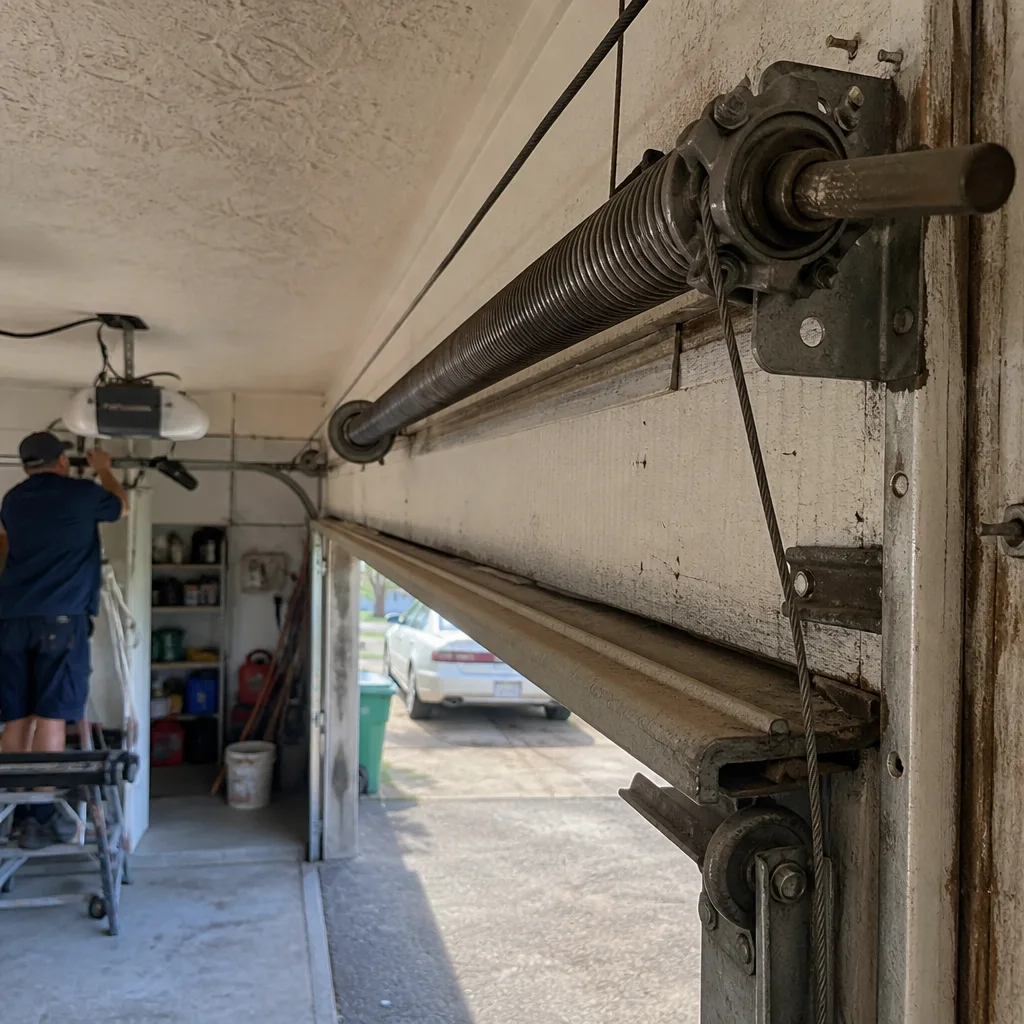
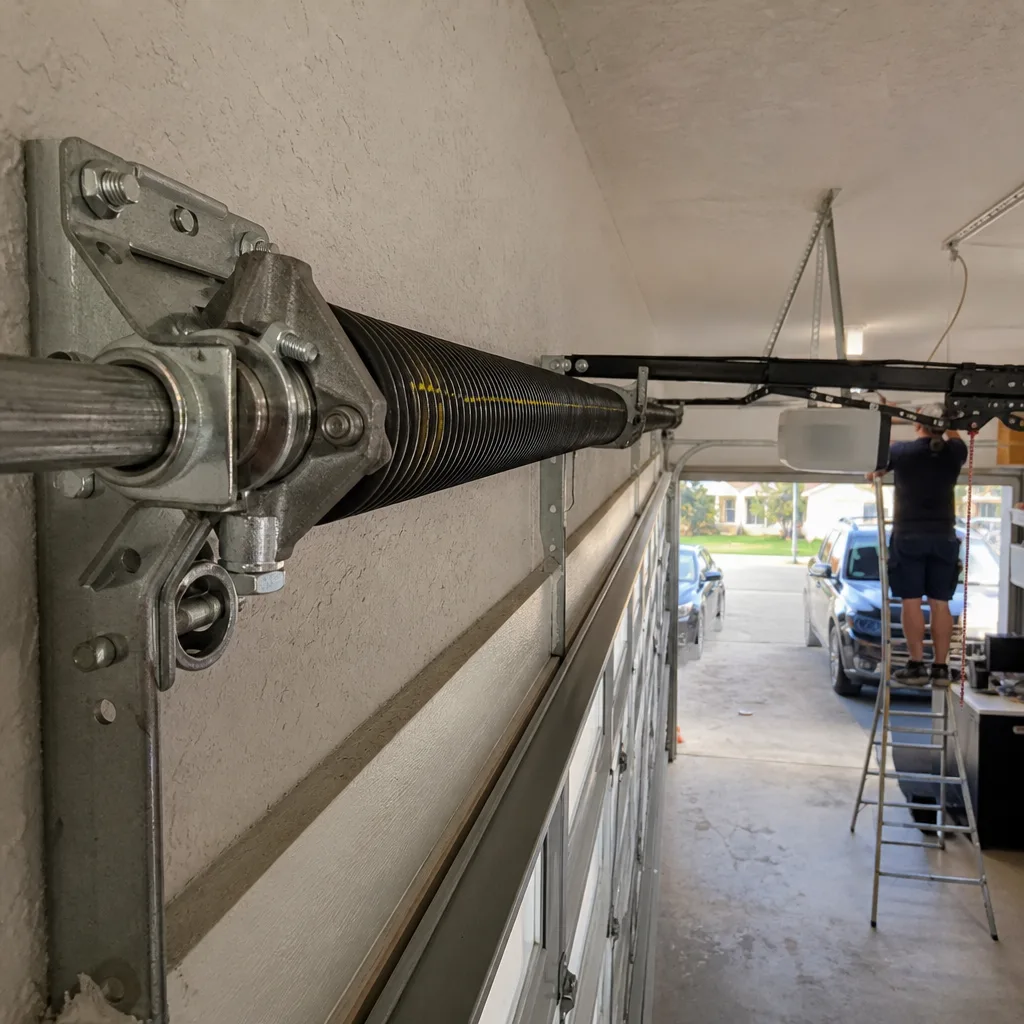
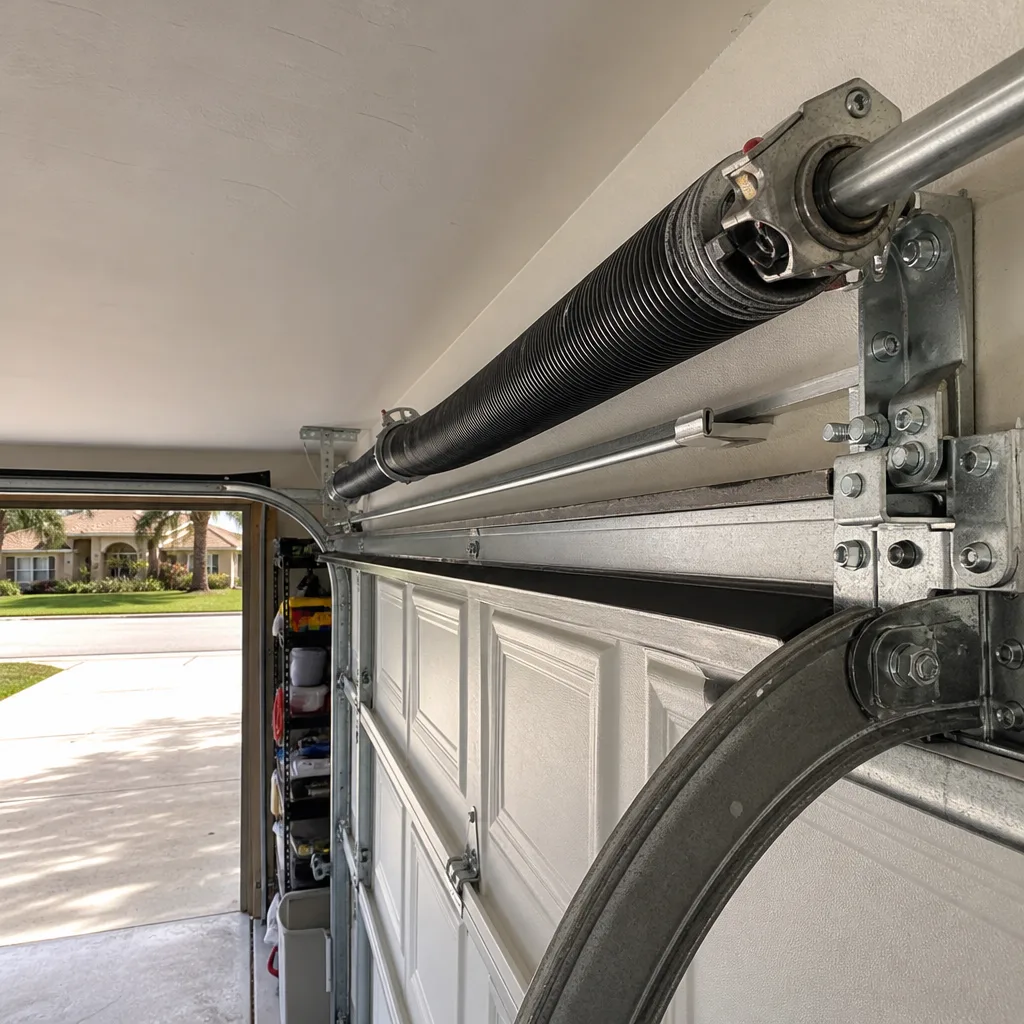
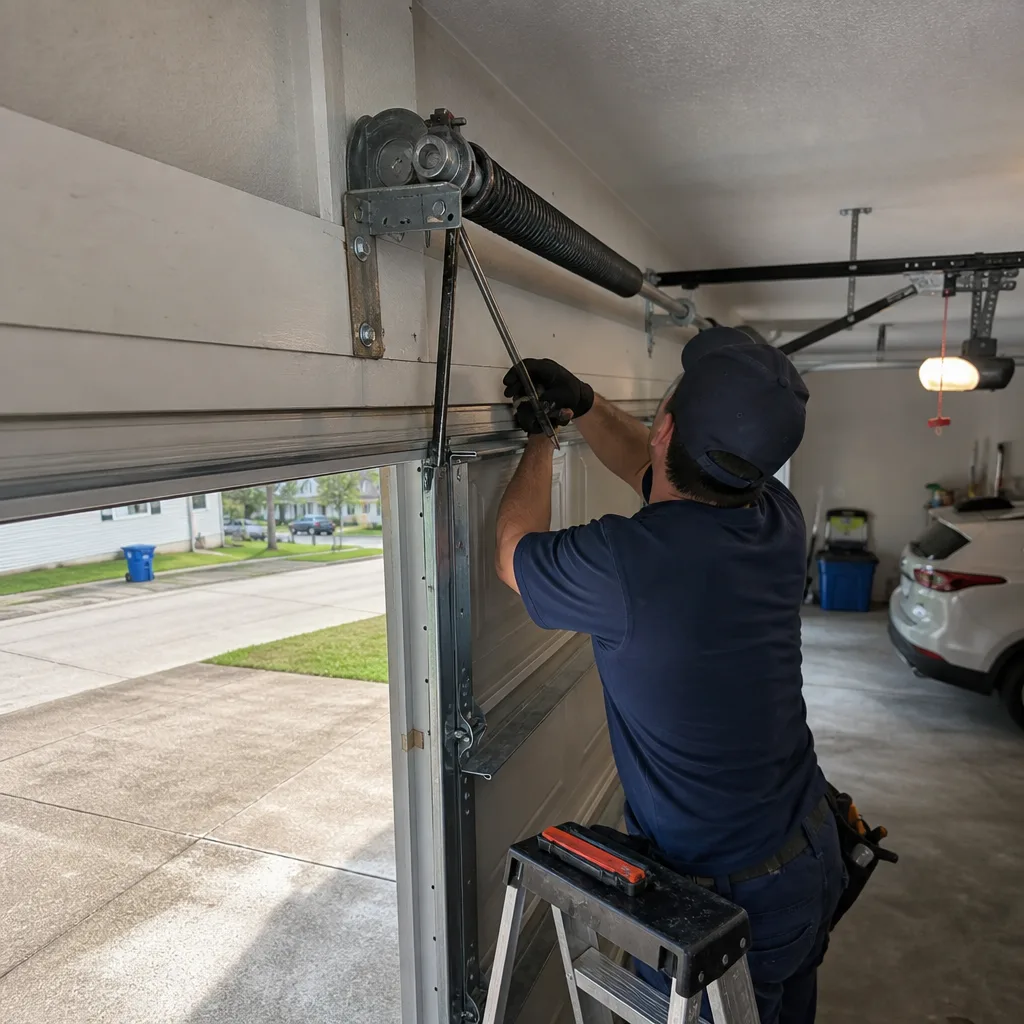
- Spring inspection. Look at the torsion spring (the horizontal spring above the closed door). A healthy spring shows no gaps in the coil. If you see a visible separation or a rough, corroded surface, the spring is nearing failure. If you have extension springs (the two springs that run parallel to the tracks), look for stretch. They should be taut, not visibly elongated.
- Hinge and roller wear. With the door open, inspect each hinge point. Loose rivets, visible gaps between the hinge plate and door, or rollers with flat spots on their wheels are all signs of wear. Rollers should spin freely; if one drags, it’s putting additional load on the opener motor.
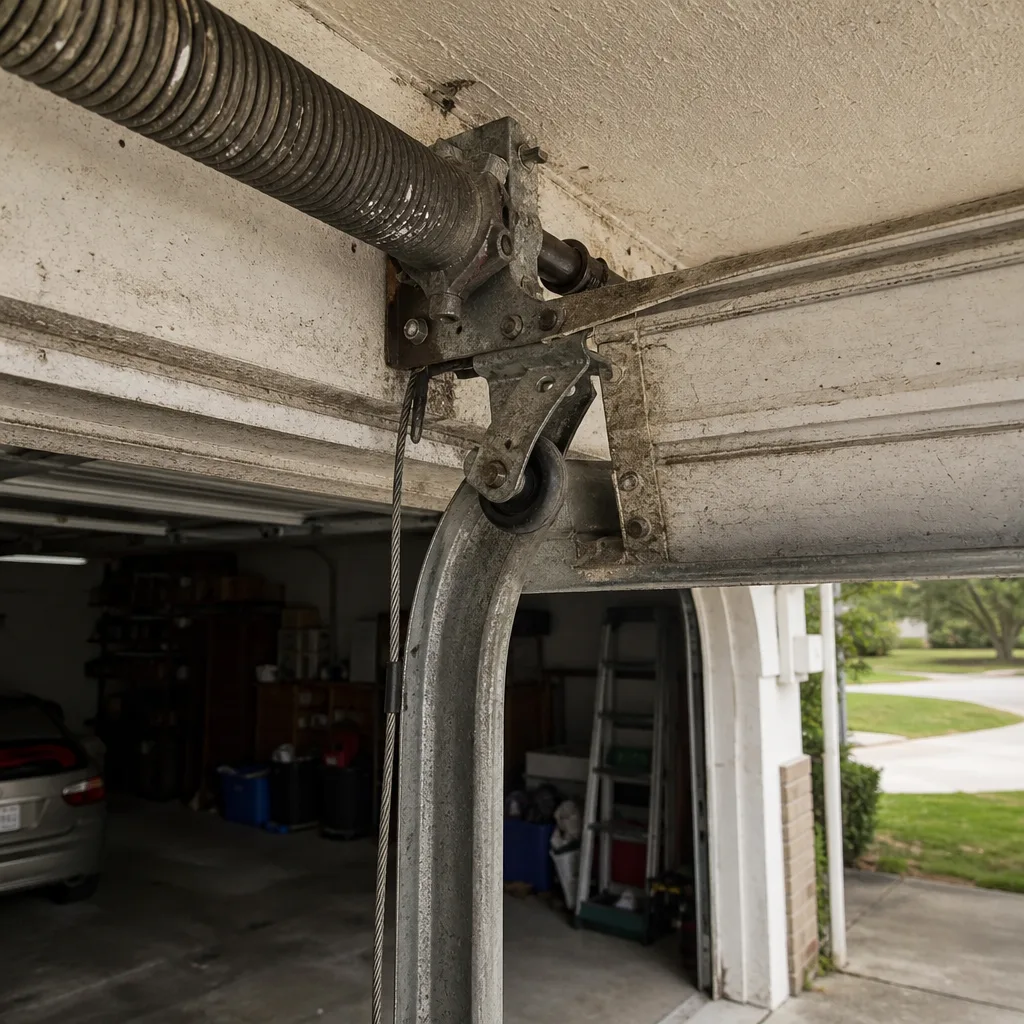
- Cable condition. The cables that run alongside the door and wrap around the bottom brackets should show no fraying, no rust-colored staining, and no slack. A frayed cable is a time bomb. When it parts, the spring tension released through the other components can cause serious damage, and this is why garage door repair in Port Saint John is best handled by someone who does this work every day.
- Panel alignment. Stand outside with the door closed and look at the seams between panels. They should be parallel and tight. Gaps, sagging, or light showing through at the corners means the door is out of square, and continuing to run it only accelerates the wear.
Spring service is the single best dry-season investment. A professional spring replacement or re-tensioning runs less than a full door replacement, and doing it before failure means you’ll never be the person with a door stuck half-open on a cold January night. If you’re in Fort Pierce and hear a sharp, gunshot-like bang from the garage on a chilly morning, that’s a spring. Call someone who knows what they’re looking at.
Spring Transition (April – June): Pollen, Dust, and Track Wear
Fort Pierce’s spring transition is subtle, but it matters for garage door health. April through June is when oak pollen, pine pollen, and fine dust from dry roads settle on everything, including the inside of your garage door tracks. In Florida’s subtropical environment, that pollen combines with residual humidity to form a sticky paste inside the horizontal track channels. Left undisturbed, this paste acts as an abrasive, grinding against the rollers every time the door cycles. The result is accelerated roller wear, increased friction on the opener motor, and a door that sounds like it’s working harder than it should.
The cheapest and most effective thing you can do in spring is clean the tracks. Not lubricate them, which is a common mistake. Track channels should be wiped clean and left dry. The lubrication belongs on the rollers, hinges, and the torsion spring, never inside the track itself. Putting grease in the track is like putting oil on a brake pad: it attracts dirt and makes the problem worse.
A spring transition routine:
- Wipe the tracks clean with a dry rag or a rag lightly dampened with mineral spirits. Get into the vertical tracks too, not just the horizontal ones. Check for visible buildup, black streaks (roller material shedding), or any deformation in the metal.
- Inspect the rollers. Nylon rollers, common on premium Clopay and Amarr doors, should be smooth and free of cracks. Steel rollers show wear by developing flat spots or rough edges. Any roller that doesn’t spin by hand needs replacement, even if it looks fine from a distance.
- Lubricate the moving parts. Use a garage-door-specific lubricant or white lithium grease on the roller bearings, hinge pins, and the torsion spring. Avoid WD-40 as a primary lubricant; it’s a moisture displacer, not a lasting lubricant. Two or three passes on the spring while the door is closed is enough. But don’t attempt to lubricate cables or the emergency release mechanism; keeping those dry is the goal.
- Check the weatherstripping on all sides. The side and top sealing strips take UV abuse all year, and spring is when you’ll notice brittleness or tears that developed over winter. A missing seal on the south-facing side of your door is common in Fort Pierce, where the late afternoon sun hammers the exterior.
This is also the season when opener sensors start acting up more frequently, particularly on older Chamberlain and Genie units. The transition from dry air back to humid air causes condensation on the sensor lenses, and a hairline of moisture is enough to interrupt the beam. A quick lens wipe fixes most of these false “obstruction” signals, but if they’re happening weekly, the sensor itself may be weakening.
Salt Air Management: A Coastal Hardware Rotation Schedule
If your home in Fort Pierce sits within five miles of the Indian River Lagoon or the Atlantic, salt air is doing quiet work on your garage door hardware all year long. Salt air corrosion doesn’t announce itself. It starts as a white, powdery bloom on zinc-plated bolts, then progresses to pitting and flaking on painted brackets, and eventually eats through the thinner metal components like cable clamps and roller brackets. Homes east of U.S. 1, in the neighborhoods around Fort Pierce Inlet and South Hutchinson Island, see this corrosion two to three times faster than homes on the west side of town.
The fix isn’t a one-time cleaning. It’s a rotating inspection schedule that catches salt air damage in its infancy. Here’s what works for coastal Fort Pierce homes:
- Every 60 days: Rinse exterior hardware with fresh water. Not a pressure wash, which forces water into bearings and seals, just a garden hose or a bucket of water. Pay attention to the bottom brackets, the track bolts, and the handle and lock mechanism. This removes the salt film before it has time to react with the metal.
- Every 90 days: Inspect the cables visually for rust-colored staining, which signals interior corrosion even if the outside of the cable looks intact. Check the torsion spring cone and set screws for white oxidation. Light oxidation can be cleaned; heavy oxidation means the part should be replaced.
- Every 6 months: Apply a corrosion-inhibiting spray, like Boeshield T-9 or CRC Marine, to all accessible hardware. This includes hinge bolts, track brackets, spring anchor points, and the cable drums. Avoid spraying into the track channel itself. A thin coat is plenty; too much product becomes a dirt magnet.
- Annually: Have a professional inspect the internal components. The rollers, especially if they are the original builders’ steel rollers, may need to be upgraded to sealed nylon-bearing rollers. For oceanfront and riverfront homes, we often recommend replacing builder-grade hardware with marine-grade or stainless components at installation, because the upcharge pays for itself in about four years of avoided corrosion damage.
If you’re within sight of the water, don’t wait for visible rust to act. By the time you see it, the part is already compromised. The rotating schedule above keeps salt air at a chronic nuisance level rather than an acute failure level. It’s also worth checking your opener’s warranty terms. Many manufacturer warranties for LiftMaster and Chamberlain openers exclude damage from “coastal environmental conditions” unless the unit is installed with specific corrosion protection. A little diligence on the front end keeps you out of a warranty dispute later.
Brand-Specific Care Notes: LiftMaster, Chamberlain, Genie, and Clopay
Different brands respond to Fort Pierce conditions in different ways, and we’ve seen enough of each to know where they typically struggle and where they hold up. This matters because the right seasonal care for a Clopay door is not the same as the right care for a Chamberlain opener.
LiftMaster openers are known for their DC motors and MyQ smart-home integration, and their circuit boards are well protected against moisture, but they’re no exception to lightning surge damage. If you’re running a LiftMaster in a Fort Pierce garage with older wiring, install a surge suppressor at the outlet before wet season. It’s a $20 part that routinely prevents a $300 circuit board replacement. The belt-drive models also benefit from a belt tension check once a year; a loose belt amplifies the sound of motor strain and leads to premature belt wear.
Chamberlain openers, which share DNA with LiftMaster, have their own pattern in coastal areas: capacitor failure during brownouts. When Florida Power & Light cycles power during summer thunderstorms, older Chamberlain units in Fort Pierce are disproportionately represented in our service calls. A good-sized capacitor replacement is cheap and restorative, but a recurring capacitor failure often indicates the motor is drawing more current than it should, which points to a track or spring issue that needs addressing first.
Genie openers are a mixed bag in Florida’s humidity. The screw-drive models, which are common in older Fort Pierce homes built in the 1980s and 1990s, suffer in wet season because the screw rail attracts condensation and rusts if it isn’t kept lubricated. The fix is a light coat of lithium grease on the screw drive once a year, but not so much that it drips onto the car. The newer belt-drive Genie models are more forgiving, but the wall consoles on older units are prone to membrane-switch failure from the humidity, so if your wall button works intermittently, that’s likely the culprit.
Clopay doors are generally well built for coastal climates, but even a premium Clopay with a factory finish can develop rust along the interior steel edge if the paint gets scratched during installation or from everyday use. In a salt-air environment, any exposed steel becomes a rust point. Once a year, touch up any nicks or scratches on the door’s interior steel with a matching paint or a rust-inhibiting primer. It’s not about looks, it’s about maintaining the structural integrity of the panel skin.
And here’s the thing: if you have a Chamberlain opener on a Wayne Dalton door, or a Genie on an Amarr, your seasonal care needs don’t change. The routines in this guide apply across all brands. What changes is the failure mode you’ll see first, and knowing what to watch for means you catch problems before they catch you. When you’re scheduling seasonal service, a company that works on eight major brands, including everything from builder-grade Craftsman to premium Clopay, Amarr, and Wayne Dalton, can do the whole job in one visit. That’s the difference between a specialist and a company that’s guessing.
Common Mistakes to Avoid
- Lubricating the track. Grease in the track channel attracts dirt, pollen, and dust, which accelerates roller wear and makes the opener work harder. Tracks should be clean and dry. Lubrication belongs on rollers, hinges, and the spring only.
- Waiting for a noise to get worse. A grinding, scraping, or popping sound from the door is not something that resolves itself. In Fort Pierce’s climate, a little noise in June is a failed roller by October. The longer you wait, the more metal particles shed into the track and the more strain lands on the opener motor.
- Ignoring the bottom seal until water is visible inside. By the time you see standing water on the garage floor, the seal has been compromised for weeks or months. Insects and humidity have already had access. Check the seal every 90 days during wet season, not just when it’s raining.
- Not labeling the breaker for the opener. In a hurry to shut things down before a storm, or to reset a tripped opener, homeowners fumble around in the dark trying to identify the right breaker. Label it now. It takes 30 seconds and saves real frustration later.
- Using the wrong lubricant. WD-40 is a solvent, not a long-term lubricant. It will displace moisture temporarily, but it doesn’t provide lasting wear protection for rollers or springs. Use a garage-door-specific lubricant or white lithium grease.
- Assuming a hurricane-rated door doesn’t need pre-season checks. Wind-load rating has to do with the door’s structural performance under wind pressure. It says nothing about the door’s balance, spring health, or the state of your manual release. A hurricane-rated door that’s been neglected is still going to fail when you need it most.
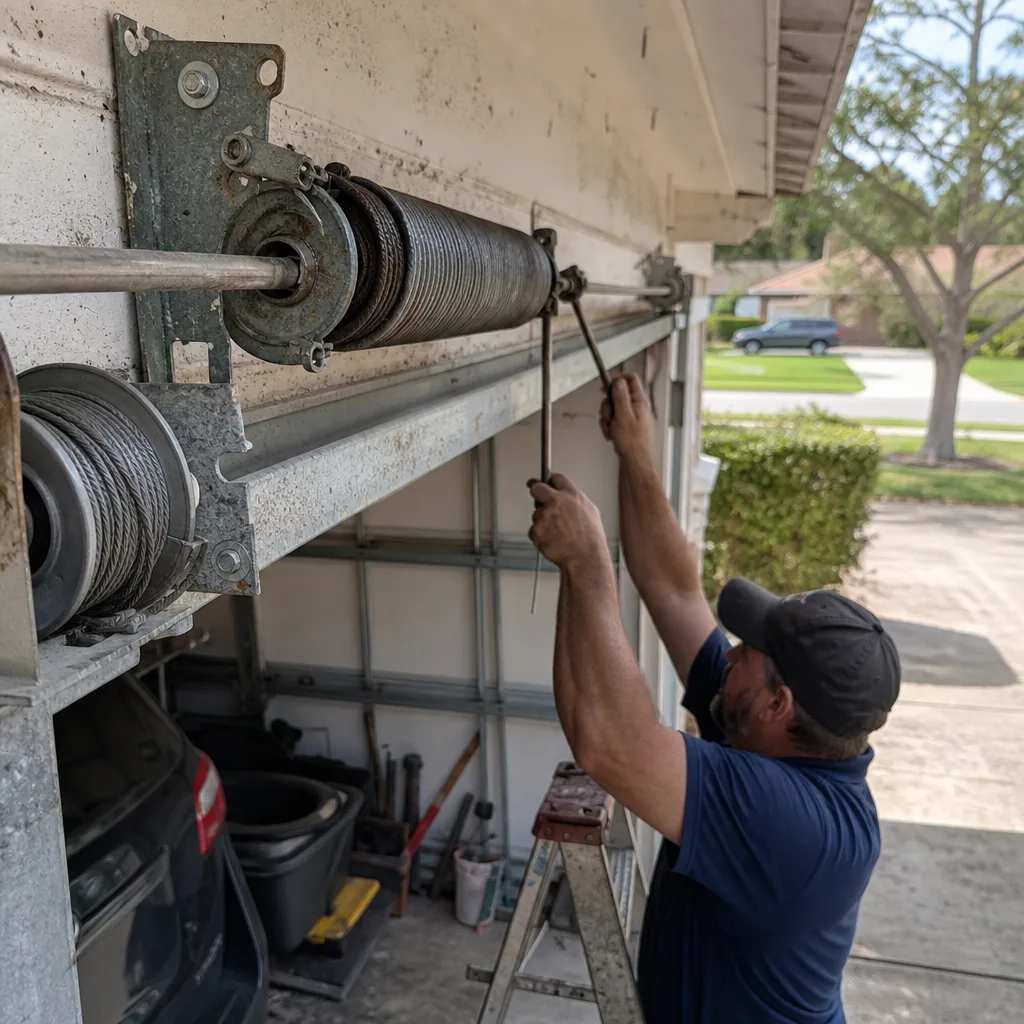
- Fixing a spring as a DIY project. Torsion springs are under hundreds of pounds of tension. The task of winding or unwinding them without the proper tools and training is one of the most dangerous home repairs a person can attempt. We’ve replaced springs for homeowners in Fort Pierce who tried and were lucky enough to walk away with just a broken wrench. Not everyone is that lucky. If the spring is broken, call a professional.
When to Call a Professional
There are seasonal routines you can do yourself, and then there are problems that need a trained eye and the right tools. A broken torsion spring is the obvious one; the tension in a wound spring is enough to cause serious injury or death if it releases unexpectedly, and this is exactly the type of repair you don’t touch. But there are quieter signals, too. If you’ve cleaned the tracks, lubricated the rollers, and checked the sensors, and the door still struggles or makes noise, something structural is going on. Maybe the door is out of square, maybe the spring needs re-tensioning, maybe the opener’s logic board is failing. Guessing wastes time and money. If you’re in Fort Pierce and any of these conditions apply, garage door opener repair in Port Saint John is available through our team, and we’ll give you an honest diagnosis. Palmetto Garage Door Service offers free estimates in Fort Pierce. Call (877) 265-2128 and we’ll tell you what’s actually wrong, not what’s easiest to sell.
Frequently Asked Questions
Every six months is right for most homes in Fort Pierce. Lubricate the torsion spring, hinge pins, and roller bearings with a garage-door-specific lubricant or white lithium grease. If your home is within a mile of the Intracoastal Waterway or the beach, consider moving to a four-month schedule, because the salt air degrades the lubricant film faster. The tracks themselves should always be cleaned and left dry.
A basic seasonal service visit, which includes spring adjustment, roller and hinge inspection, track cleaning, lubrication, and balance testing, typically runs between $89 and $149 in the Fort Pierce area depending on the condition of the door and the scope of any small parts that need replacing. More involved work, like a bottom seal replacement or new rollers, adds $30 to $80 to that total, and spring replacement is its own job, usually in the $180 to $340 range. For an exact quote, call (877) 265-2128 and we’ll give you a number before any work starts.
No. At Palmetto Garage Door Service, we quote a price before we start any work, and that number is the number on the invoice. If we find something unexpected during service, we stop, show you what we found, and get your approval before proceeding. You’ll never walk out to the garage to find a larger bill than the one you agreed to.
We stock common replacement parts for the eight major brands we service: LiftMaster, Chamberlain, Genie, Clopay, Amarr, Wayne Dalton, Craftsman, and Raynor. That means springs, rollers, cables, hinges, weatherseals, and sensor kits are usually available on the truck during a service visit in Fort Pierce. If a part is unusual or specific to a particular model, we can source it and schedule a return visit, and we’ll tell you that upfront before you pay for anything.
Most of the inspection and cleaning items in this guide are DIY-friendly, and we encourage homeowners in Fort Pierce to do them. For more guides & resources on keeping your door running smoothly, visit our blog. The one exception is anything involving the torsion spring. Adjusting, replacing, or even inspecting the spring closely while under tension requires specialized tools, and it’s dangerous to do without proper training. If your seasonal check uncovers a spring issue, leave it alone and call a professional.
For most Fort Pierce homeowners, yes, with a few caveats. Smart openers from LiftMaster and Chamberlain give you remote monitoring and control, which is useful for managing the door during storm season or when you’re away. But in a salt-air environment, the Wi-Fi module and circuit board are exposed to the same conditions as the rest of the opener, so a surge protector at the outlet is non-negotiable. The added humidity and electrical activity during Florida’s summer make a smart opener more vulnerable than the same unit in a drier climate, and a little protection goes a long way.
The Bottom Line
Fort Pierce doesn’t have four seasons, but it has four distinct sets of conditions that shape how your garage door performs, and each one has a specific season-specific alert. Wet season demands moisture and lightning prep. Hurricane season demands a working manual release and a documented test. Dry season is for spring tension and panel hygiene. Spring transition is for cleaning pollen and dust out of the tracks before it becomes an abrasive paste. Salt air, for coastal homeowners, is a constant and slow-moving adversary that rewards a rotating inspection schedule. The annual cost of all of this is modest compared to replacing a door or an opener prematurely, and the habit of catching problems early is what keeps a Fort Pierce garage functional for twenty years instead of ten. If you’d rather have a professional handle it, garage door installation in Port Saint John and seasonal maintenance are available through our team, and we’ll be straight with you about what your door actually needs.
Written by the team at Palmetto Garage Door Service, serving Fort Pierce since 2018.
See the difference
 Before
 After
 Before
 After
 Before
 After