Last updated October 31, 2026
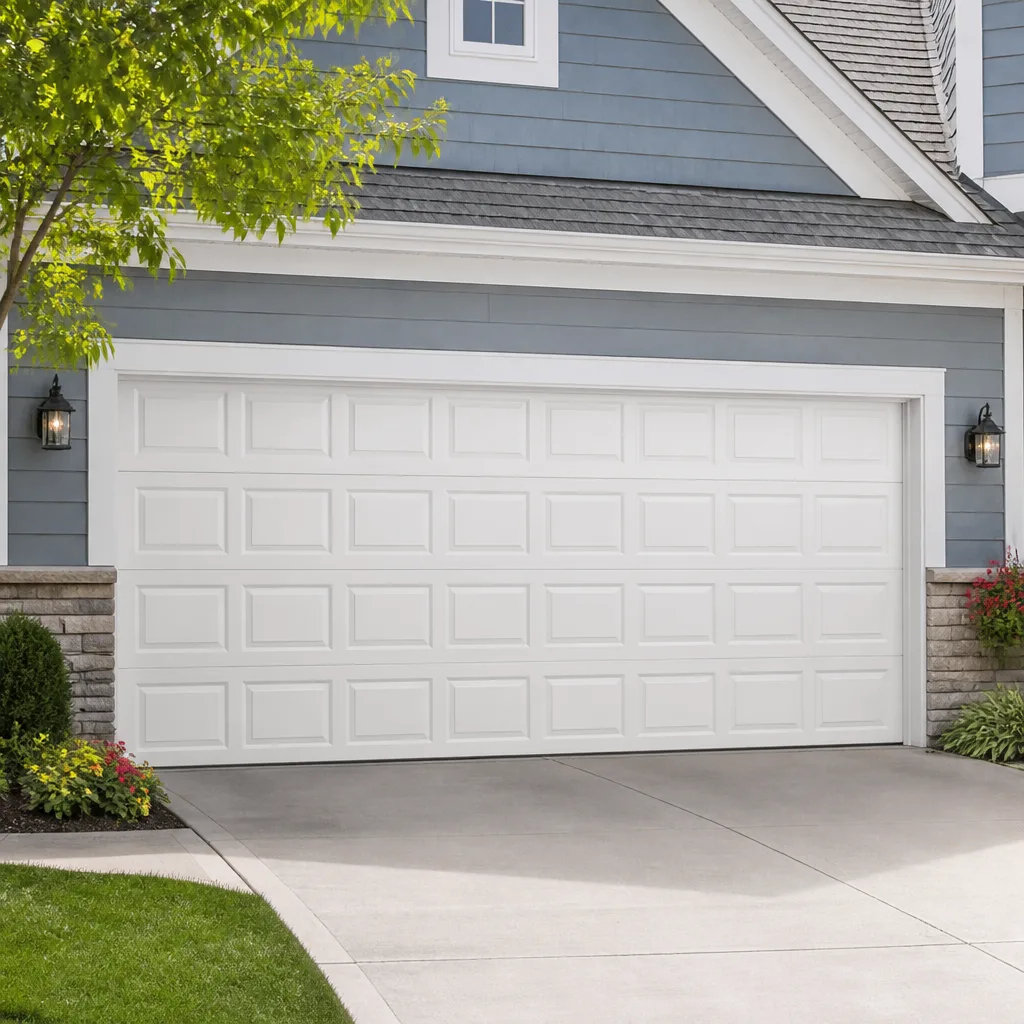 Raised-panel steel
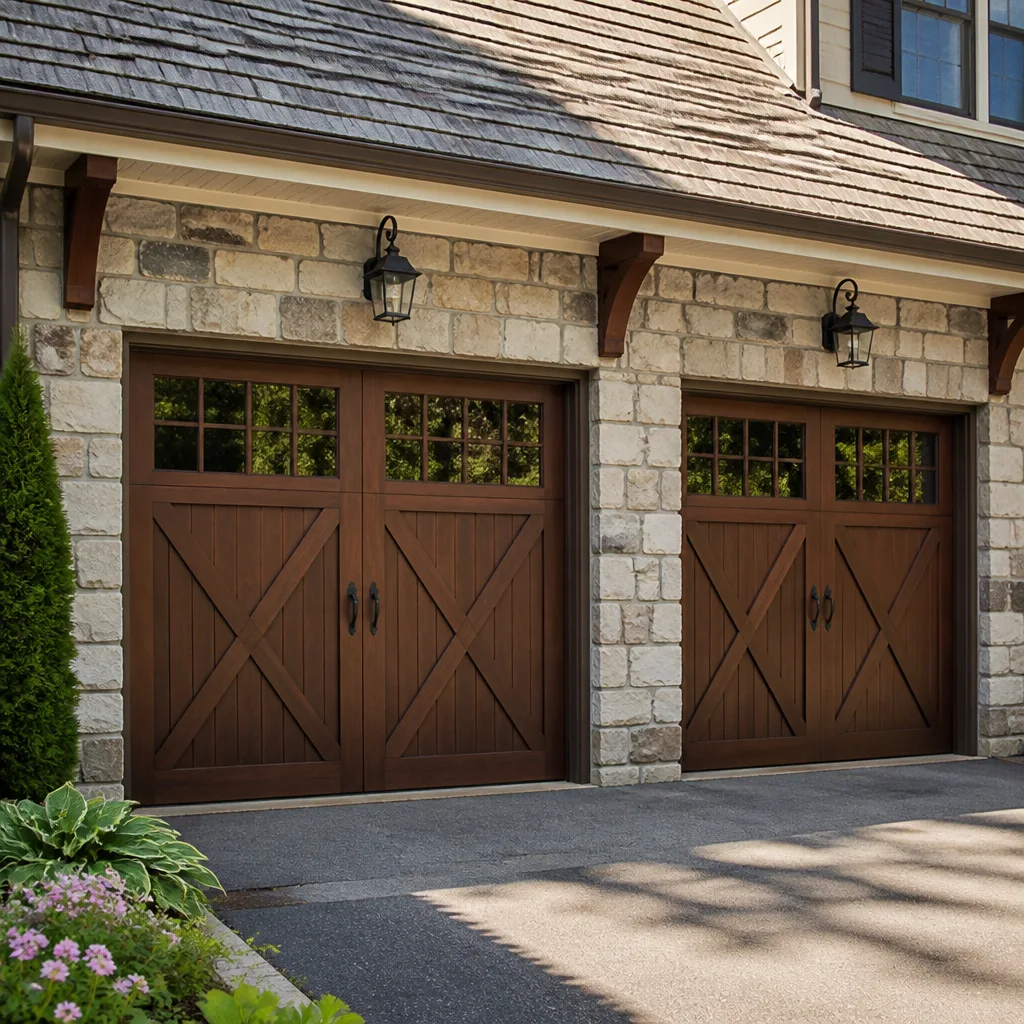 Carriage house
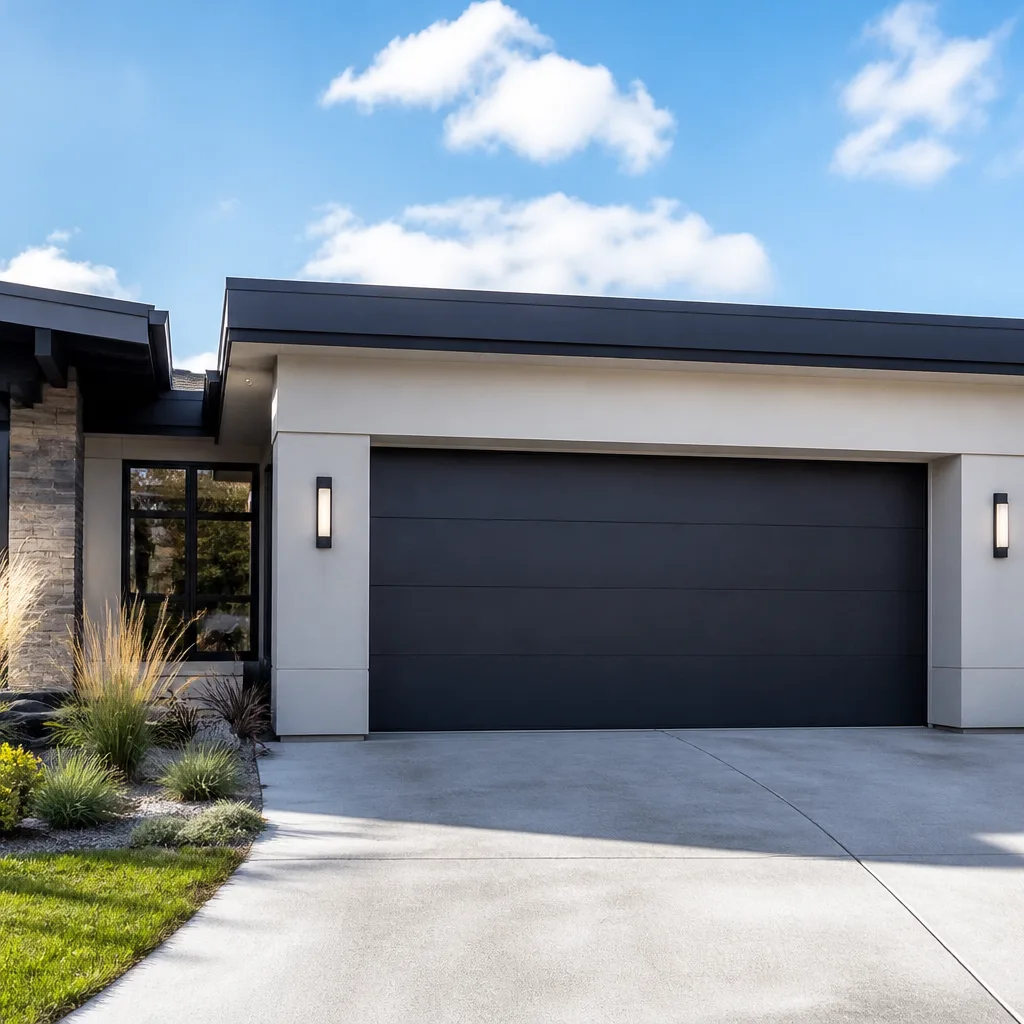 Modern flush
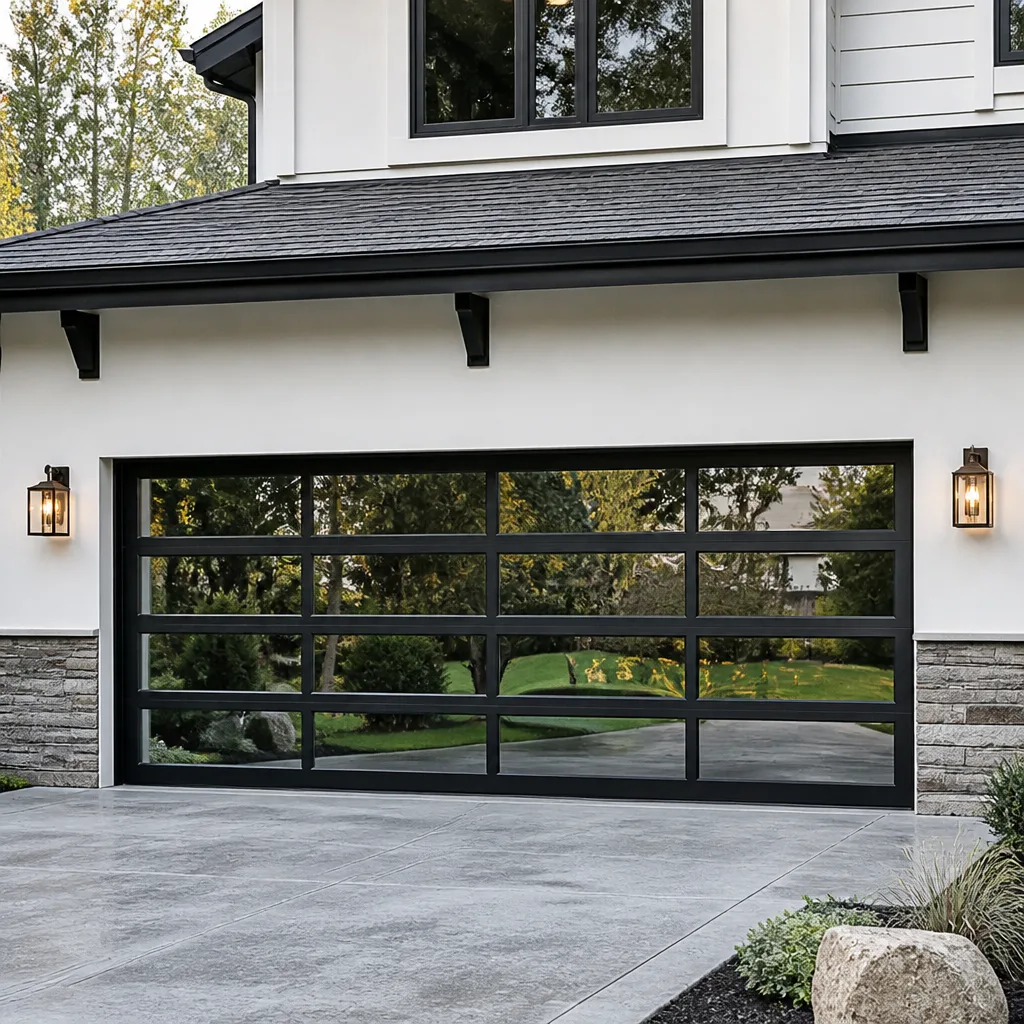 Full-view glass
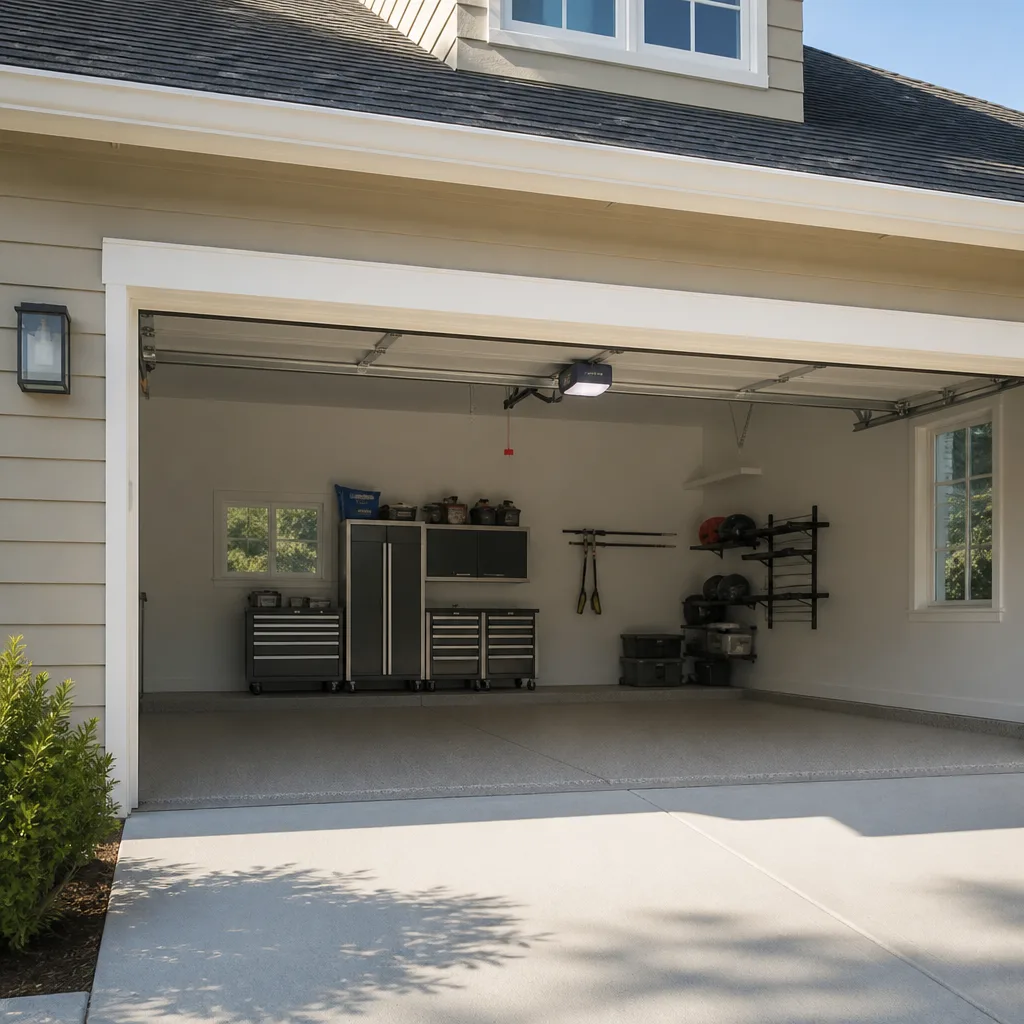 LiftMaster openers
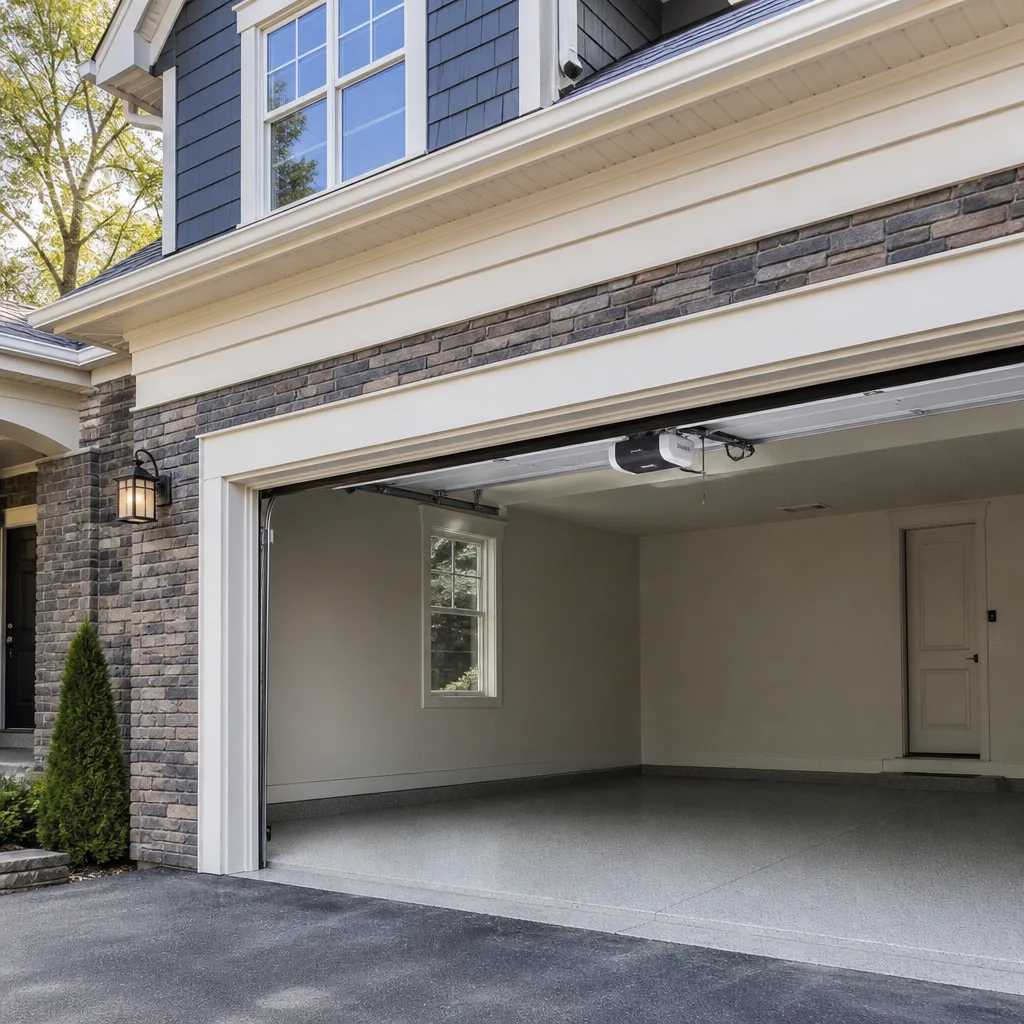 Chamberlain openers
Full 25-point door and opener safety check with every visit - springs, cables, rollers, tracks, and your LiftMaster or Chamberlain opener included
You get a price before we start. It does not change when the truck arrives.
Get your free estimateHow to Hire a Garage Door Contractor in Fort Pierce: A Step-by-Step Guide
Most hiring guides tell you to “get three quotes and compare” – but in Fort Pierce, the real filter is whether a contractor can prove Florida Product Approval compliance and has experience with St. Lucie County permit pulls. We’ve watched a Fort Pierce homeowner pay $1,400 for a new garage door after a hurricane, only to discover the door didn’t carry a Florida Product Approval number. Their windstorm insurer flagged it. The door had to come out. A second full replacement followed. This guide will show you how to avoid that outcome. You’ll learn how to verify a contractor’s state license in under two minutes, what “Florida Product Approved” actually means on a spec sheet, the specific questions to ask about St. Lucie County permits, and how to spot the storm-chaser crews that flood Fort Pierce after every named storm. For more guides & resources, see our full blog.
Quick Answer
Hiring a garage door contractor in Fort Pierce starts with three non-negotiables: verify the company’s Florida DBPR license, confirm the door or opener carries a Florida Product Approval number if it’s an exterior installation, and ask who pulls the St. Lucie County permit. A qualified contractor will answer all three questions directly, in writing, before you sign anything. Then compare quotes on the same door model, spring type, and warranty terms – not just on price.
Styles & brands we work with
Table of Contents
- Step 1: Verify the Florida State License Through the DBPR
- Step 2: Check for Florida Product Approval Compliance
- Step 3: Ask About St. Lucie County Permits Before You Sign
- Step 4: Ask What Brands the Contractor Works On
- Step 5: Compare Quotes the Right Way
- Step 6: Spot Fort Pierce-Specific Red Flags
- Step 7: Know What Happens After You Hire
Step 1: Verify the Florida State License Through the DBPR
Before you let anyone touch your garage door in Fort Pierce, check their Florida state license. This takes less than two minutes and it’s the single most effective filter for separating established local contractors from unlicensed operators. The Florida Department of Business and Professional Regulation (DBPR) maintains a public database at myfloridalicense.com. Every legitimate garage door contractor in St. Lucie County carries a specialty contractor license. Here’s the exact process:
- Go to myfloridalicense.com and click “Verify a License.”
- Enter the contractor’s name, company name, or license number.
- Confirm the license category shows “Garage Door” or “Specialty Contractor” – not just a general contractor classification.
- Check the license status shows “Current, Active” – not expired, revoked, or inactive.
- Look at the license issue date. A license issued three months ago raises different questions than one issued twelve years ago.
We’ve had Fort Pierce homeowners call us after an unlicensed handyman pulled their torsion spring, fixed it wrong, and disappeared. The repair held for a week. Then the door came off its track at 6 a.m. with two cars inside. A DBPR check would have caught that before the first dollar changed hands. Ask the contractor for their license number on the first call. If they hesitate, deflect, or say they’re “exempt,” end the conversation.
One more detail: in Florida, a garage door contract in excess of $500 requires a written agreement. If your contractor is doing a licensed, permitted job, they already know this. If they quote you over the phone for $1,800 and never put anything on paper, that’s a signal the license isn’t real either.
Step 2: Check for Florida Product Approval Compliance
This is where Fort Pierce differs from most of the country. Florida requires exterior components on homes to carry a Florida Product Approval number – a certification that the product has been tested for wind load, water intrusion, and impact resistance under the state’s building code. Our Seasonal Garage Door Care for Fort Pierce: Year-Round Homeowner’s Guide covers how to maintain that approved door through every season. Garage doors are exterior components. In St. Lucie County, which sits directly in the Atlantic wind zone, that approval isn’t optional. It’s the difference between an insurance claim paid and an insurance claim denied.
“Florida Product Approved” means the door model has been reviewed by the Florida Building Commission and listed in their product database. When a manufacturer submits a door for approval, they provide documentation showing exactly what wind speeds and impact standards that model meets. The approval number appears on the product spec sheet and usually on a label affixed to the door itself.
Here’s why this matters more in Fort Pierce than in inland Florida. St. Lucie County has some of the strictest wind-borne debris region requirements in the state. Garage doors are the largest opening on most homes. When a hurricane hits, a non-compliant door is typically the first point of failure – and the first thing an insurance adjuster checks after the storm. If your door wasn’t Florida Product Approved, the insurer can argue the damage resulted from an improperly rated installation and deny the claim.
Before you sign a contract, ask the contractor for the Florida Product Approval number for the specific door model they’re bidding. Then verify it in the Florida Building Code online database. If the contractor can’t produce it, walk away. Not all contractors bother to check this, and some don’t want you to check it either. The homeowner who paid $1,400 for a non-compliant door in Fort Pierce learned this the hard way. The installer knew the door wasn’t approved. The homeowner didn’t know to ask. The second replacement cost more than the first install.
The rule is simple: for any exterior garage door installation in Fort Pierce, no Florida Product Approval number means no contract.
Step 3: Ask About St. Lucie County Permits Before You Sign
St. Lucie County requires a permit for garage door replacement. Not every contractor handles this the same way, and the differences matter. Before you sign, ask three specific questions:
- Who pulls the permit? The contractor should pull it, not you. A contractor who asks the homeowner to pull the permit is usually avoiding the accountability that comes with a permitted job.
- Who pays for the permit? Permit fees in St. Lucie County for a garage door replacement typically run $50 to $200 depending on the scope. That cost should be listed as a line item on your written estimate, not buried or omitted.
- Who handles the inspection? After installation, the county schedules an inspection. The contractor should coordinate that, be present for it, and fix anything that fails. Ask directly: “If the inspection fails, do you cover the corrections?” The answer should be yes.
In our experience in Fort Pierce, contractors who avoid permits are usually avoiding something else too. Unpermitted work creates a problem when you sell the home – the buyer’s inspector flags it, the title company asks for documentation, and you’re retroactively pulling a permit on work that may not pass current code. That’s a $500 to $1,000 problem you don’t need.
Permit pulls also create a public record of the work. If you’re comparing contractors and one says “we don’t need a permit for this,” you’ve learned something about how they operate. Fort Pierce homeowners should expect a full permitted process on any door replacement. Repair work – like spring replacement or opener repair – generally doesn’t require a permit, but the contractor should still be licensed and working under their DBPR credentials.
Step 4: Ask What Brands the Contractor Works On
Garage doors are not all alike. What’s true for a Clopay door isn’t necessarily true for a Wayne Dalton. The opener logic on a LiftMaster differs from a Genie. A contractor who “works on everything” may mean they work on everything poorly. A contractor who can name the brands they’re certified on – and explain the differences – is the kind of specialist you want in Fort Pierce. See our Choosing the Right Garage Door Brand: A Buyer’s Guide for Fort Pierce for deeper guidance.
At Palmetto Garage Door Service, we’re trained and experienced on eight major brands: LiftMaster, Chamberlain, Genie, Clopay, Amarr, Wayne Dalton, Craftsman, and Raynor. That coverage matters because Fort Pierce homes carry a wide mix. The 1990s ranch home off US-1 may have a builder-grade Craftsman. The new construction in Tradition may have a LiftMaster smart opener with a Clopay door. The 1970s block home in Lakewood Park may still have an original Genie screw-drive opener. A contractor who only knows one or two brands will turn away jobs or, worse, improvise.
Ask the contractor directly: “What brands do you work on?” Then listen to the answer. A specialist will give you a specific list and tell you what they’re certified on. A generalist will say “all of them” and change the subject. If you have a LiftMaster opener, ask if they’ve handled the MyQ smart-home integration. If they don’t know what MyQ is, that’s your answer. If you have a Raynor door, ask about panel availability for your specific model year. Garage doors are all we do, and that focus means faster diagnosis and a correct repair the first time.
Step 5: Compare Quotes the Right Way
Three quotes are only useful if you’re comparing the same job. Most Fort Pierce homeowners compare three different doors, two different spring types, and one quote that doesn’t include permits. Here’s how to make every quote comparable:
- Lock the door model first. Decide on the specific door you want – make, model, insulation R-value, panel style – before you ask for quotes. Then every contractor bids the same door. If a contractor insists on bidding a different model, ask why. Some have legitimate reasons; some are steering you toward inventory they’re trying to move.
- Ask about spring type. Torsion springs cost more than extension springs and last longer. A quote that specifies “extension springs” on a door that should have torsion springs is cheaper for a reason. Confirm the spring type, cycle rating, and whether it’s included in the install price or billed separately.
- Compare warranty terms, not just years. A “10-year warranty” on the door panel is different from a “10-year warranty on parts and labor.” Ask what’s covered, for how long, and whether the contractor’s workmanship warranty is separate from the manufacturer’s product warranty. Some manufacturers require certified installers for the full warranty to apply.
- List every line item. The quote should show the door, springs, tracks, hardware, opener (if included), haul-away of the old door, permit fee, and labor separately. If a quote is one bottom-line number with no breakdown, you can’t compare it to anything.
- Check the opener is included or excluded explicitly. Some quotes include a new opener; some assume the existing one carries over. On a 15-year-old opener, that’s a $400 difference waiting to surprise you.
In Fort Pierce specifically, ask whether the quoted door carries the Florida Product Approval number we covered in Step 2. A lower quote on a non-compliant door is not a better deal – it’s a future insurance claim denial with a bow on it. A $200 difference between quotes often evaporates the moment you equalize for permits, spring type, and product approval.
Step 6: Spot Fort Pierce-Specific Red Flags
After every hurricane season, out-of-state contractors roll into St. Lucie County in pickups with magnetic door signs. They knock on doors in Fort Pierce neighborhoods from Sunrise Boulevard down to Tradition and pitch “storm-proof” garage doors at “one-time pricing.” Then they leave before the first inspection. Fort Pierce has specific red flags that inland Florida doesn’t see as often:
- The contractor has no local address. A Google check shows a PO box, a UPS store, or an address in another state. Legitimate Fort Pierce contractors have a physical presence or a verifiable local track record.
- The truck has out-of-state plates. Not always a dealbreaker, but combined with a storm-chaser pitch, it’s a pattern. Ask how long they’ve worked in St. Lucie County.
- They push a “hurricane season special.” Reputable contractors price by the job, not by the season. Scarcity-driven pricing spikes after a storm; it doesn’t discount.
- They can’t name the St. Lucie County permit process. Ask what the current permit fee is for a garage door replacement. If they pause or guess, they haven’t pulled one here.
- They offer a “no permit needed” discount. As covered in Step 3, that’s not a discount. That’s a liability transfer.
- They request full payment upfront. A deposit of 25% to 50% is normal. One hundred percent before work starts is not. Florida construction law doesn’t require it, and established contractors don’t ask for it.
We’ve cleaned up after enough of these crews to know the pattern. The door works for a season, the contractor’s phone goes dead, and a Fort Pierce homeowner calls us to re-hang a door that was never flashed correctly on day one.
Step 7: Know What Happens After You Hire
Once you’ve verified the license, confirmed the Florida Product Approval, sorted the permit, and locked the quote, the job should follow a consistent sequence. Knowing that sequence keeps the contractor honest and keeps you from wondering whether things are on track:
- Contract and deposit. You sign a written agreement with a detailed scope of work and pay a deposit. The agreement should state the permit fee as a separate line item, the start date, and the payment schedule.
- Material ordering. The contractor orders the door and opener (if applicable) by model number. For non-stock doors, this adds one to three weeks. In Fort Pierce, hurricane-season backlogs can stretch that longer – plan accordingly if you’re replacing before peak storm season.
- Permit application. The contractor files the permit with St. Lucie County. You should receive a copy of the application or permit number. If you don’t, ask for it.
- Installation day. The old door comes out, the new door goes in, springs are tensioned, tracks are aligned, safety systems are tested. On a typical replacement, expect this to take four to six hours. Opener installation and programming adds another hour or two.
- Inspection. St. Lucie County schedules and performs the inspection. The contractor should be present and should correct any deficiencies at no additional cost.
- Final payment. Payment is due after the inspection passes, not before. Any contractor who demands final payment before inspection is out of sequence.
After the job is done, keep your paperwork. The product spec sheet with the Florida Product Approval number, the permit, the inspection sign-off, and the warranty registration all belong in a folder with your other home records. When your windstorm insurer asks for documentation, you’ll have it – and that’s the difference between a smooth claim process and a denied one.
Common Mistakes to Avoid
- Hiring on price alone. In Fort Pierce, a $200-cheaper quote on a non-compliant door can cost you a denied insurance claim after the next storm. Compare equal scope, not just equal price.
- Skipping the DBPR license check. Two minutes on myfloridalicense.com is the cheapest insurance you’ll buy this year. If they won’t give you the license number, that’s your answer.
- Accepting “we don’t need a permit.” St. Lucie County requires a permit for door replacement. A contractor who bypasses it is saving themselves time, not saving you money.
- Ignoring the Florida Product Approval number. If the door spec sheet doesn’t carry the approval, the door doesn’t belong on a Fort Pierce home. This is the error that triggered the $1,400 replacement-to-rereplacement horror story we opened with.
- Comparing quotes on different door models. Three quotes mean nothing if one is a steel pan door, one is a full-view aluminum, and one is a thermally broken insulated door. Lock the model first.
- Hiring a storm-chaser. Out-of-state crews appear after every hurricane season to capture Fort Pierce demand. They leave before inspection day. Local track record matters.
- Paying the full amount upfront. A reasonable deposit is standard. Full payment before the county inspection is not. If a contractor demands it, find another contractor.
See the difference
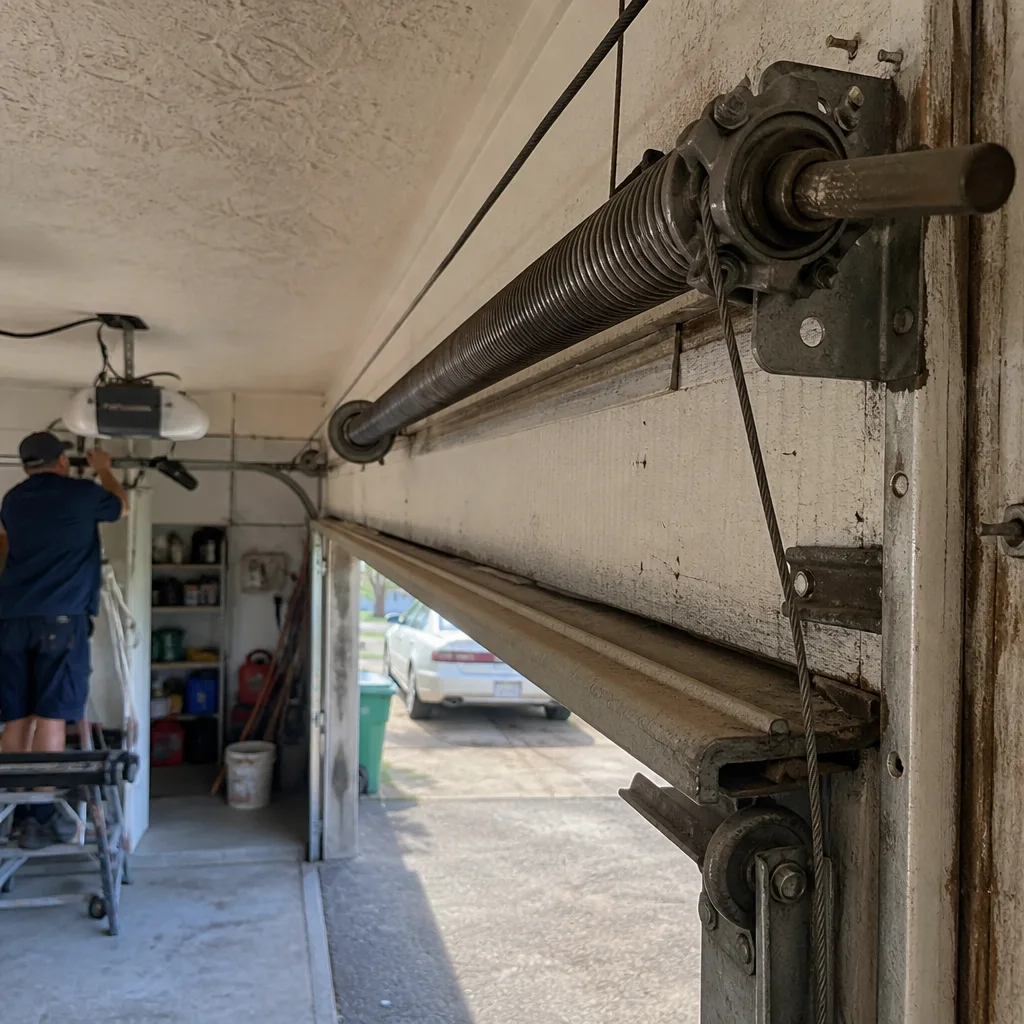 Before
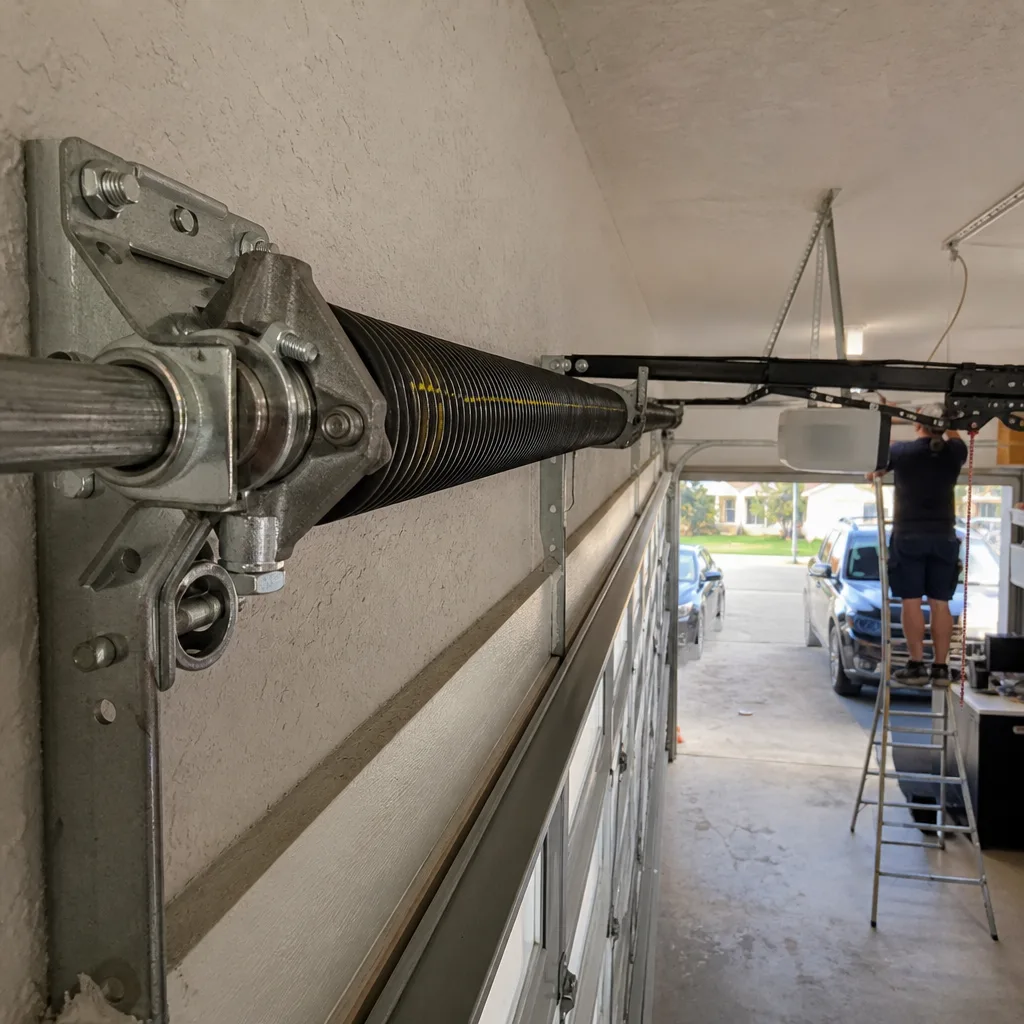 After
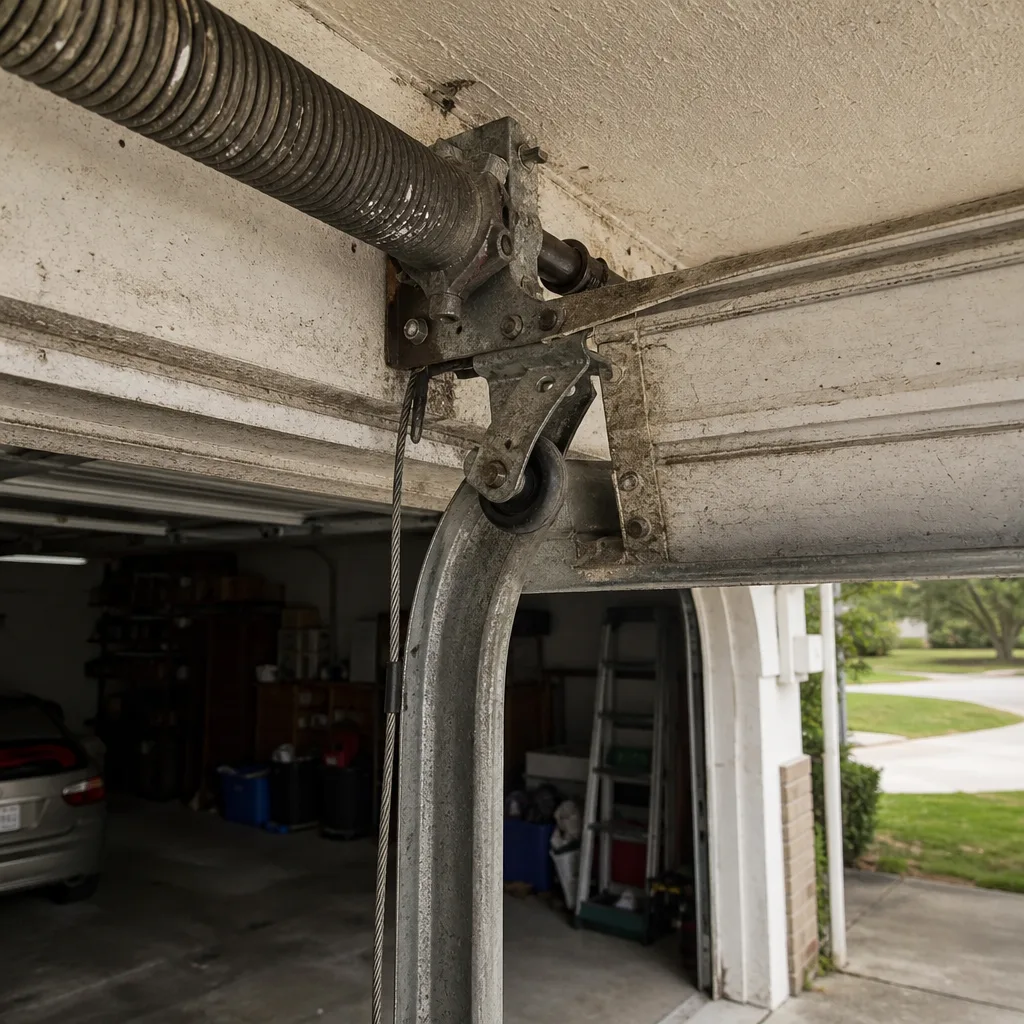 Before
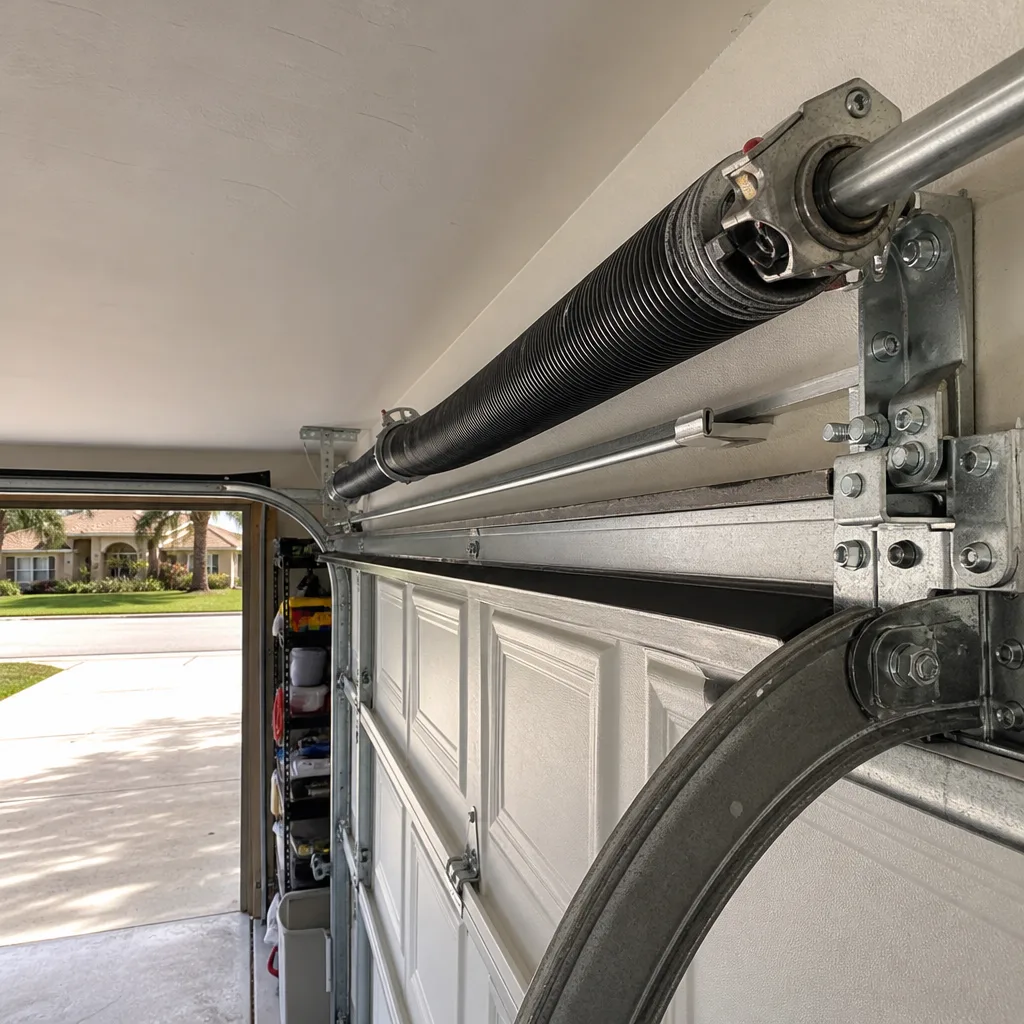 After
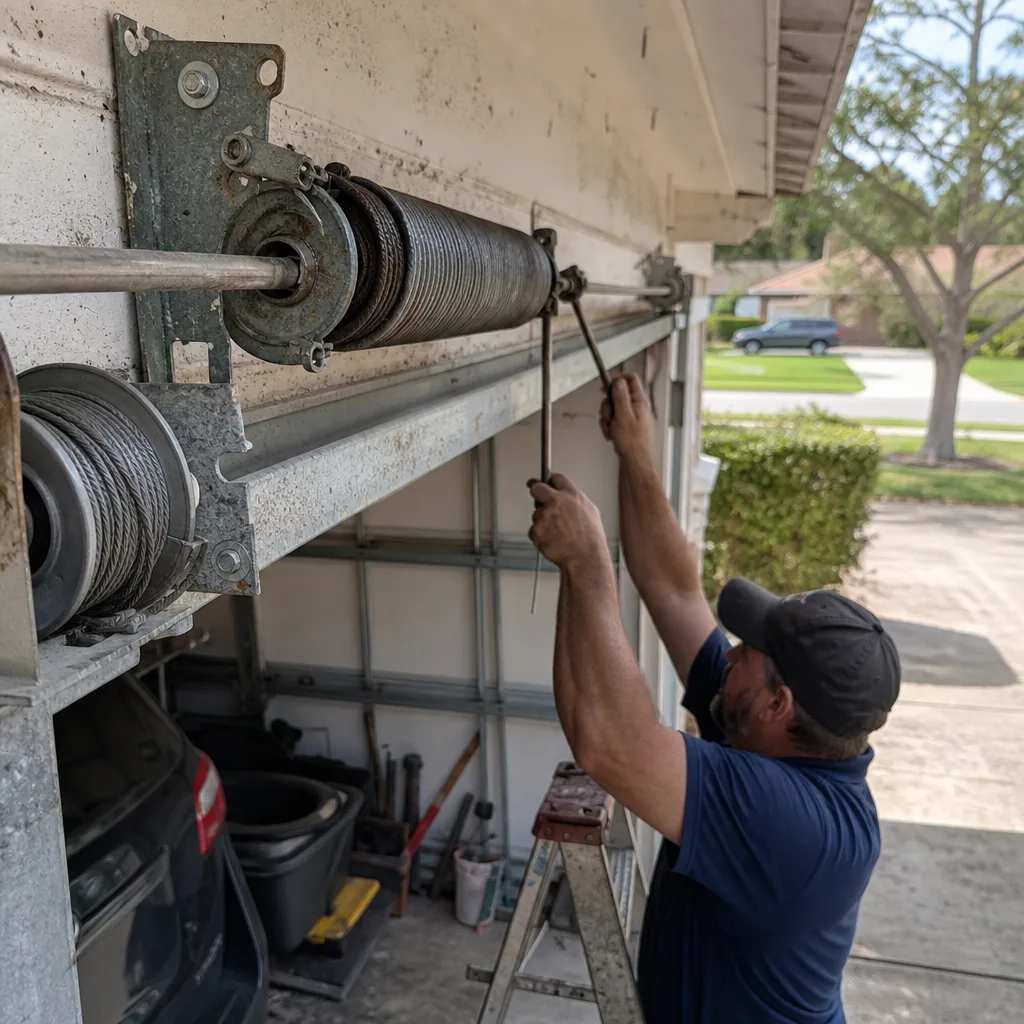 Before
 After
When to Call a Professional
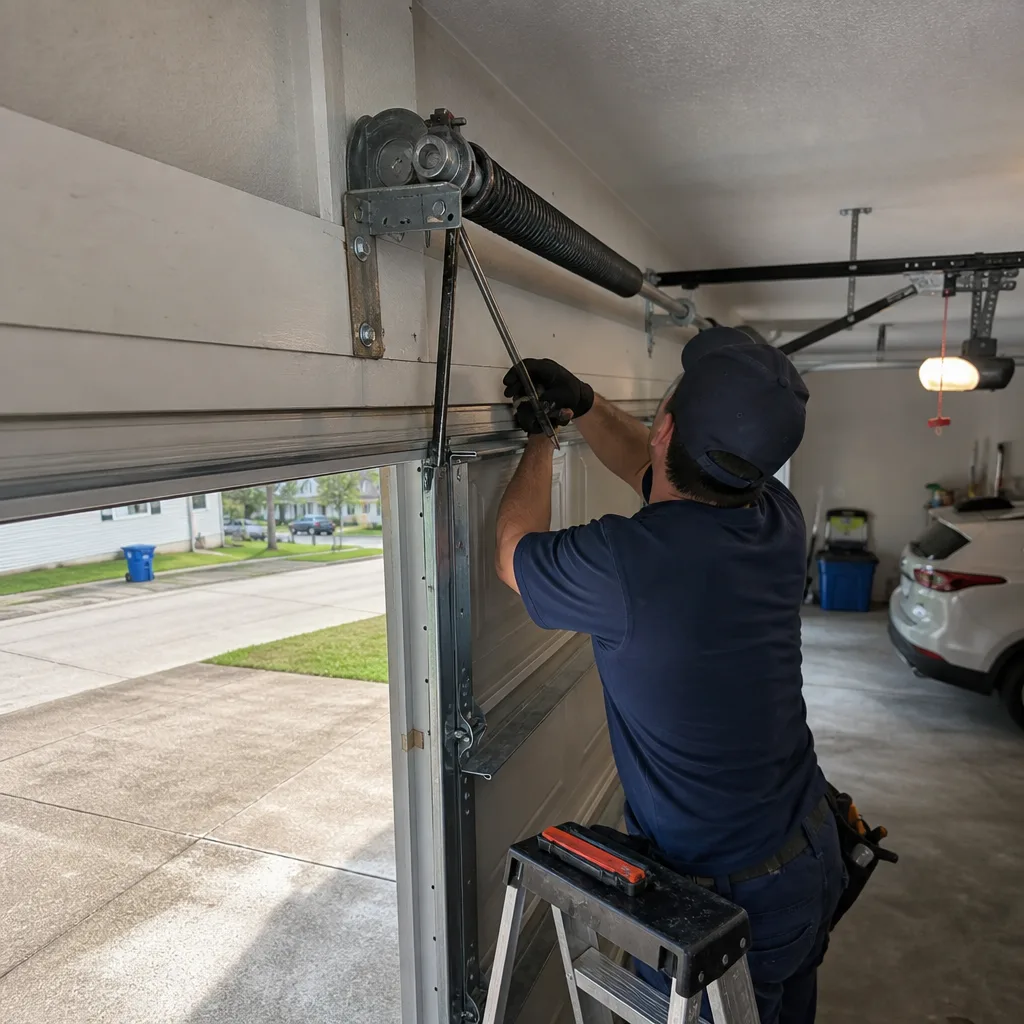
Some garage door jobs are genuinely do-it-yourself – lubricating rollers, tightening loose bolts, checking the balance. Others carry a real risk of serious injury, particularly anything involving torsion springs under tension or cables under load. If your door won’t lift, if a spring has snapped, if the cables are frayed, or if the door came off its track, call a licensed contractor. Our The Complete Garage Door Repair Guide for Fort Pierce Homeowners breaks down what’s safe to handle yourself. In Fort Pierce, that’s our focus at Palmetto Garage Door Service. We work on LiftMaster, Chamberlain, Genie, Raynor, and the other major brands – from the opener to the panels. If you’re weighing repair versus replacement, we’ll tell you which one actually makes sense for your door and your home. Palmetto Garage Door Service offers free estimates in Fort Pierce – call (877) 265-2128.
Frequently Asked Questions
Yes, St. Lucie County requires a permit for garage door replacement. Your contractor should pull the permit, pay the fee as a line item on your quote, and handle the inspection. Call (877) 265-2128 to talk through the full permit process for your Fort Pierce home.
A Florida Product Approval number certifies that a garage door has been tested for wind load and impact resistance under Florida’s building code. In Fort Pierce’s wind-borne debris region, that approval is required for exterior doors to satisfy your windstorm insurance policy. Ask the contractor for the approval number before you sign anything.
In Fort Pierce, a basic steel garage door replacement typically runs $900 to $1,400 for the door and installation, while mid-range insulated doors run $1,400 to $2,600 and premium wood-look or full-view doors can exceed $3,500. Opener installation adds $350 to $700 depending on the model. Call (877) 265-2128 for an exact quote on your specific door and size – estimates are free.
Palmetto Garage Door Service is trained on LiftMaster, Chamberlain, Genie, and Craftsman openers, along with Raynor and four other major door brands. If you’ve got a smart-home opener that isn’t pairing, a belt-drive that’s grinding, or a screw-drive that’s worn out, call (877) 265-2128 – garage doors are all we do.
If the door is under 10 years old and the problem is a single spring, roller set, or opener issue, repair usually makes sense. If the panels are rusted through, the door is 18 to 20 years old, or it lacks a Florida Product Approval number, replacement is the better call. Call (877) 265-2128 and we’ll walk through both options with real numbers.
For a broken spring or a door off track, Palmetto Garage Door Service prioritizes calls in Fort Pierce and St. Lucie County and typically gets a technician out quickly. Call (877) 265-2128 and tell us what’s happening – we’ll get you back up and running.
The Bottom Line
Hiring a garage door contractor in Fort Pierce is less about “three quotes” and more about three verifications: a DBPR license, a Florida Product Approval number on the door, and a contractor who pulls the St. Lucie County permit before work starts. Add to that a quote that matches on door model, spring type, and warranty coverage, and you’ll avoid the expensive mistakes that trap so many homeowners here. The storm-chaser crews leave after the season; a licensed local contractor stays. If you’re comparing contractors in Fort Pierce, call Palmetto Garage Door Service at (877) 265-2128 to arrange a free estimate and get straightforward answers on repair, replacement, and your specific brand – from the opener to the panels.
Written by the team at Palmetto Garage Door Service, serving Fort Pierce since 2018.