
Last updated October 31, 2026
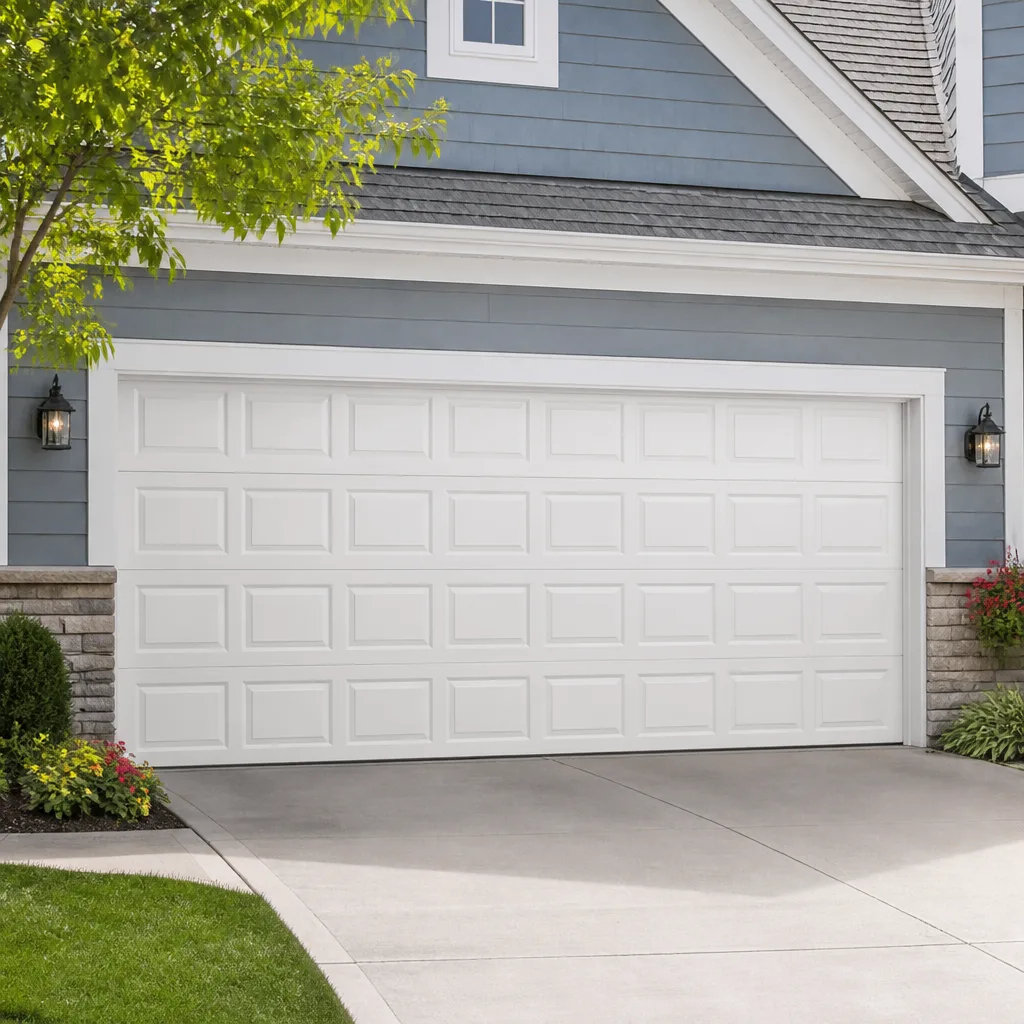 Raised-panel steel
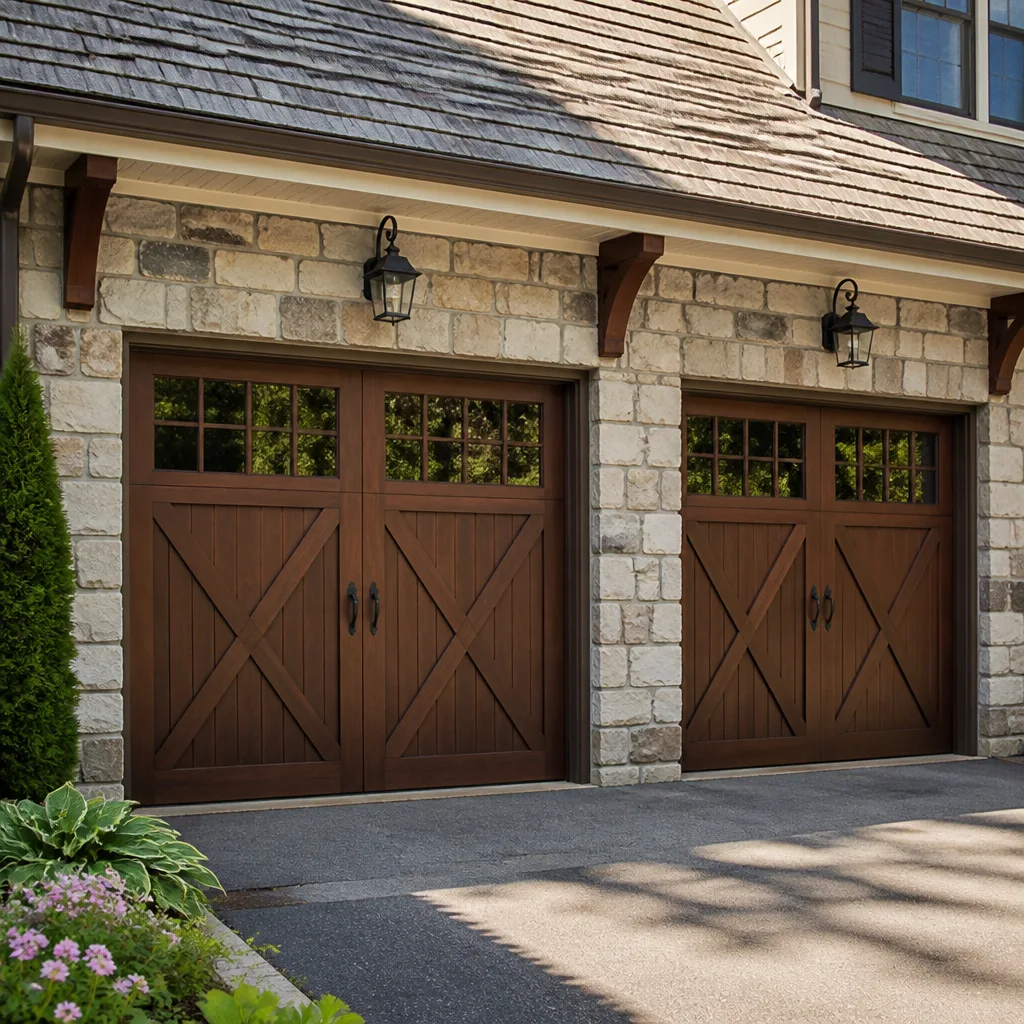 Carriage house
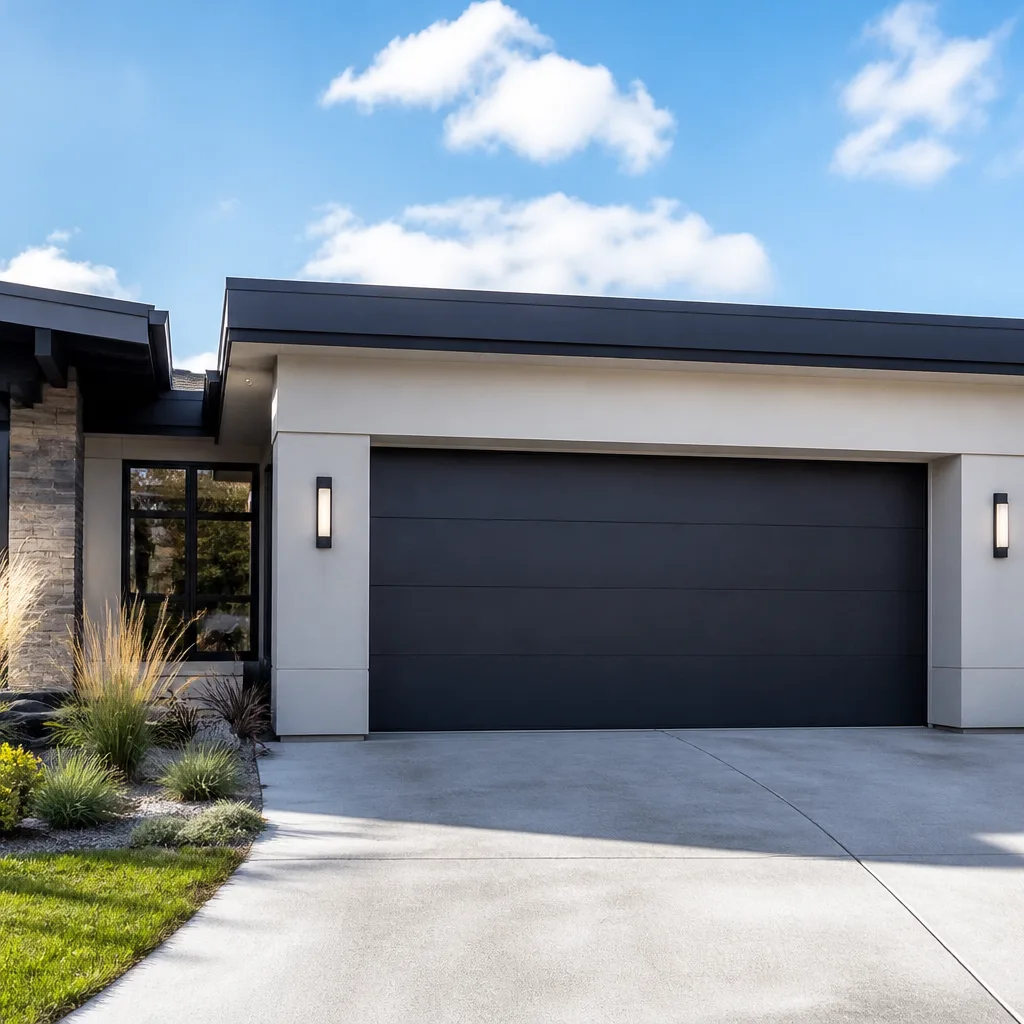 Modern flush
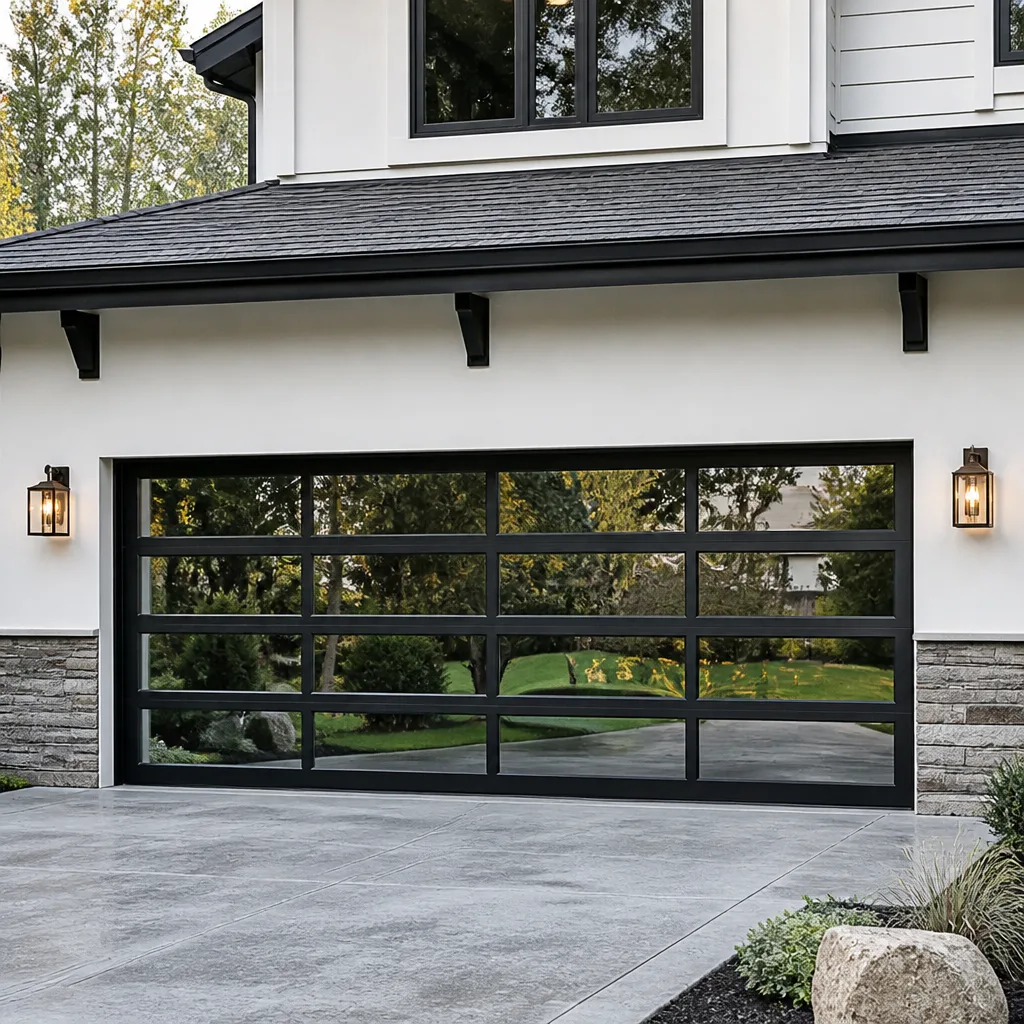 Full-view glass
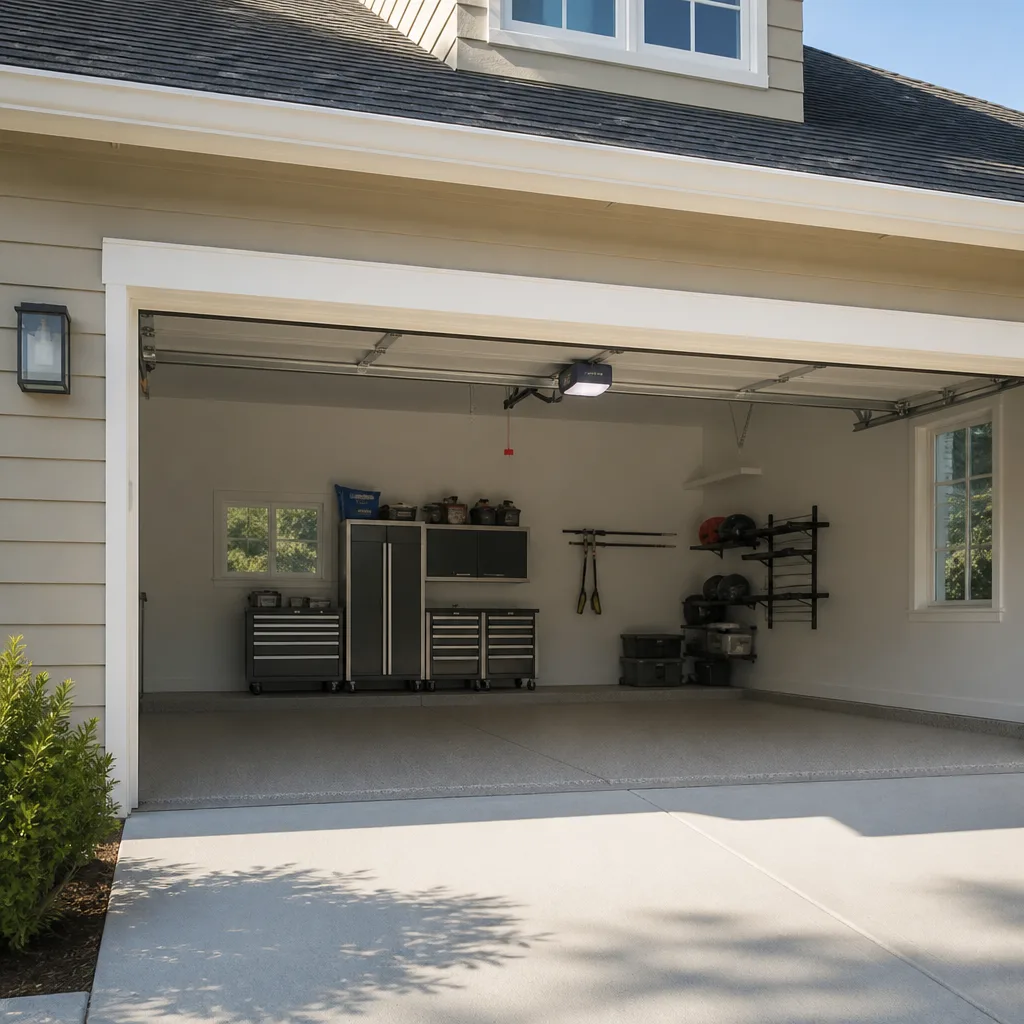 LiftMaster openers
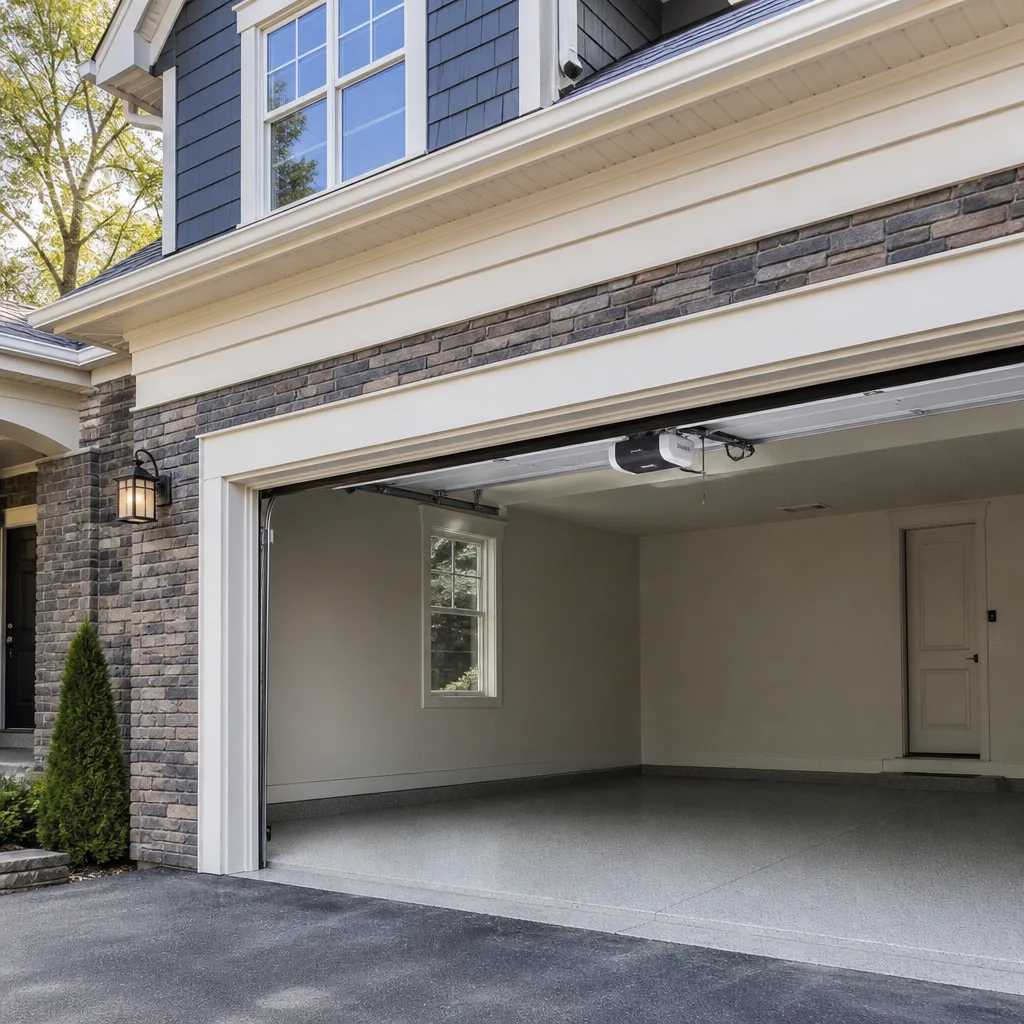 Chamberlain openers
Full 25-point door and opener safety check with every visit - springs, cables, rollers, tracks, and your LiftMaster or Chamberlain opener included
You get a price before we start. It does not change when the truck arrives.
Get your free estimateGarage Door Repair Troubleshooting: Common Problems and How to Fix Them
The grinding noise your garage door made three weeks ago wasn’t random. It was a specific mechanical signal that, if decoded correctly, predicts exactly which component is about to fail and how urgently you need to address it. Most troubleshooting guides wait until the door stops working entirely before they start diagnosing. This one works backwards from the symptoms you’re already noticing: the sounds in the morning, the hesitation halfway up, the way the door sits slightly crooked when closed. If you live in Fort Pierce, where salt air and humidity accelerate wear on every metal component, those early signals matter even more. By the end of this guide, you’ll know what your door is trying to tell you and whether the fix is a five-minute adjustment or a call to our Garage Door Repair services.
Quick Answer
Garage door troubleshooting starts with identifying the symptom cluster: unusual sounds (grinding, popping, squealing), motion problems (slow, uneven, reversing), or visual cues (gaps, sagging, cable slack). Most issues trace back to one of four systems: springs, rollers, cables, or the opener. Safety-critical components like torsion springs and cables should be handled by a trained professional, not a DIY attempt. For How to Hire a Garage Door Contractor in Fort Pierce: A Step-by-Step Guide, see our resource before making that call.
Styles & brands we work with
Table of Contents
- What Your Garage Door Sounds Are Telling You
- Behavior Problems: Slow, Uneven, and Reversing Doors
- Visual Cues: Gaps, Sagging, and Cable Slack
- Opener Problems vs. Door Hardware Problems
- The 60-Second Manual Balance Test
- Unsafe Door Combinations: When to Stop Operating
- Single-Car vs. Double-Car Doors: Different Failure Patterns
- Common Mistakes to Avoid
- When to Call a Professional
- Frequently Asked Questions
What Your Garage Door Sounds Are Telling You
Every garage door makes some noise, but specific sounds map to specific problems. In Fort Pierce, we hear the same pattern complaints from homeowners in Lakewood Park, Indian River Estates, and along South Hutchinson Island: a door that sounded “off” for weeks before it finally quit. The sound itself is a diagnostic tool. A grinding noise that happens when the door moves almost always points to worn rollers or misaligned tracks. A popping sound, especially right before the door stops moving, signals a spring that’s about to snap. A high-pitched squeal during operation typically means metal-on-metal contact somewhere: a dry bearing, a roller that’s seized, or a hinge that’s binding.
Here’s the part most guides skip: the timing of the sound matters. When does it happen? If you hear grinding only when the door passes a specific point in its travel, you’ve got a track issue at that exact spot: a bent section, a loose bracket, or debris caught in the rail. If the sound is consistent through the entire cycle, the problem is in the moving parts themselves: rollers, hinges, or the opener’s drive mechanism. Homeowners who learn to listen for timing can often pinpoint the problem before a technician even arrives, which saves diagnostic time when you call for garage door repair in Port Saint John or anywhere else in the Fort Pierce area.
Door brand matters less than people assume. We see grinding rollers on Clopay doors from newer Fort Pierce subdivisions just as often as on 1990s Wayne Dalton models in older neighborhoods near downtown. What matters more is maintenance history and exposure. A door that’s never had its rollers lubricated will grind regardless of brand. A door facing east, getting direct morning sun and afternoon salt breeze off the Indian River Lagoon, will deteriorate faster than an identical model facing north.
Sound-to-Cause Quick Reference
- Grinding or scraping during movement: Worn rollers, misaligned track, or debris in the track channel.
- Popping or snapping sound followed by the door stopping: Torsion spring failure. Do not operate the door.
- Squealing or high-pitched whine: Dry bearings, seized roller, or hinge metal-on-metal contact.
- Loud bang when the door hits the floor: Limit settings wrong on the opener, or broken spring dropping the door faster than designed.
- Rattling when the door is closed and the wind blows: Loose hinges, worn weatherstripping, or loose track bolts.
The takeaway: sounds are not random background noise. They’re mechanical signals. Decode them early and you catch a $15 roller replacement before it becomes a $300 spring replacement or a $900 opener replacement.
Behavior Problems: Slow, Uneven, and Reversing Doors
A garage door that behaves differently than it did last month is telling you something. Slow operation is the most commonly ignored symptom because it happens gradually. One month, the door takes six seconds to open. Three months later, it takes nine. Homeowners adjust to the new normal without realizing the door is working harder, which puts strain on the opener motor and the springs simultaneously.
An uneven door is different. If one side of the door hangs lower than the other when partially open, you’re looking at a spring imbalance. On a standard two-spring system, one spring may have lost tension or broken while the other continues working. This forces the opener to fight against an unbalanced load, which shortens the motor’s life dramatically. In Fort Pierce, where summer humidity causes metal fatigue and salt air accelerates corrosion on spring coils, this failure mode is more common than in drier climates. We’ve seen Amarr doors in St. Lucie County develop spring imbalances at twice the rate of identical models installed in the Orlando area, purely because of environmental exposure.
Reversing doors create their own set of questions. If your door starts closing, hits the floor, and immediately reverses back up, the problem could be the opener’s force sensitivity setting, a misaligned safety sensor, or an obstruction in the track that the door is detecting as a person. If the door reverses before it reaches the floor, that’s the safety sensor system doing its job. Something is breaking the infrared beam between the two sensors near the bottom of the door opening. Fort Pierce homeowners often find that leaves, palm fronds, or even spider webs in the sensor lens trigger false reversals after heavy rain or wind. Clean the lenses first, then check alignment, then check for wiring damage if the problem persists.
The pattern to remember: speed problems point to springs and opener load. Direction problems point to sensors and opener settings. Siding problems point to balance and track issues. These are three separate systems, and mixing them up leads to unnecessary part replacements.
Visual Cues: Gaps, Sagging, and Cable Slack
You don’t have to operate the door to spot a problem. Walk out to your driveway right now and look at the door with fresh eyes. Most Fort Pierce homeowners see their garage door ten times a day without actually looking at it. Once you look, the visual evidence is often unambiguous.
Gaps. A gap at the top of the door when closed almost always means the travel limit is set too high. A gap at the bottom means the limit is too low or the concrete settled. But a gap on one side only, with the other side tight against the jamb, typically means the door is out of square: a spring issue, a track that’s pulled away from the wall, or a door section that’s dented in from an impact. On Wayne Dalton doors, which use a different track profile than Clopay or Amarr, a side gap can also indicate a worn track roller bracket that’s allowing the wheel to ride off-center.
Sagging. When the door is closed and you stand inside the garage looking at the top section, a door that bows or sags in the middle often points to strut failure. The horizontal reinforcement struts on double-wide doors prevent the top section from flexing under opener pull. When a strut rusts through or the fasteners loosen, the door loses rigidity and the opener starts pulling a door that’s bending instead of rolling. Craftsman doors and other builder-grade models with lighter-gauge steel are more prone to this in Fort Pierce’s coastal environment.
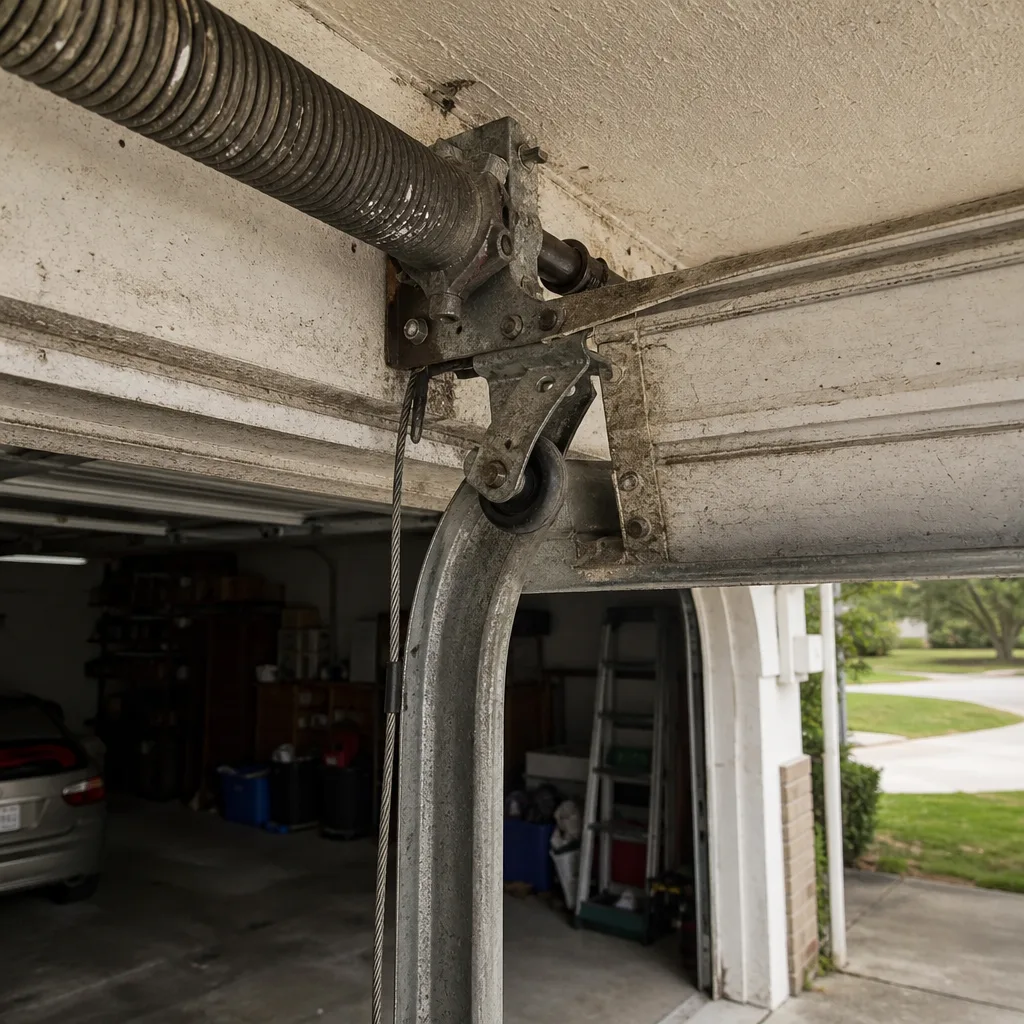
Cable slack. This one is non-negotiable. If you see a cable hanging loose, with visible slack between the drum and the bottom bracket, do not operate the door. A cable that’s off its drum usually means a broken spring or a door that’s racked to one side. Operating the door with cable slack risks the cable snapping entirely, which can whip with enough force to cause serious injury. This is one of the visual cues that transitions directly from “something to fix” into “something to leave alone and call a professional about immediately.”
Opener Problems vs. Door Hardware Problems
This distinction causes more confusion than any other topic in garage door troubleshooting. The opener is the motorized box mounted to the ceiling. The door hardware is everything else: springs, cables, rollers, hinges, tracks. When a door won’t open, homeowners see a motor that runs and assume the opener is the problem. In our experience, the opener is often the victim, not the culprit, because door hardware problems make the opener work harder until it fails.
Here’s how to isolate which system is causing the issue. First, pull the emergency release cord, usually a red handle hanging from the opener rail. When you pull it, the door disconnects from the motor. Now try to lift the door manually. If the door feels heavy, sticks, or drops back down, the problem is in the door hardware: springs, rollers, or track. A disconnected door that’s properly balanced should lift with one hand and stay open at shoulder height. If it doesn’t, the opener was likely fine and simply couldn’t handle the load of a door with a failing spring.
If the door lifts smoothly and stays open on its own, the problem is in the opener system: logic board, gear and sprocket assembly, drive belt or chain, or motor capacitor. This test takes under a minute and saves Fort Pierce homeowners from paying for an opener diagnosis when the real issue is a $250 spring replacement. It also works the other way: no point replacing springs if the opener’s plastic drive gear has stripped its teeth on a door that’s actually balanced fine.
Smart opener systems add another layer. LiftMaster, Chamberlain, and Genie openers with MyQ or similar connectivity can show error codes, send alerts to your phone, or refuse to operate if the safety sensors are blocked. When a smart opener won’t respond to the wall button, check the lock mode. Many homeowners accidentally enable the lock on the wall panel, which disables remote operation as a security feature. That’s a phone-call-free fix if you know to look for it.
The 60-Second Manual Balance Test
This is the single most useful diagnostic step a homeowner can perform. It determines whether your springs are doing their job, and it requires no tools, no disassembly, and no technical knowledge.
Step 1: Close the door completely. The springs are under maximum tension when the door is closed, so this is where the test starts.
Step 2: Pull the emergency release cord on the opener rail. This disconnects the door from the motor.
Step 3: Lift the door manually by the handle or the bottom edge. Use both hands. Lift to waist height, about three feet off the ground.
Step 4: Release the door. Watch what happens.
Here’s what the results tell you. If the door stays in place, your springs are balanced and doing their job. If the door drifts downward, the springs are losing tension, which means the opener is carrying extra load every cycle. If the door shoots upward, the springs are over-tensioned, which also indicates an adjustment problem. If the door feels impossibly heavy and you can barely lift it, a spring has likely broken entirely.
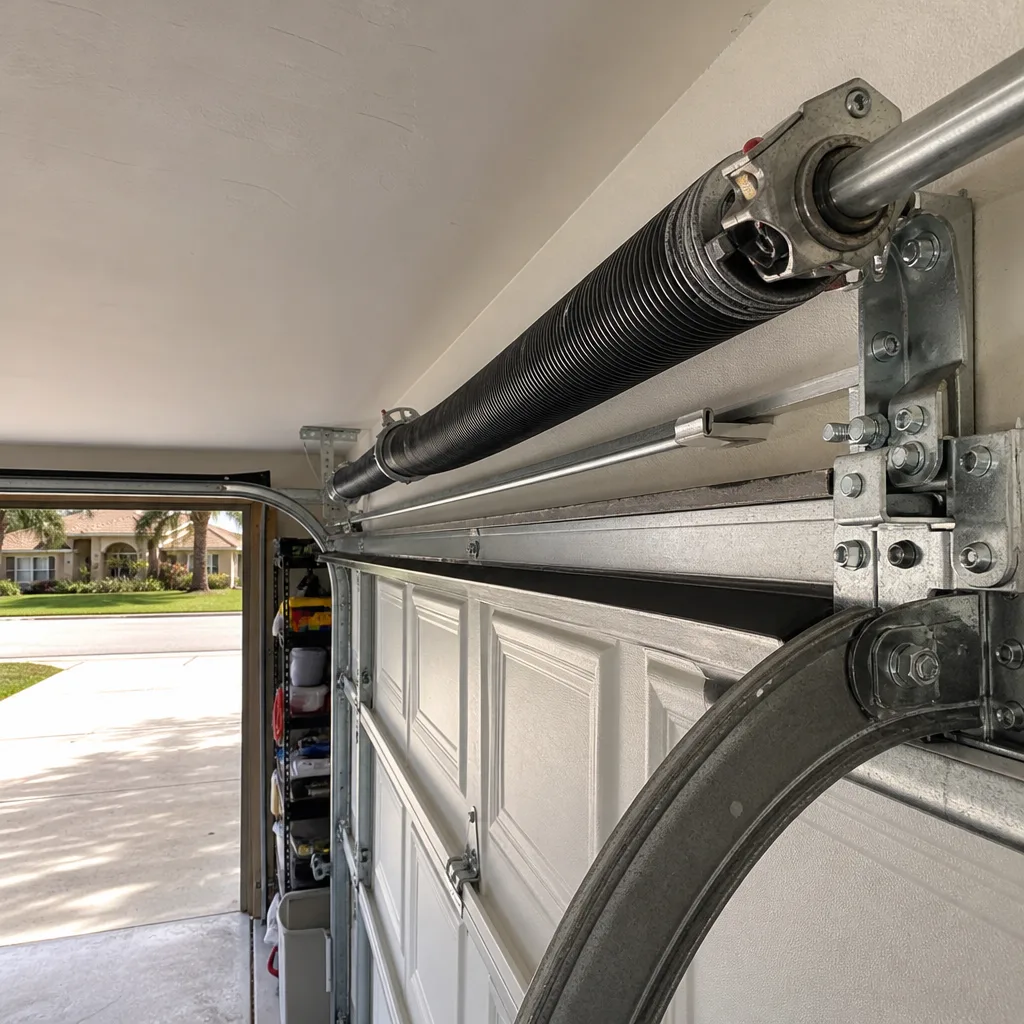
On a double-spring system, the door may feel normal when closed but reveal imbalance at midpoint, because one spring handles the lower portion of travel and the other handles the upper. That’s why the test stops at waist height: it’s the point where both springs are most active. Fort Pierce homeowners who perform this test monthly catch spring fatigue weeks before a failure strands the door in the open position, which is especially important during hurricane season when a working garage door is part of your home’s wind resistance system.
If the balance test shows drift or heaviness, the spring system needs attention. Spring replacement is not a DIY repair. Torsion springs carry enough stored force to cause serious injury if released improperly. For a reliable diagnosis and safe repair, contact Palmetto Garage Door Service home to schedule a spring inspection.
Unsafe Door Combinations: When to Stop Operating
Some symptom combinations mean the door has crossed from inconvenient to dangerous. Recognizing these combinations is part of responsible homeownership, especially in Fort Pierce where a door that fails suddenly can leave your home exposed to weather, pests, or security risks. Our Garage Door Warning Signs: A Fort Pierce Homeowner’s Reference Guide covers the full list.
The unsafe combinations:
- Broken spring + any attempt to operate: If you hear a loud bang and the door won’t move, stop. A door with a broken spring can fall unpredictably. The spring alone is under enough tension to cause injury if mishandled.
- Cable slack + door movement: If a cable is hanging loose and you’ve been operating the door anyway, stop immediately. The remaining cable may be the only thing preventing the door from crashing down.
- Door falling faster than normal: If the door drops when you release it manually, the springs are not counterbalancing the weight. A free-falling double garage door weighs 200 to 300 pounds.
- Visible cracks in the spring coils: A torsion spring with a visible crack is about to fail. It’s not a question of if, but when.
- Track pulled away from the wall with loose bolts: The track is the door’s guide rail. A track that’s separating from the framing can let the door come off its rollers entirely.
In any of these situations, the correct move is to leave the door alone and make the call. If the door won’t close, you can manually pull the emergency release to lower it carefully, but that can be risky if the springs are broken and the door’s full weight is in your hands. When in doubt, block off the opening and wait for a professional.
Single-Car vs. Double-Car Doors: Different Failure Patterns
A single-car door and a double-car door share the same components, but they fail differently because the weights and spring configurations differ. Understanding which failure pattern applies to your setup helps you anticipate problems before they happen.
Single-car doors typically run on a single torsion spring. One spring carries the entire load. When that spring fails, the failure is immediate and complete: the door becomes very heavy, very fast, and the opener can’t move it at all. Single-car door owners usually know something is wrong the moment it happens, because the failure mode is binary. The spring works, or it doesn’t. Fort Pierce homes built in the 1980s and 1990s, especially in neighborhoods like Indian River Estates and the older sections of White City, often still have single-spring conversions from original extension spring setups.
Double-car doors almost always run on two springs, one on each side of the center plate. Two springs distribute the load. When one breaks, the other continues working, which creates a different failure pattern: the door still opens, but it’s slow on one side, slightly uneven, and the opener motor works harder every cycle. Homeowners miss this failure for weeks because the door still functions. Then the second spring fails, and suddenly the door won’t move at all. This is why double-car door owners should react to subtle changes in speed and balance more aggressively than single-car owners. On Amarr and Clopay double doors, which use higher-grade spring wire, a broken single spring can hide for a month or more while the remaining spring silently overloads.
The maintenance implication: if you have a double-car door and notice any of the behavior changes described earlier, perform the balance test immediately. If one spring has already failed, replacing both springs together is standard practice, since the surviving spring is fatigued from carrying double load and will fail soon anyway. For homeowners in Fort Pierce considering a replacement, garage door installation in Port Saint John and the surrounding area often includes upgrading to a properly spec’d two-spring system.
Common Mistakes to Avoid
- Lubricating the wrong parts with the wrong product. WD-40 is a solvent, not a lubricant. It strips away whatever lubrication exists and leaves metal surfaces vulnerable. Use a silicone-based garage door lubricant on rollers, hinges, and springs only. Never lubricate the track, which creates a mess and attracts debris.
- Replacing the opener when the spring is the problem. A new opener on a door with broken springs will fail within months. Always diagnose the door hardware first with the balance test before spending money on the opener.
- Ignoring slow operation because the door still works. Slow is a symptom, not a personality trait. Fort Pierce humidity accelerates the damage that slow operation causes to the opener motor and gear assembly.
- Tightening loose track bolts without checking alignment. A track that’s pulling away from the wall often has an underlying issue: a door that’s racked, a spring that’s out of balance, or damaged brackets. Tightening bolts masks the symptom without fixing the cause.
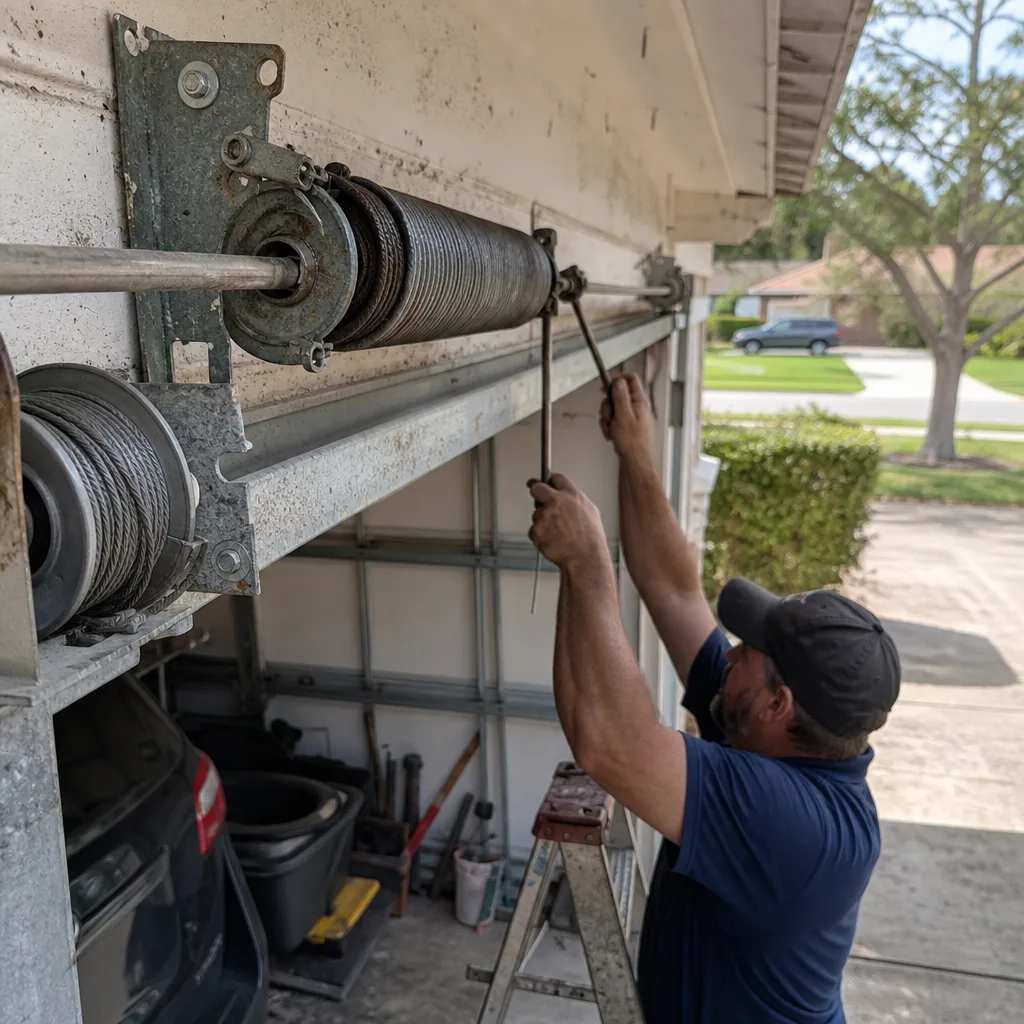
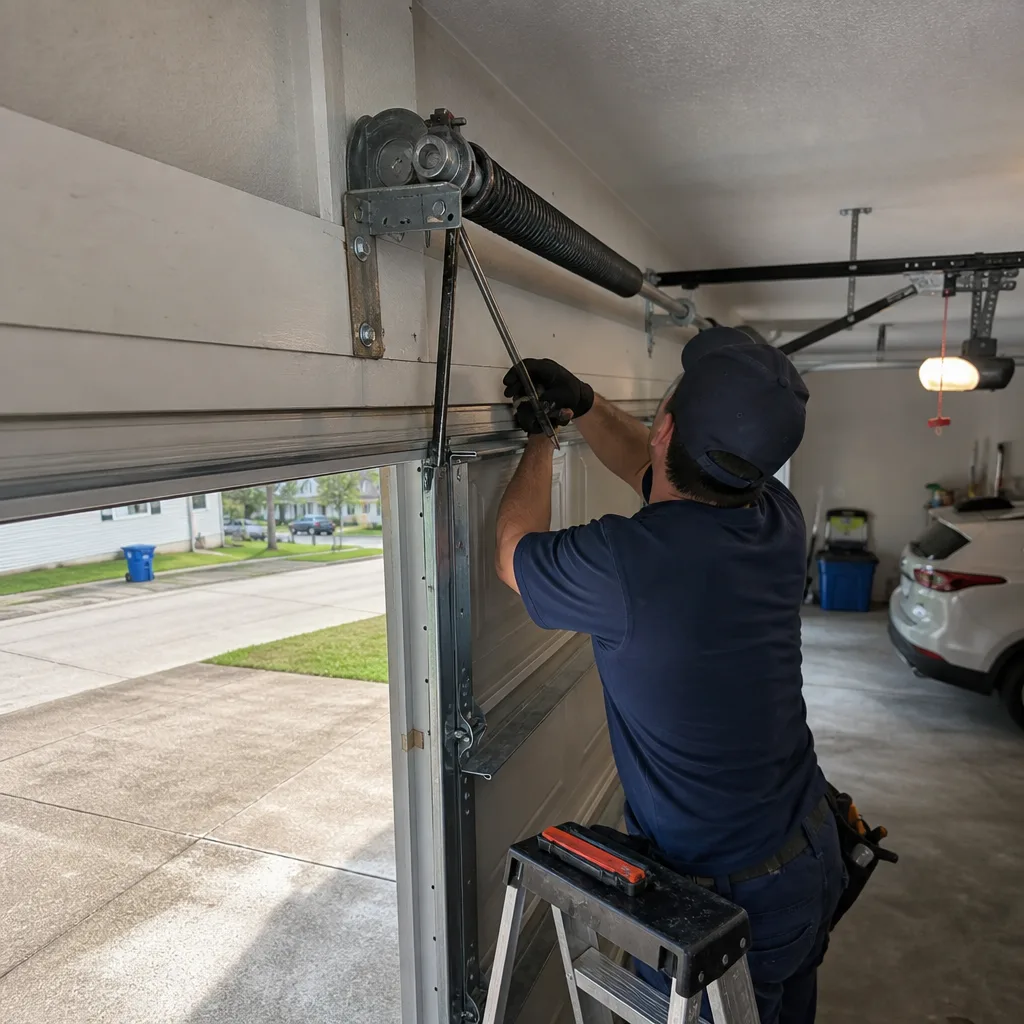
- Attempting spring replacement without proper tools and training. Torsion springs store enormous force. The winding bars, the proper procedure, and an understanding of spring direction and wire size are non-negotiable. This is not a job that rewards improvisation.
- Adjusting opener force settings to compensate for a heavy door. If your door is dragging and you crank up the opener force to muscle through it, you’re burning out the opener and masking a spring problem. Fix the balance first.
- Skipping the safety sensor diagnosis when the door reverses. Reversing doors are usually sensor problems, not motor problems. Clean the lenses and check the alignment before assuming the worst.
When to Call a Professional
Here’s the honest truth from someone who sees this every day in Fort Pierce: some problems are mechanical adjustments, and some are structural failures. You can replace rollers, lubricate hinges, clean sensors, and perform the balance test yourself. You should not touch springs, cables, or anything under tension. If your door does any of the following, stop troubleshooting and call a garage door specialist: free-falls when the emergency release is pulled, shows visible cable slack, made a loud bang and now won’t lift, or has a spring with a visible crack. If your door works but the balance test shows drift, a spring replacement is in your near future, and getting it done before it fails is cheaper than an emergency call at 7 PM. Palmetto Garage Door Service offers free estimates in Fort Pierce. Call (877) 265-2128 and we’ll give you an honest assessment without upselling you on parts you don’t need. If you’re outside Fort Pierce proper, our coverage extends through the Treasure Coast, including garage door opener repair in Port Saint John.
Frequently Asked Questions
A grinding noise during operation almost always points to worn rollers or misaligned tracks. The roller bearings wear out over time, especially in coastal areas like Fort Pierce where salt air accelerates metal fatigue. Replacing rollers is a straightforward fix, but if the grinding is caused by a bent track, the track section needs professional realignment or replacement. Call (877) 265-2128 for a diagnosis if the sound persists after lubricating the rollers.
Listen for a loud bang from the garage, then check whether the door feels heavy when you try to lift it manually with the emergency release pulled. A door that won’t budge or drops immediately when released has a broken spring. You may also see a visible gap in the spring coil. Do not operate the door. Spring replacement requires professional tools and training.
If the door opens fine but refuses to close, the safety sensors near the bottom of the track are usually the problem. Check that both sensor lenses are clean, aligned to face each other, and that nothing is blocking the beam. In Fort Pierce, palm fronds and wind-blown debris often trigger false sensor blocks after storms. If cleaning and realigning doesn’t fix it, the sensor wiring or the logic board may need attention.
No. While a double-car door with one broken spring may still open, the remaining spring is carrying the full load and will fail prematurely. The door is also unbalanced, which strains the opener and creates uneven wear on the track and rollers. Replace both springs at the same time to restore balance and avoid a second failure within months.
Lubricate moving parts every six months in Fort Pierce’s coastal climate. The combination of humidity, salt air, and heat means rollers, hinges, and springs dry out faster than in inland locations. Use a silicone-based garage door lubricant, not WD-40. Apply to the roller bearings, hinge points, and spring coils. Skip the track.
An uneven door usually means one of two things: a spring imbalance or a track alignment issue. A spring that’s lost tension on one side makes the door rack and close crooked. A track that’s out of alignment causes the rollers to bind on one side, creating the same visual effect. The balance test can help isolate the cause, but a professional inspection is the fastest way to confirm which system needs attention.
The Bottom Line
Garage doors speak in sounds, motions, and visual patterns. Grinding means rollers or track. Popping means springs. Reversing means sensors. Uneven means balance. The key is listening before the failure becomes total, because a $20 roller replacement and a $400 spring replacement both start with a noise that most homeowners ignore. Perform the balance test monthly. Clean your sensors when the door acts up. Lubricate every six months, especially in Fort Pierce. And when the problem involves springs, cables, or anything under tension, call a professional. Find more guides & resources on our blog to keep your door running smoothly. Palmetto Garage Door Service handles all of it: springs, openers, tracks, and full installations. We work on your brand, whether it’s Clopay, Amarr, Wayne Dalton, or Craftsman. Garage doors are all we do, and we’ll tell you honestly whether to repair or replace. Call (877) 265-2128 for a free estimate.
Written by the team at Palmetto Garage Door Service, serving Fort Pierce since 2018.
See the difference
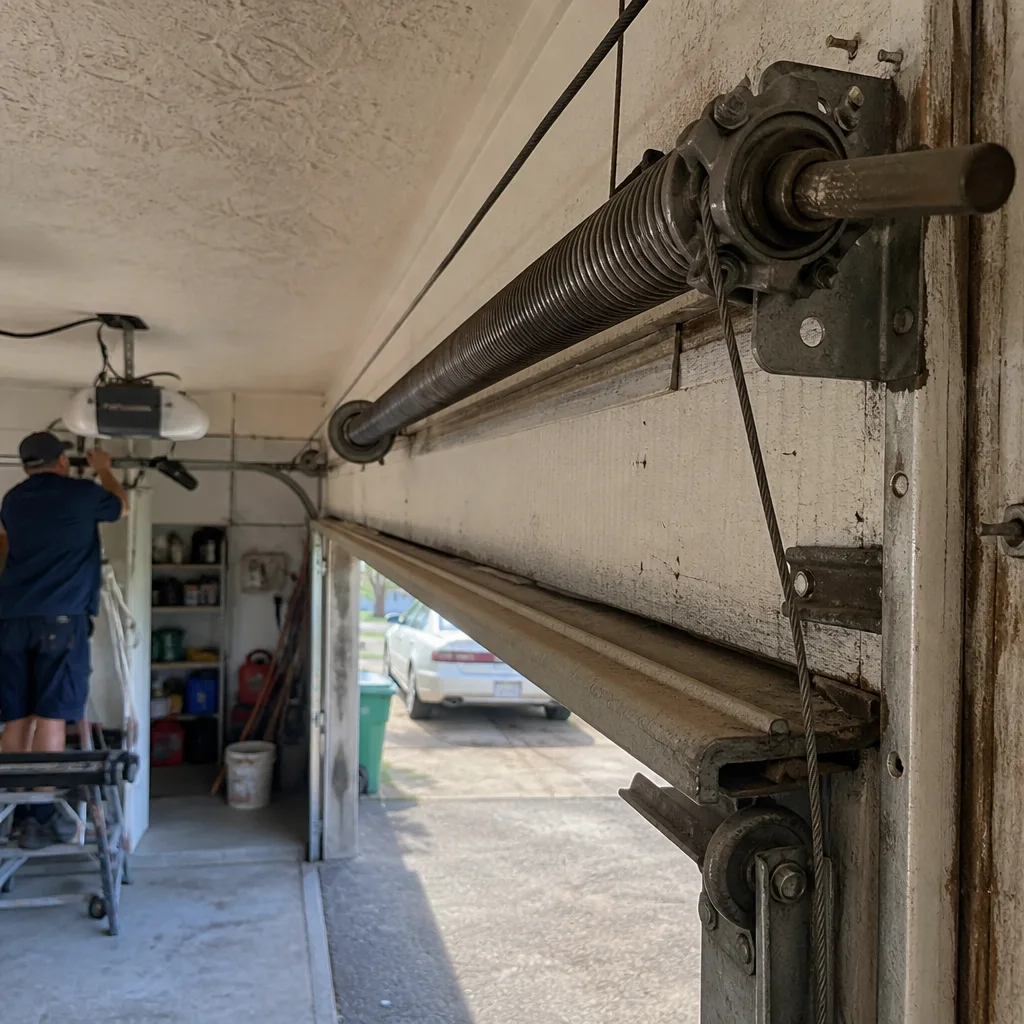 Before
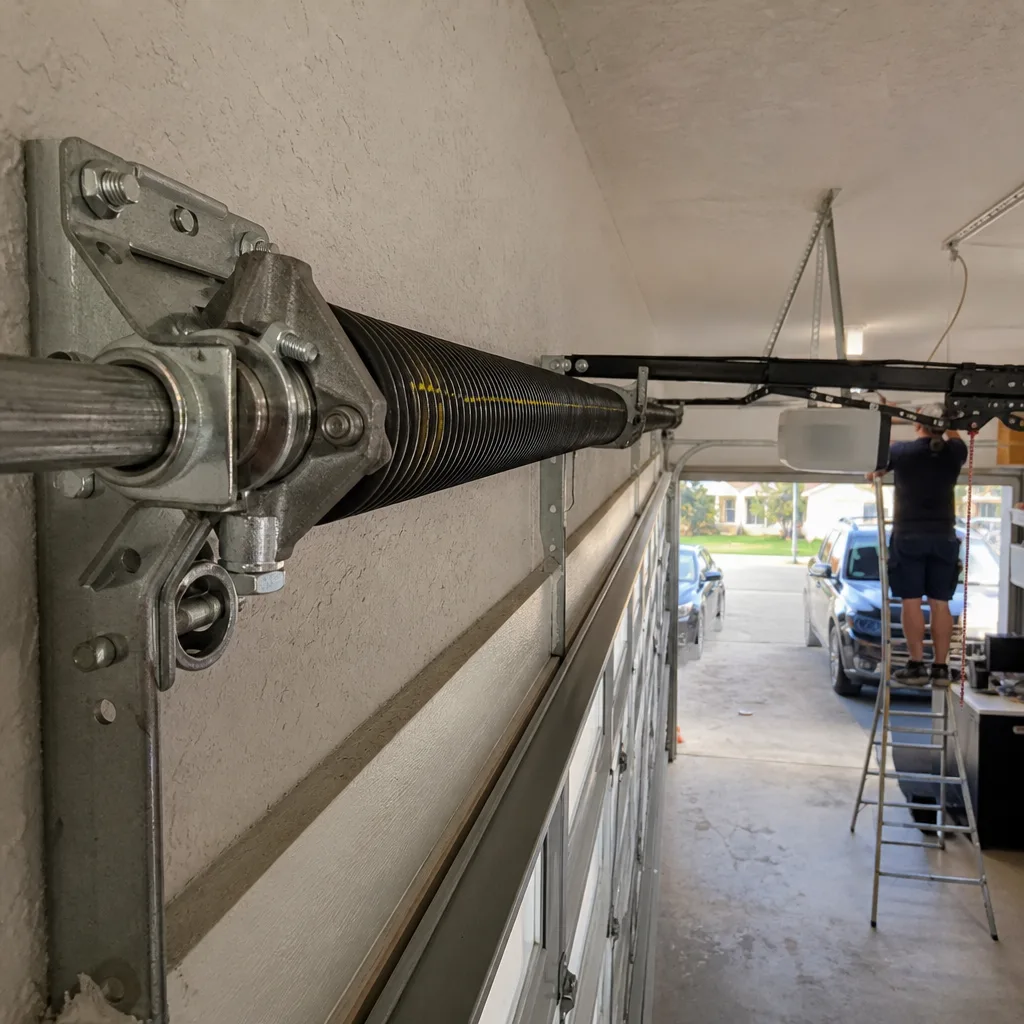 After
 Before
 After
 Before
 After