
Last updated October 31, 2026
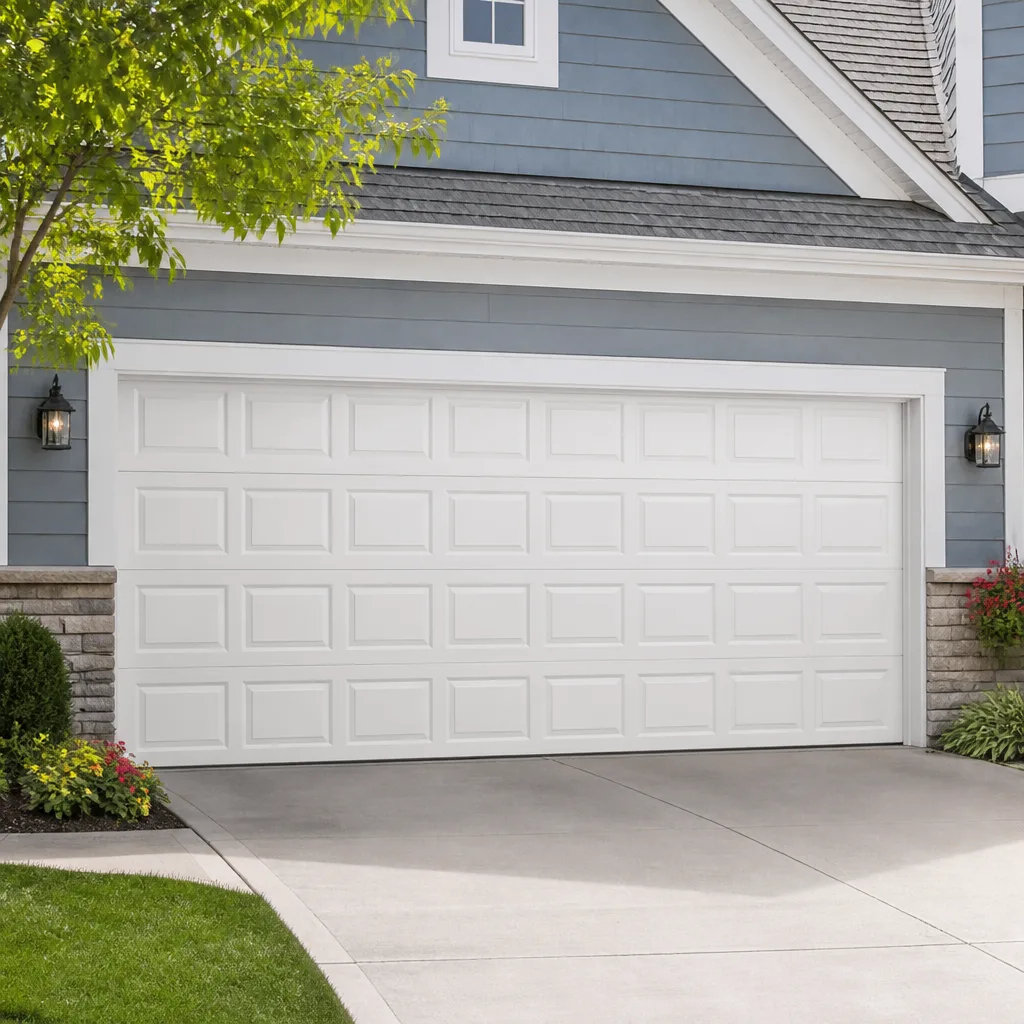 Raised-panel steel
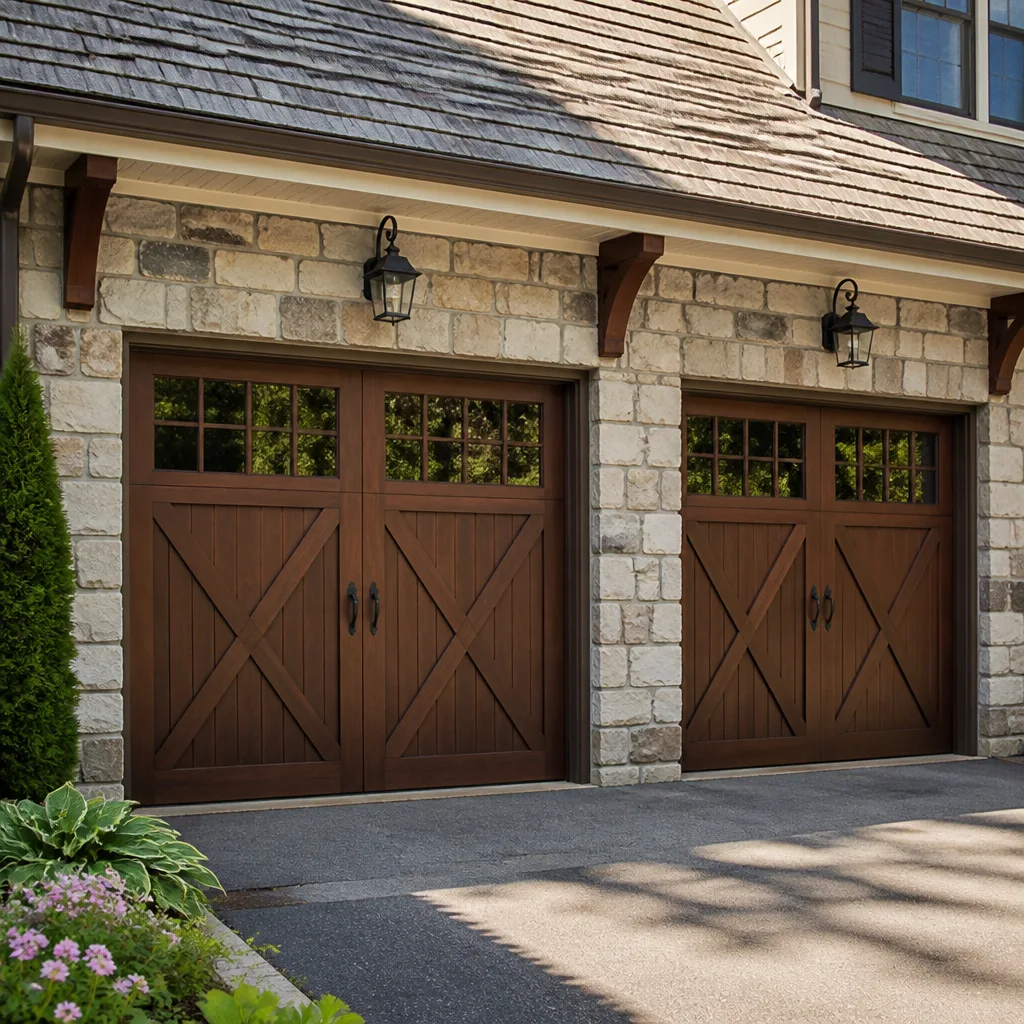 Carriage house
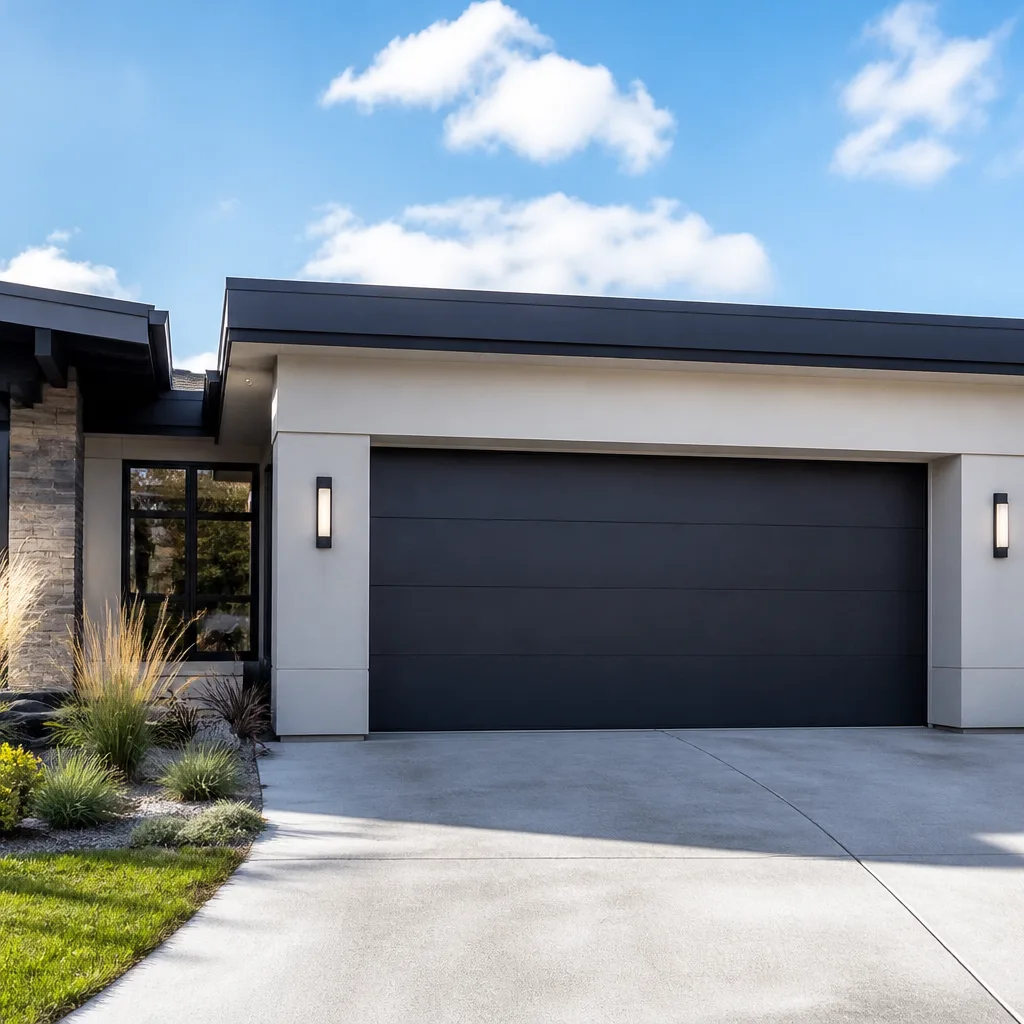 Modern flush
 Full-view glass
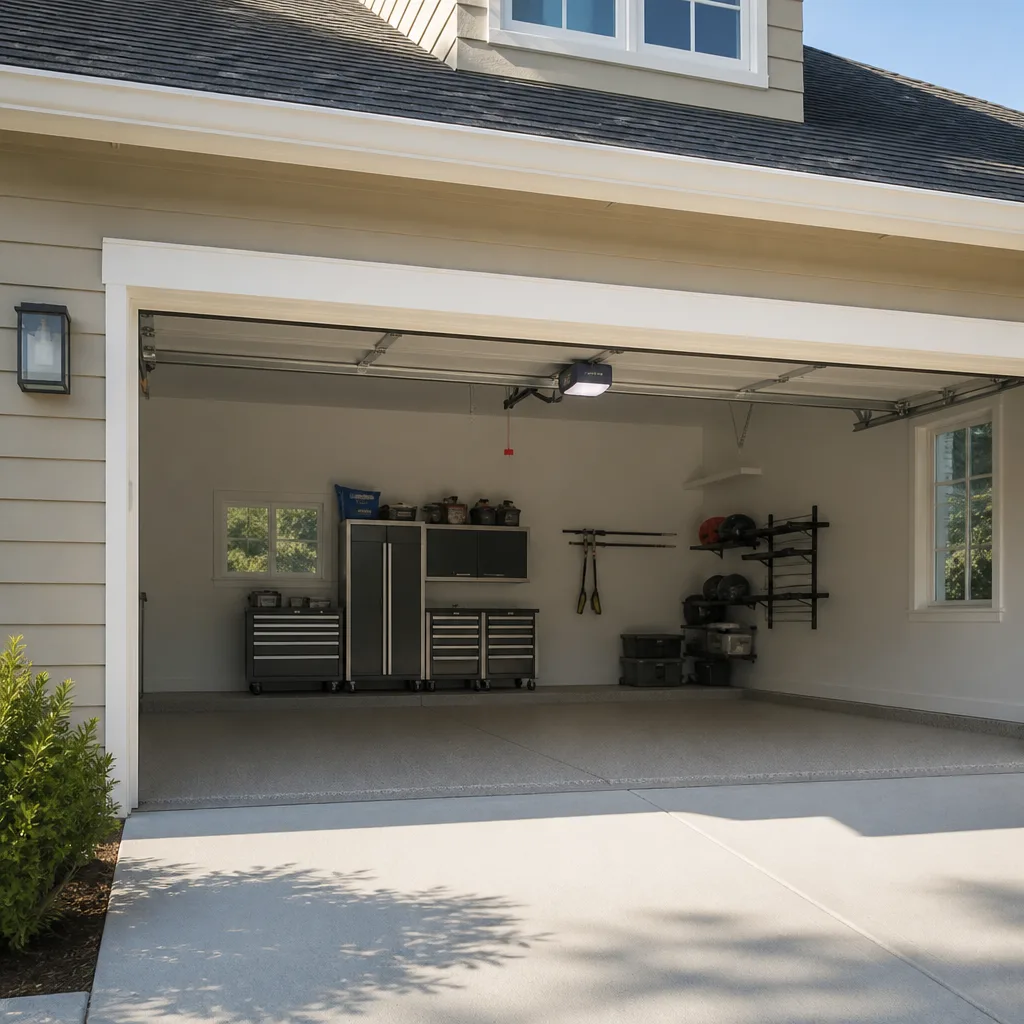 LiftMaster openers
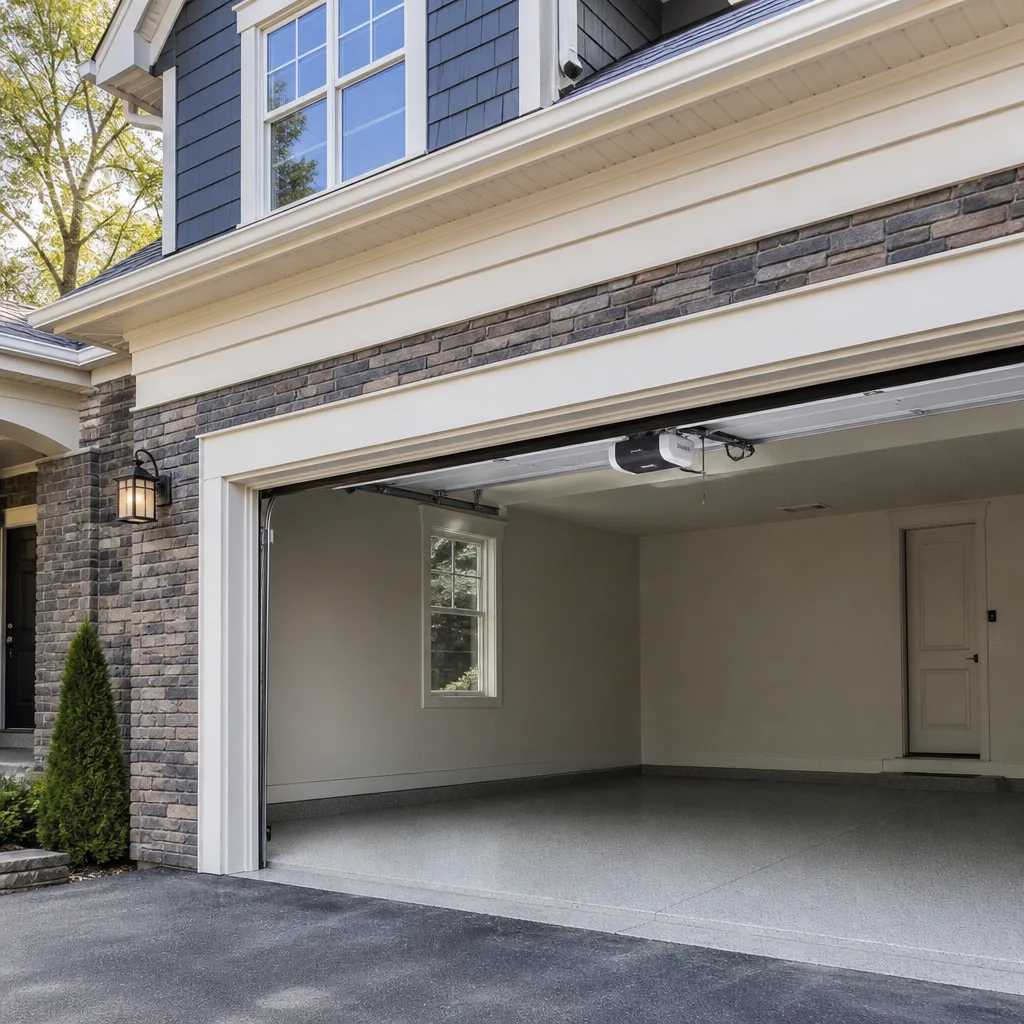 Chamberlain openers
Full 25-point door and opener safety check with every visit - springs, cables, rollers, tracks, and your LiftMaster or Chamberlain opener included
You get a price before we start. It does not change when the truck arrives.
Get your free estimateGarage Door Repair Maintenance Checklist for Fort Pierce Homeowners
The number one cause of premature garage door spring failure in coastal Florida isn’t heavy use. It’s the wrong lubricant trapping moisture against metal in a humid, salt-air environment. A garage door in Fort Pierce lives a different life than one in Orlando or Atlanta. The air itself works against the hardware. This Garage Door Warning Signs: A Fort Pierce Homeowner’s Reference Guide is built for that reality, with a maintenance calendar tied to actual St. Lucie County seasons, not a generic four-season template, plus the specific inspection points and product choices that actually matter here.
Styles & brands we work with
Quick Answer
Fort Pierce homeowners should inspect and lubricate garage door hardware every three months, with heavier attention in late spring before hurricane season and again in October after the worst of the salt-air summer. The four tasks that matter most are lubricating hinges and rollers with a lithium-based grease (never WD-40), checking torsion spring ends for rust, testing the auto-reverse feature monthly, and inspecting bottom brackets for corrosion after any coastal storm.
Table of Contents
- The Monthly Fort Pierce Maintenance Checklist
- Lubrication in a High-Humidity Climate: What Works, What Rusts
- Salt Air and Your Hardware: Where Corrosion Shows Up First
- A Month-by-Month Maintenance Calendar for St. Lucie County
- Post-Storm Inspection Protocol
- Auto-Reverse and Force Settings: Testing and Documentation
- What a Homeowner Can Do vs. What Requires a Technician
- Common Mistakes to Avoid
- When to Call a Professional
- Frequently Asked Questions
- The Bottom Line
The Monthly Fort Pierce Maintenance Checklist
A garage door performs roughly 1,000 open-and-close cycles per year for the average household. In Fort Pierce, where many homes use the garage as the primary entrance, that number runs higher. Every cycle puts stress on springs, cables, rollers, and hinges. Monthly attention takes about 15 minutes and prevents most mid-summer breakdowns.
Here is the checklist we recommend for Fort Pierce homeowners. Do these tasks on the first weekend of every month:
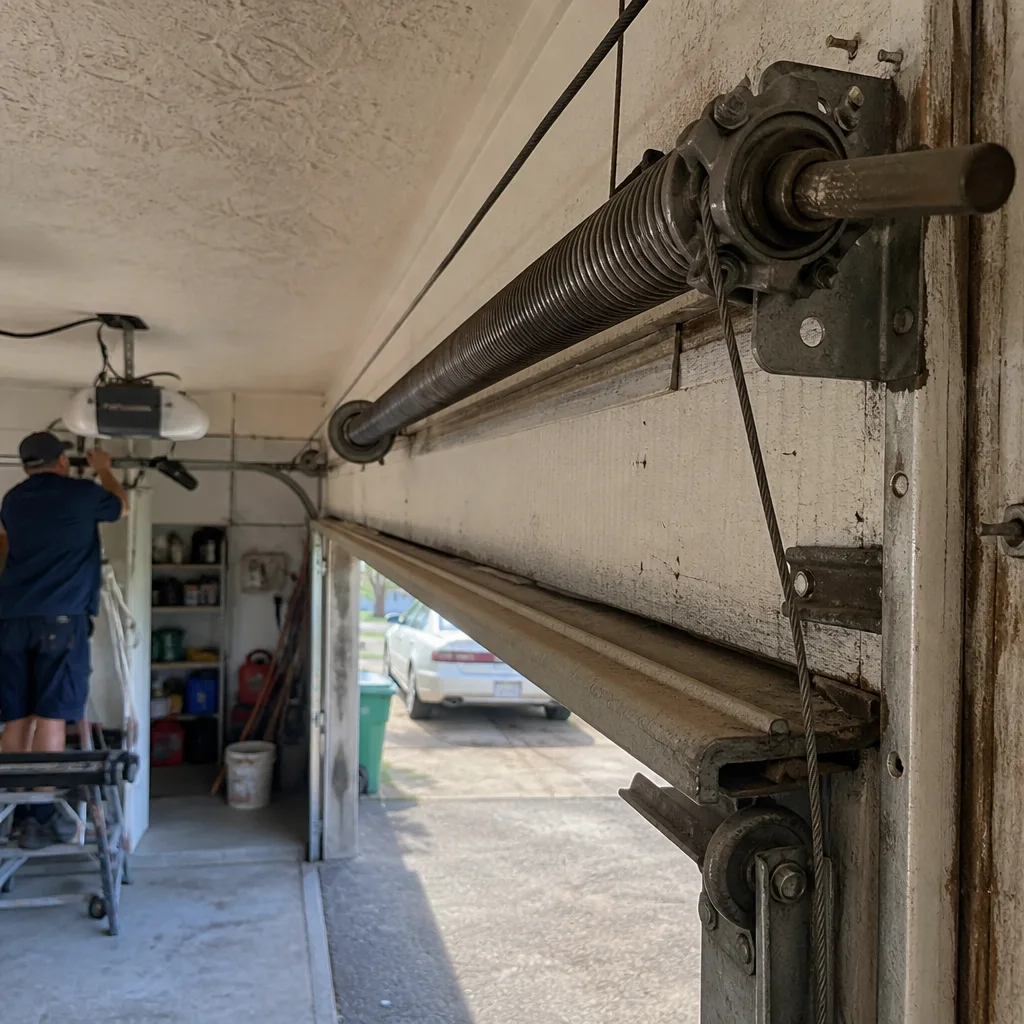
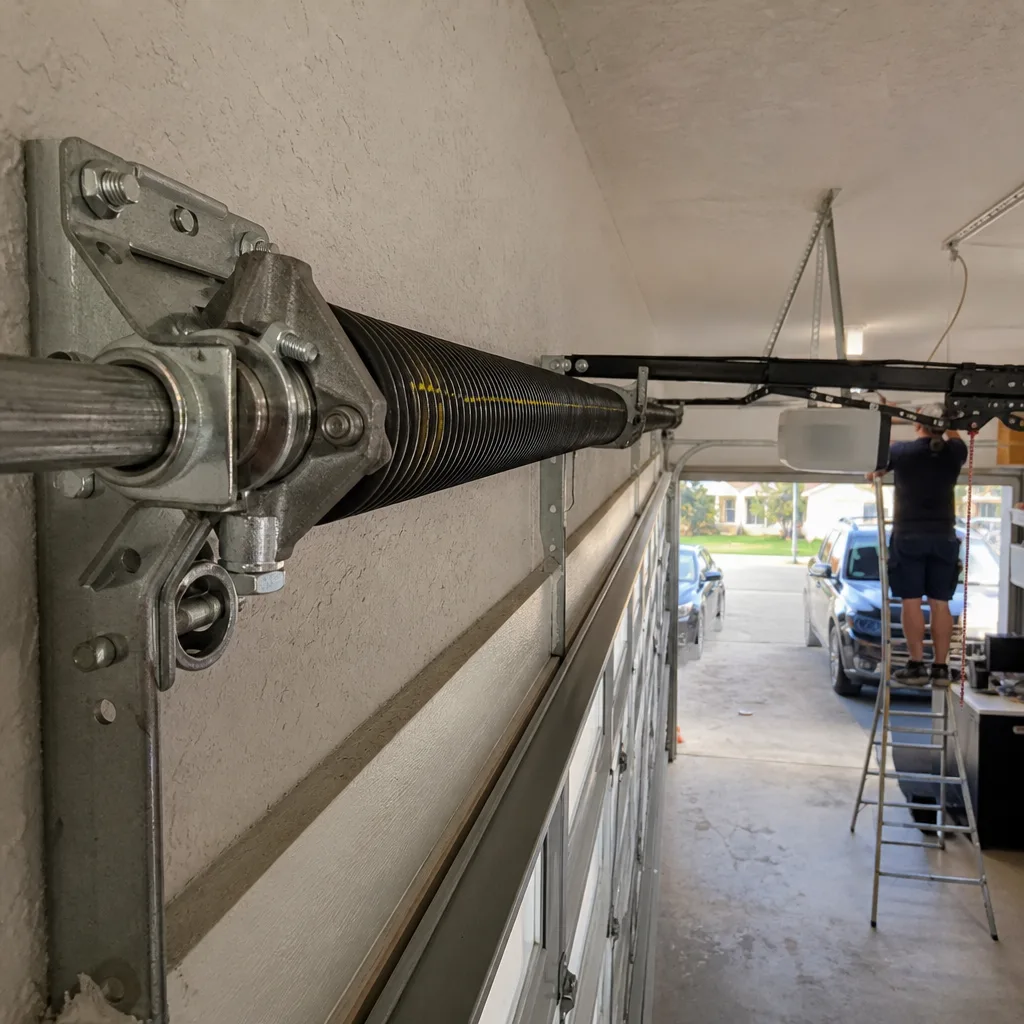
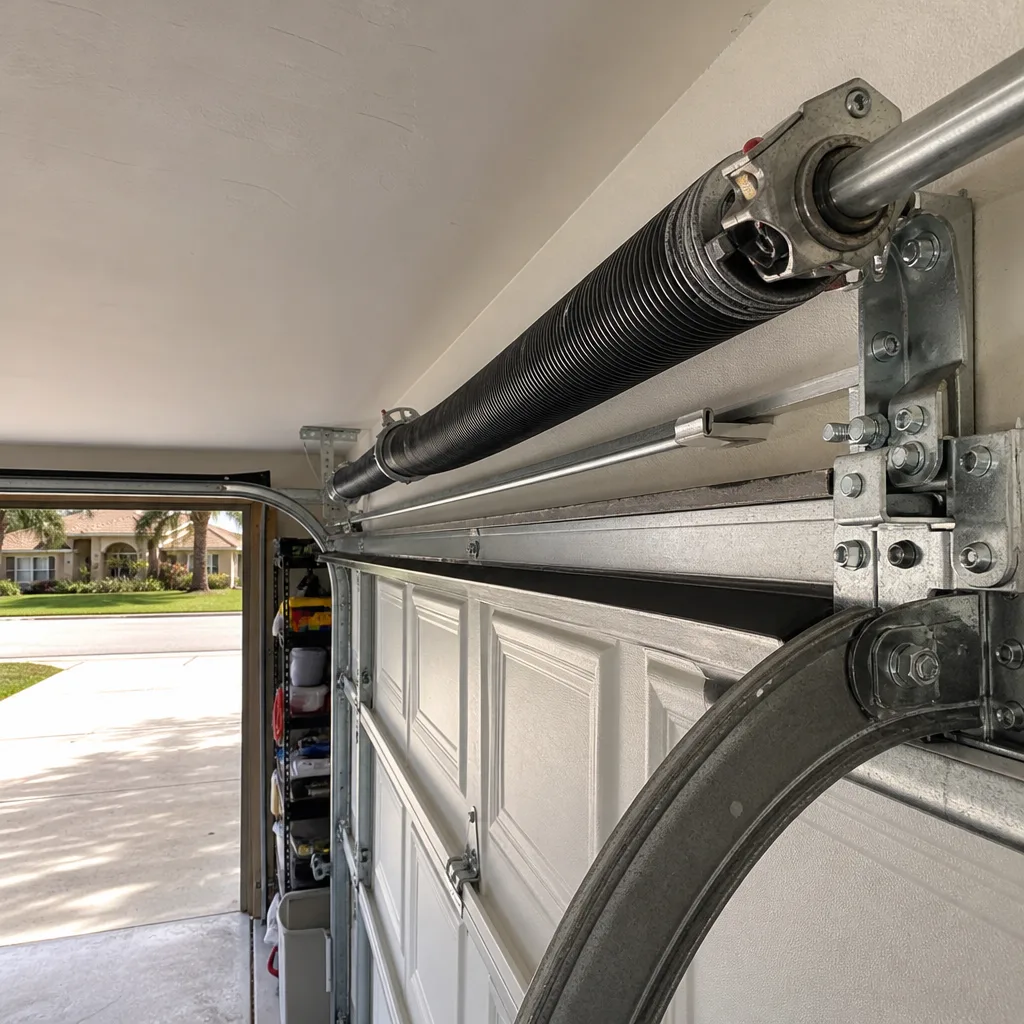
- Visual sweep of torsion springs. Look at the spring above the door. Surface rust is normal in our humidity. Pitting, flaking, or a visible gap in the coil means the spring is failing. Do not touch it. Call a technician.
- Listen to the door. Open and close it once while standing inside the garage. A smooth door is nearly silent except for the opener motor. Grinding, squealing, or popping sounds mean a lubrication or alignment issue.
- Check the balance. Pull the emergency release cord and lift the door manually to waist height. It should stay in place. If it drops or rises on its own, the springs need adjustment.
- Test the auto-reverse. Place a roll of paper towels flat under the door and close it. The door should reverse within two seconds of contact. Test the photo-eye sensors by waving something past them while closing.
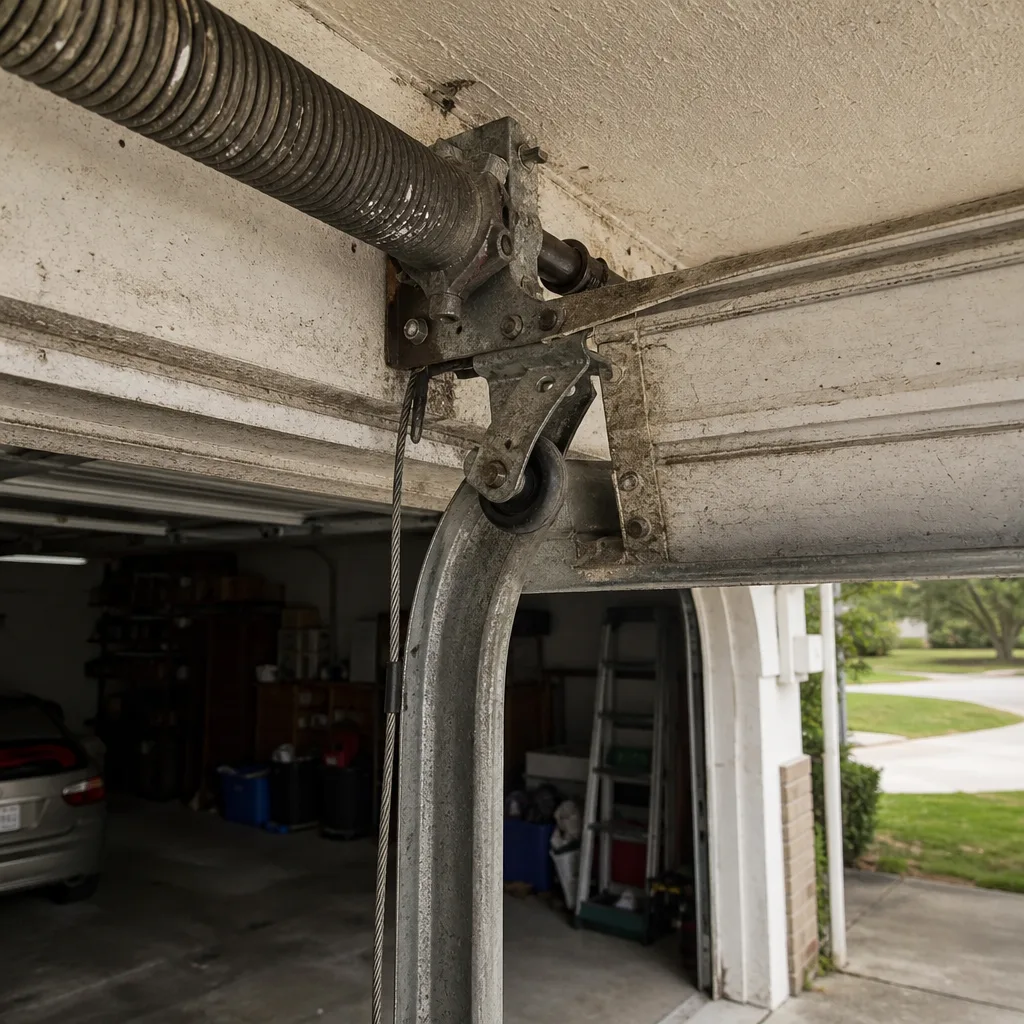
- Inspect cables. Look at the lift cables running along each side of the door. Frayed strands or rust near the bottom bracket are warning signs of imminent failure.
- Clear the tracks. Wipe the vertical tracks with a dry cloth. Debris buildup happens faster in humid air because dust sticks to condensation.
These six items catch 90% of problems before they become breakdowns. The rest of this guide explains why each one matters in our specific climate and how to do them properly.
Lubrication in a High-Humidity Climate: What Works, What Rusts
Humidity in Fort Pierce averages over 75% year-round. During summer months it sits above 80% most mornings. That changes the lubrication math considerably. A product that works fine in Arizona can actively damage your door here.
What to use:
- White lithium grease for metal-to-metal contact points: hinges, torsion spring coils, and the bearing plates at spring ends.
- Silicone spray with PTFE for rollers, especially nylon rollers. It displaces moisture without attracting grit.
- Garage-door-specific lubricant from a brand like Genie or Chamberlain. These are formulated to resist washout in humid environments.
What to avoid:
- WD-40. This is the biggest mistake we see in Fort Pierce garages. WD-40 is a water displacer and solvent, not a lubricant. It strips existing grease and, in our salt-heavy air, leaves metal surfaces more exposed to corrosion within weeks.
- Heavy axle grease. It attracts sand and grit. On the Treasure Coast, that grit includes salt particles. The result is an abrasive paste that grinds down hinge pins.
- Motor oil or 3-in-1 oil. Too thin for the spring cycle frequency. It drips onto the door surface and runs off within days in heat.
How often should you lubricate in Fort Pierce? Every three months is the baseline. During June through September, when humidity and salt content in the air peak, every two months is safer. If you live within two miles of the Indian River Lagoon or the ocean, lean toward the two-month interval. The salt concentration in the air is measurably higher and acceleration of corrosion is real.
Salt Air and Your Hardware: Where Corrosion Shows Up First
Fort Pierce sits directly on the Treasure Coast. The Atlantic breeze carries microscopic salt particles inland for several miles. Combined with our humidity, the result is a mild but persistent saline bath for any exposed metal on your home, including garage door hardware.
Not every part of the door corrodes at the same rate. Here are the specific points where we see salt-air damage first, in order of frequency:
- Bottom brackets. These hold the lift cables and sit closest to the concrete floor, where moisture pools after rain or garage flooding. They rust faster than any other component. Look for orange staining or flaking metal at the lower corners of the door.
- Hinge pins. The seams between door panels flex on every cycle. Salt air penetrates the pin grooves and works from the inside out. A hinge that squeaks even after lubrication likely has internal corrosion.
- Torsion spring ends. The spring itself is coated steel, but the ends where it mounts to the center bearing plate are more exposed. In our experience, this is where coastal Florida springs fail first.
- Track fasteners. The bolts holding the vertical tracks to the wall. They’re small, often overlooked, and easy to replace before the track shifts out of alignment.
- Opener rail. The metal rail that runs from the motor to the door. Salt air settles on it and, combined with grease, forms a stubborn film that increases friction.
One specific home type deserves extra attention. Homes along Hutchinson Island, South Beach, or near the Fort Pierce Inlet see dramatically higher salt exposure than homes west of US-1. If your garage faces east toward the water, double your inspection frequency on bottom brackets and hinge pins.
A Month-by-Month Maintenance Calendar for St. Lucie County
Generic maintenance guides recommend “seasonal” inspections. That works in places with four actual seasons. Fort Pierce has two seasons: wet and warm, and slightly less wet and warm. Our maintenance needs track to hurricane season and humidity peaks instead.
January – February: This is the mildest stretch of the St. Lucie County year. Ideal time for a full system inspection. Clean the tracks thoroughly, check balance, tighten any loose hardware, and lubricate all moving parts. The cooler weather makes this the most comfortable time for more involved tasks.
March – April: Humidity starts climbing. Begin the monthly auto-reverse test habit now if you haven’t. Apply a fresh coat of lithium grease to hinge pins and spring coils. If you noticed any rust during the dry months, treat it now before summer accelerates it.
May: Hurricane season preparation. This is the month to have a professional service the door if you haven’t in over a year. Check that the door seals properly at the bottom. Replace the weatherstripping if it’s cracked or brittle. A compromised bottom seal lets driving rain and wind-blown debris into the garage during a storm.
June – September: Peak heat, peak humidity, peak salt activity. Lubricate every two months during this window instead of three. Listen to the door weekly for new sounds. If you hear a change, investigate before it becomes a breakdown. Garage doors fail most frequently in Fort Pierce between July and September, in our experience, because heat accelerates spring fatigue and humidity accelerates corrosion.
October: Post-hurricane-season inspection. Even if no storm hit us directly, the summer has taken its toll. Check every point on the salt-air list above. Clean the tracks again. This is also a good time to test the opener’s force settings, which we cover below.
November – December: The second mild window of the year. Good time for any deferred replacements: rollers, weatherstripping, hinge hardware. If you’re considering a new door installation, this is when many Fort Pierce homeowners schedule it, before the spring rush.
Post-Storm Inspection Protocol
Tropical systems passing through St. Lucie County bring three threats to a garage door: high sustained winds, driving rain, and pressure differentials that stress structural components. Even a brush-by storm can leave damage that isn’t immediately visible.
After any named storm passes within 50 miles of Fort Pierce, do this inspection in this order, and do it before opening the door with the opener:
- Visual exterior check. Walk around the outside. Look for dented panels, pulled-away weatherstripping, or debris wedged in the tracks. Do not stand directly in front of the door while inspecting it. If the spring failed during the storm, the door could be under tension.
- Check the gap. Stand inside and look at the door closed. Sunlight or water visible at the edges means the seal shifted or the door is out of square.
- Manual lift test. Pull the emergency release and lift slowly. If the door is noticeably heavier than normal, stop. That means a spring has lost tension or failed. Lower it gently and call a technician.
- Track alignment check. With the door open, look at each track. A bent track will show as a curve or kink, not a straight line. Do not try to bend it back. Track repair requires proper tools and the tension must be released first.
- Opener test. Only after the door passes the manual test. Run a full cycle and listen. Operate the auto-reverse test. If anything behaves differently than pre-storm, get it checked.
A specific storm-related issue we see in Fort Pierce is debris impact. Palm fronds, branches, and loose construction materials become projectiles in hurricane-force winds. A small dent in a panel is cosmetic. A dent near the bottom track or the spring line can affect operation. If there’s any doubt, a Garage Door Repair in Port Saint John call can determine whether the damage is structural or superficial.
Auto-Reverse and Force Settings: Testing and Documentation
Every garage door opener manufactured since 1993 includes two safety mechanisms: the mechanical auto-reverse and the photoelectric eye sensors. Both must be tested monthly. If a door closes on a person or object and the reverse mechanism fails, the liability falls on the homeowner. Documenting your testing can be relevant if an insurance claim ever involves the door.
How to test auto-reverse:
- Place a 2×4 flat on the floor under the path of the door. A roll of paper towels works as a substitute, but the 2×4 is the standard test object recommended by opener manufacturers.
- Close the door using the opener. The door should contact the object and reverse to fully open within two seconds.
- If the door continues down or reverses slowly, the force setting is too high or the mechanism is failing. Stop using the door and call a technician.
How to test the photo-eye sensors:
- Start with the door open. Press the close button.
- Wave an object, anything from a broom handle to your foot, across the sensor beam while the door is closing.
- The door should immediately stop and reverse. If it keeps closing, the sensors are misaligned or failed. This is a safety issue that requires immediate attention.
Documentation tip: Keep a simple note in your phone or a garage notebook. Write the date, the test result, and any observations. Three lines per month. If an incident ever occurs involving the door, this log demonstrates responsible maintenance. Insurance companies and lawyers both ask for maintenance records. A simple log makes a meaningful difference.
Force settings are adjusted on the opener unit itself, usually on LiftMaster, Chamberlain, Genie, and Craftsman models via small dials or buttons. The setting controls how much force the motor applies before reversing. If you’ve had to raise the force setting to make the door close, that’s a symptom of a larger problem, usually spring tension loss or track friction. The correct fix is addressing the root cause, not cranking the force dial.
For opener-specific issues, our Garage Door Opener Repair in Port Saint John page covers the common failure points on LiftMaster, Chamberlain, Genie, and Craftsman units.
What a Homeowner Can Do vs. What Requires a Technician
Honest guidance here matters more than anywhere else in this guide. Some tasks on this list are safe for a careful homeowner. Others involve stored kinetic energy that can cause serious injury. No maintenance task is worth a hospital visit.
Safe for homeowners:
- Visual inspection of all components
- Lubricating hinges, rollers, and springs (reaching the spring, not touching or adjusting it)
- Tightening visible bolts and fasteners on tracks and hinges
- Testing auto-reverse and photo-eye sensors
- Cleaning tracks with a dry cloth
- Replacing weatherstripping on the bottom seal
- Painting the door surface (doors only, not hardware)
Requires a trained technician, no exceptions:
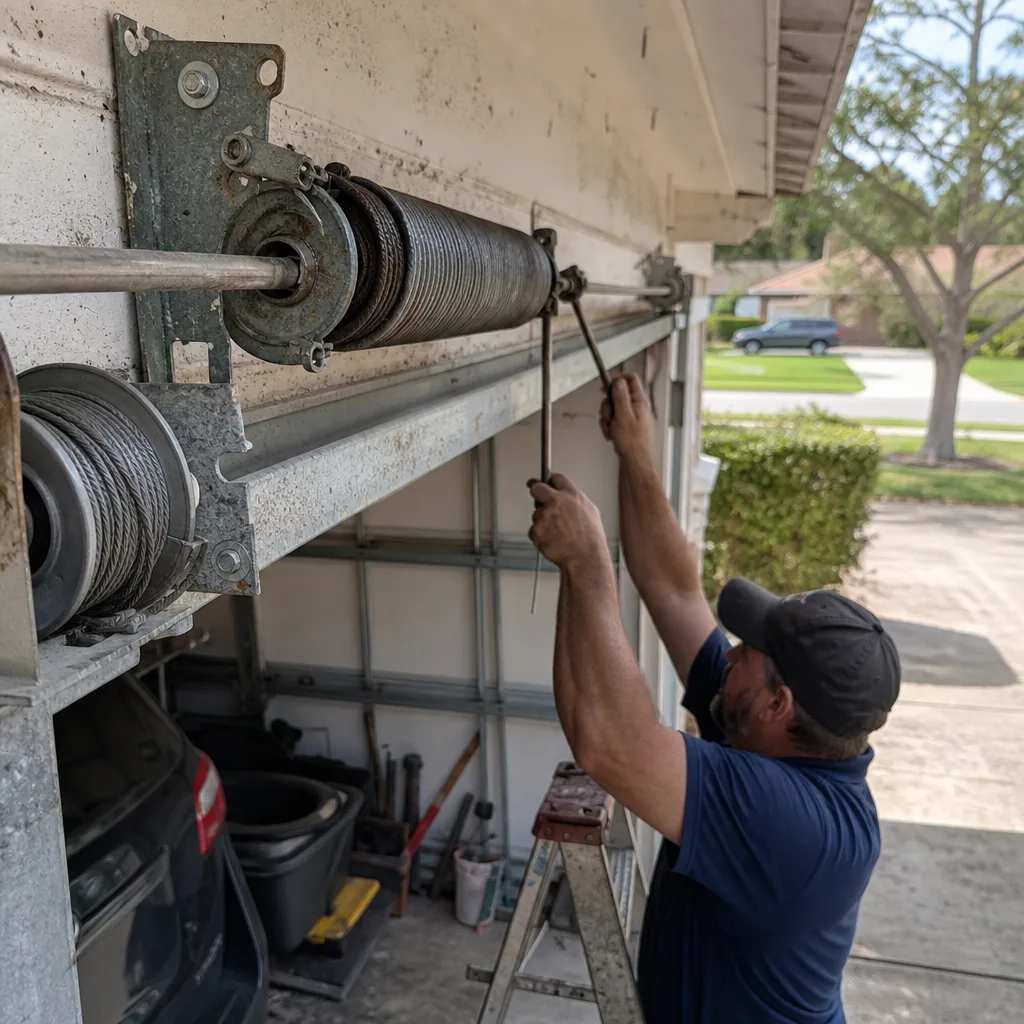
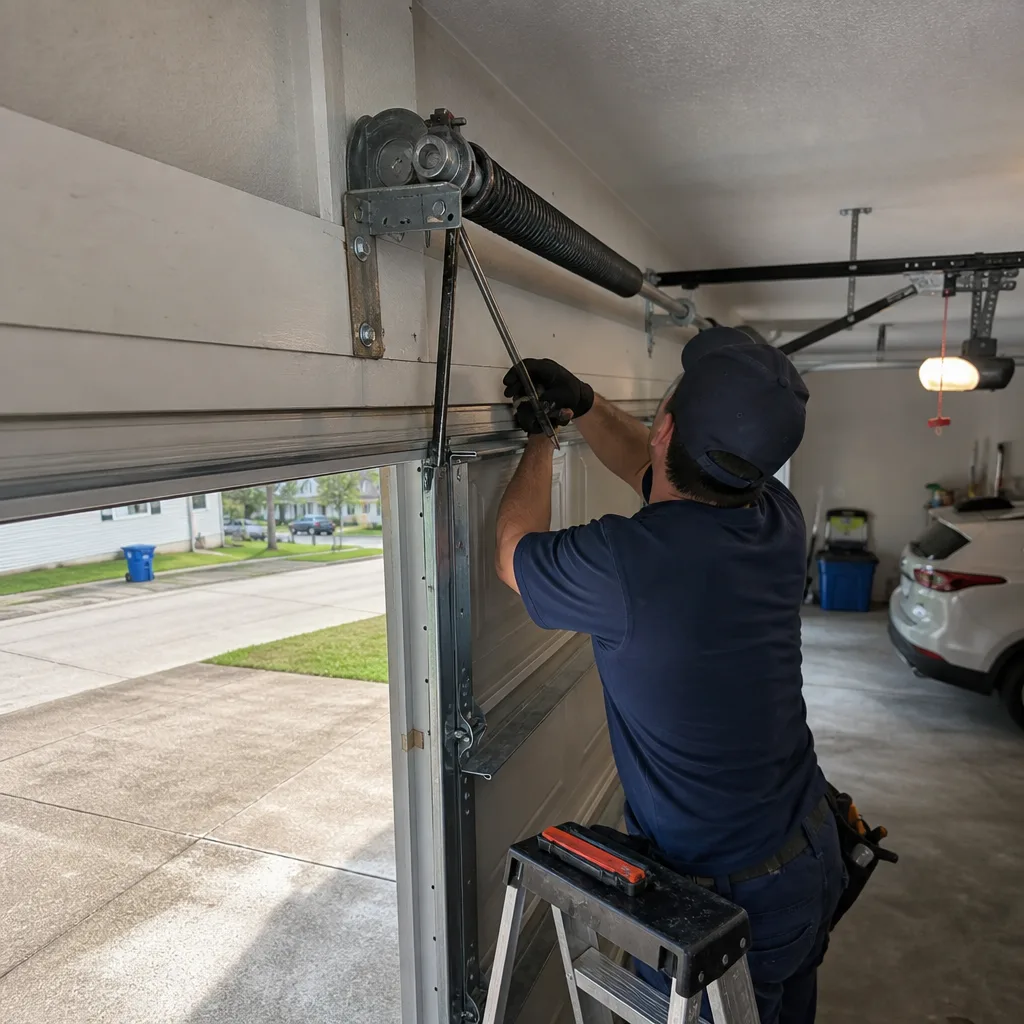
- Anything involving torsion springs: adjustment, replacement, painting, or rust treatment on the spring itself. The torsion spring holds enough tension to break bones or cause fatal injury if it releases unexpectedly. This is the one area where we are emphatic: do not DIY torsion spring work.
- Lift cable replacement. Cables are under tension from the springs. If one snaps during replacement, the cable can whip with dangerous force.
- Track bending or realignment. Improper alignment causes the door to bind, which can lead to cable derailment or spring damage.
- Opener force settings and circuit board work. Electrical safety plus the risk of misadjusting safety mechanisms.
- Any repair after a storm impact. Hidden structural damage can make the door unstable.
Palmetto Garage Door Service handles all of these across eight major brands: LiftMaster, Chamberlain, Genie, Clopay, Amarr, Wayne Dalton, Craftsman, and Raynor. Garage doors are all we do, so whether you have a Wayne Dalton door with a Genie opener or a Clopay door with a LiftMaster, a single call covers all of it.
Common Mistakes to Avoid
- Using WD-40 on everything. In Fort Pierce humidity, this strips protective grease and accelerates rust on hinges and springs. It’s designed to displace water, not lubricate moving parts under load. Switch to white lithium grease or silicone spray with PTFE.
- Skipping the auto-reverse test. Most homeowners test it once when the opener is installed and then never again. The mechanism can fail silently. This is the difference between a door that stops and a door that doesn’t, and that difference matters if a child or pet is under it.
- Ignoring a noisy door. Noise is the earliest warning sign of almost every garage door failure. A new squeak, grind, or pop means something changed. Addressing it early costs a few minutes of inspection; ignoring it often leads to a full spring or roller replacement.
- Raising the opener force instead of fixing the real problem. If the door struggles to close and you turn up the force dial, you’re masking the symptom. The underlying issue is usually worn springs or track friction, and both get worse over time. Higher force also increases the danger if the auto-reverse fails.
- Lubricating the wrong parts or over-lubricating. Too much grease attracts salt-laden grit. The rollers should be lubricated sparingly. The tracks should not be lubricated at all, a common misconception. Greasy tracks collect debris and make the door work harder.
- Putting off post-storm inspections. Damage from a tropical system doesn’t heal on its own. A small misalignment worsens with every cycle. Fort Pierce residents who wait until the door breaks are usually fixing a problem that began weeks or months earlier in a storm.
When to Call a Professional
Some situations are not maintenance issues. They are Garage Door Repair calls. If your door makes a loud bang and stops moving, that’s a snapped torsion spring. If the door opens a few inches and reverses, that’s a sensor or force issue. If the opener runs but the door doesn’t move, that’s a broken gear or trolley disconnect. These are not things to lubricate away.
If the door is more than 15 years old and needs multiple repairs in a single year, replacement may cost less long-term than repeated fixes. We’ll tell you which one actually makes sense. Sometimes a new Garage Door Installation in Port Saint John area is the smarter money. Other times a $200 repair buys another five years.
Palmetto Garage Door Service offers free estimates in Fort Pierce. Call (877) 265-2128 and we’ll assess the situation honestly, whether that means a repair or a replacement.
Frequently Asked Questions
Most garage door repairs in Fort Pierce range from $150 to $400 depending on the component. Torsion spring replacement typically runs $180 to $340. Roller replacement runs $100 to $200. Opener gear replacement runs $150 to $250. Exact pricing depends on your door’s brand, size, and spring configuration. Call (877) 265-2128 for a free estimate and we’ll quote the exact price before any work begins.
Every three months is the baseline for Fort Pierce’s climate, but every two months during June through September when humidity and salt air peak. Homes within two miles of the coast should lean toward the shorter interval. Use white lithium grease on metal-to-metal points and silicone spray with PTFE on rollers.
The combination of Atlantic salt air and year-round humidity above 75% creates a corrosive environment for exposed metal. Bottom brackets, hinge pins, and torsion spring ends are the first components to show damage. Regular lubrication with the correct products slows the process but cannot eliminate it entirely.
No. Torsion springs are under extreme tension and can cause serious injury or death if they release unexpectedly. This is the one garage door component where DIY work carries genuine danger. Call a trained technician who has the correct winding bars and experience. Palmetto Garage Door Service handles torsion spring replacement daily across Fort Pierce.
Check the outside of the door for impact damage, then the bottom seal for gaps, then the tracks for bends, then manually lift the door to test balance, and finally run a full opener cycle with an auto-reverse test. If the door feels heavier than normal or the tracks are bent, do not use the opener and call a technician.
We work on eight of the most widely installed brands: LiftMaster, Chamberlain, Genie, Clopay, Amarr, Wayne Dalton, Craftsman, and Raynor. Whatever your equipment, from builder-grade to premium, the odds are high that we service it. Our Palmetto Garage Door Service home page details the full scope of our work.
The Bottom Line
A garage door in Fort Pierce needs more attention than one inland. The salt air and humidity change what products you use, how often you use them, and where corrosion appears first. Monthly visual checks, quarterly lubrication with the right products, post-storm inspections after any tropical system, and documentation of your auto-reverse tests cover the essentials. For Garage Door Repair Troubleshooting: Common Problems and How to Fix Them, see our detailed walkthrough. The do-it-yourself work is straightforward if you stay away from springs, cables, and tracks. Everything else, call someone who works on garage doors every day. Keep this checklist somewhere you’ll actually see it: inside the garage door by the opener, in your phone, or taped to the water heater. Fifteen minutes a month prevents almost every breakdown we get called about.
Written by the team at Palmetto Garage Door Service, serving Fort Pierce since 2018. Explore more guides & resources on our blog.
See the difference
 Before
 After
 Before
 After
 Before
 After